by Todd Wilkinson
Has there ever been, will there ever be again, a more beloved human spokesperson for the natural world on planet Earth than Jane Goodall?
If the answer isn’t affirmative, then why might there never be anyone like her? Goodall herself would find that prospect to be sad and unacceptable, a failure of all she had worked for in trying to inspire new generations of conservation leaders to carry on.
Goodall lived during a novel span of time when a number of remarkable forces converged that gave her a platform. The soapbox she earned, which she never took for granted, rewarded serious attentive generations of people who loved wildlife, prided themselves on being knowledgable, and embraced Goodall’s own value-laden messaging as something worth rallying around in common cause.
By her own admission, Goodall in recent years said we were dwelling in “dark times.”
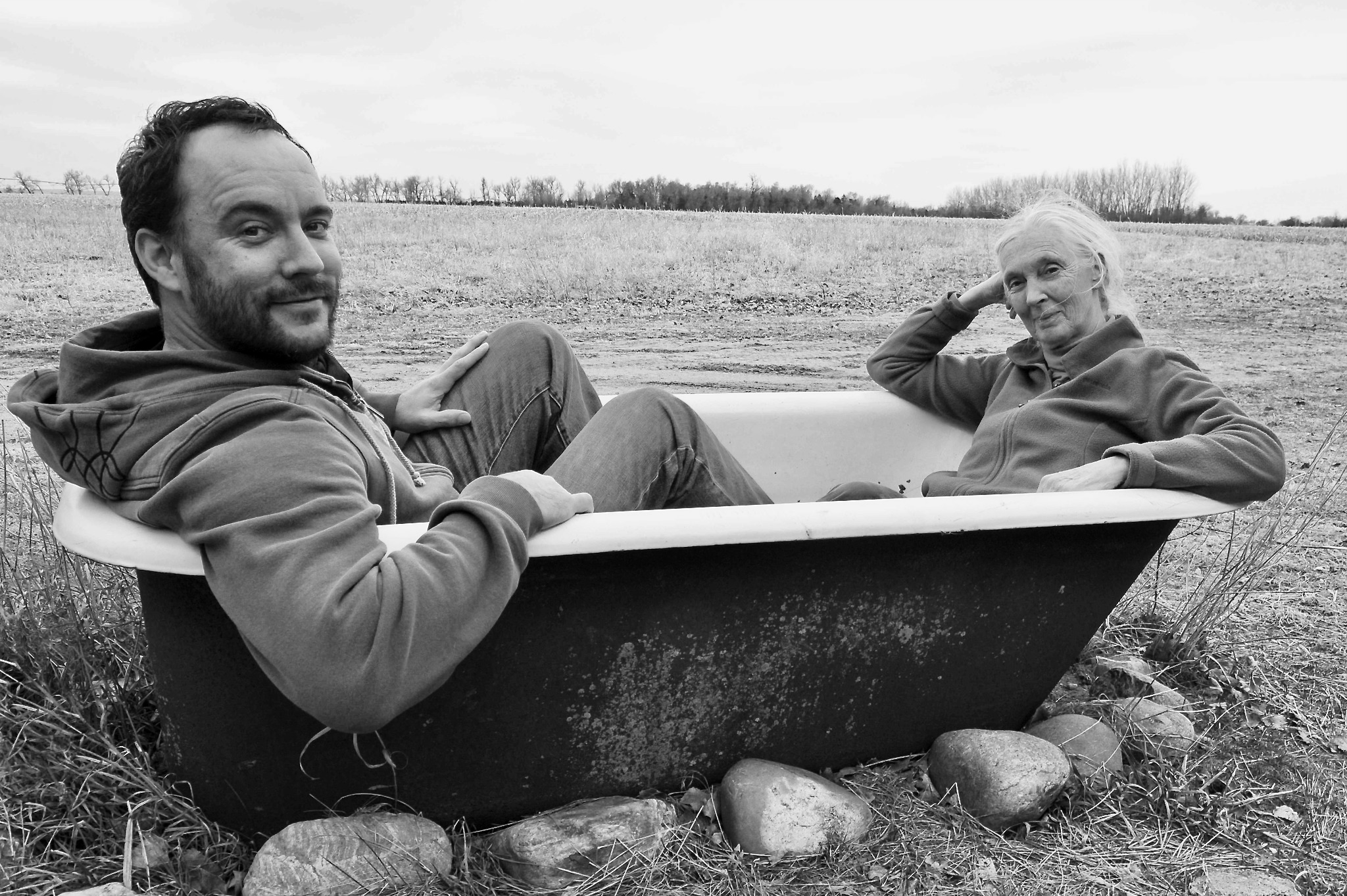
One expression of the massive heartfelt outpouring of affection for Goodall after her passing, directed toward the most recognizable face and name associated with tree hugging advocacy ever, is the diverse range of people who covet the photographed moments they had in her company. She somehow made every single person who appeared in the frame with her, and millions of others who hung on to her every word, believe they mattered.
Just as some disparaged Grizzly 399 as a nuisance celebrity roadside bear, some in Wyoming also said Goodall had no business voicing her concerns about the fate of wildlife—as if to say, “Who the hell does Jane Goodall think she is?”
To which, Mangelsen didn’t miss a beat. “Well, she’s Jane ‘friggin’ Goodall. Do I really need to explain how dumb and childish it sounds to take a pot shot at her and suggest she has no credentials or isn’t qualified to have an opinion?”
People counted as being curmudgeonly, imperious or evincing extraordinary amounts of power, wealth and celebrity, nevertheless stood in awe of her. The reason: she wasn’t a phony, she wasn’t out to materially enrich herself or dwell in a mansion, and she went hard until the very end because she didn’t believe there is a retirement age that allows elders to stop setting an example by doing what’s right.
Her advocacy wasn’t about her; it was about using the goodwill she accrued and channeling it selflessly toward the things she was advocating for—kindness and respect of other sentient beings, even if those non-humans sometimes gave their lives to give people sustenance.
Many incredibly eloquent tributes have been penned amid a rarefied outpouring of mourning that may be unprecedented, directed toward a spiritual figure who didn’t subscribe to a religious denomination but understood that in creation everything is connected.
One lesser-known aspect of Jane Goodall was her mirth. She wasn’t a raconteur in the classical way but she had an ability to bring a sense of calming levity to intense, serious matters. While excelling in being understatedly wry and unflappable, the result of being brought up in the great waggish tradition of the UK, she genuinely enjoyed making mischief.
In the summer of 2018, Goodall did something she had never done before in her life: she, with the help of her assistants Mary Lewis and Susana Name, pulled out a credit card and entered her name in a Wyoming lottery with the hope of winning a bear hunting tag.
That year in September, the Wyoming Game and Fish Department planned to hold the first sport hunt of grizzly bears in the state in 42 years. Touting that it had a “surplus of grizzlies” and “harvesting” nearly two dozen wouldn’t affect the overall population, the state planned to offer 22 lucky individuals the chance to kill a bear.
Despite being on a grueling travel schedule, encouraging large crowds everywhere she went to be advocates for protecting wild Earth, Goodall found herself on a phone call with her close friend, the American wildlife photographer Tom Mangelsen, who was at his home in Jackson Hole.
Mangelsen and his assistant at the time, photographer Sue Cedarholm, informed Goodall, then 84, that they intended to join a growing pool of people seeking to secure one of those 22 permits because the lottery was open to anyone, non residents of Wyoming included. When Goodall heard Mangelsen’s rationale, she thought it was brilliant, and quickly decided that she wanted to take part, too.
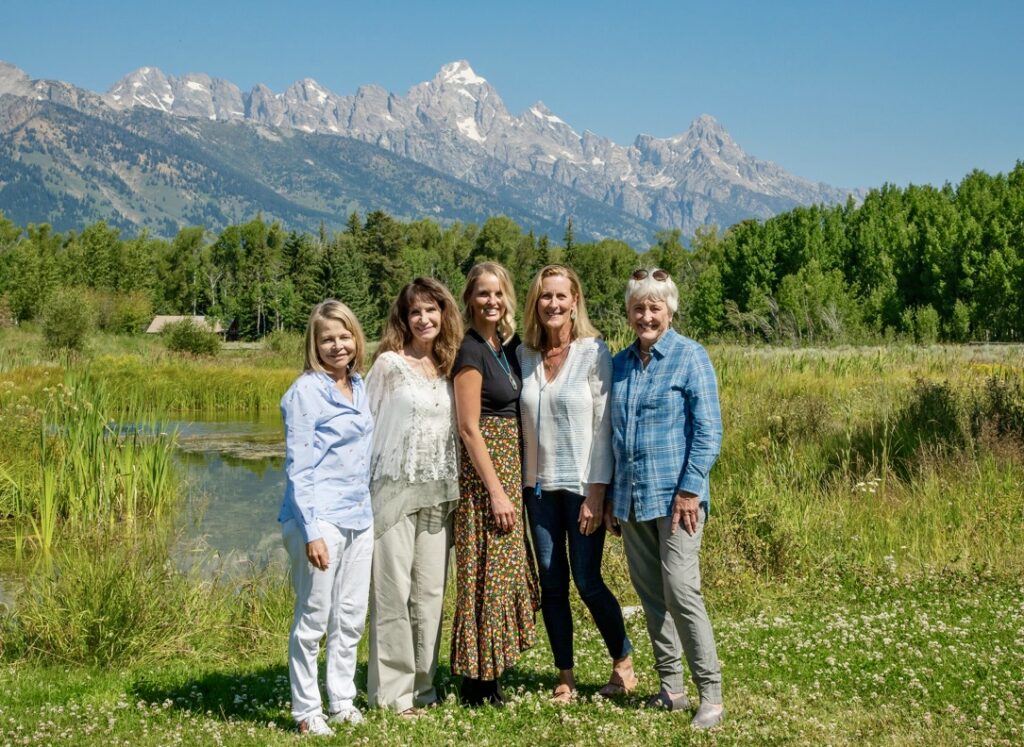
Almost giddy at the prospect, yes Jane Goodall joined around 7000 people who paid $15 and put their names in contention to be awarded a coveted hunting tag. Not long afterward, another famous wildlife scientist, African elephant biologist Cynthia Moss, followed suit at the encouragement of five women from Jackson Hole who had launched an ad hoc campaign called “Shoot’Em With A Camera.”
“Shoot’Em With A Camera” founders were citizen conservationists—Ann Smith, Lisa Robertson, the late Deidre Bainbridge, Judy Hofflund and Heather Lang.
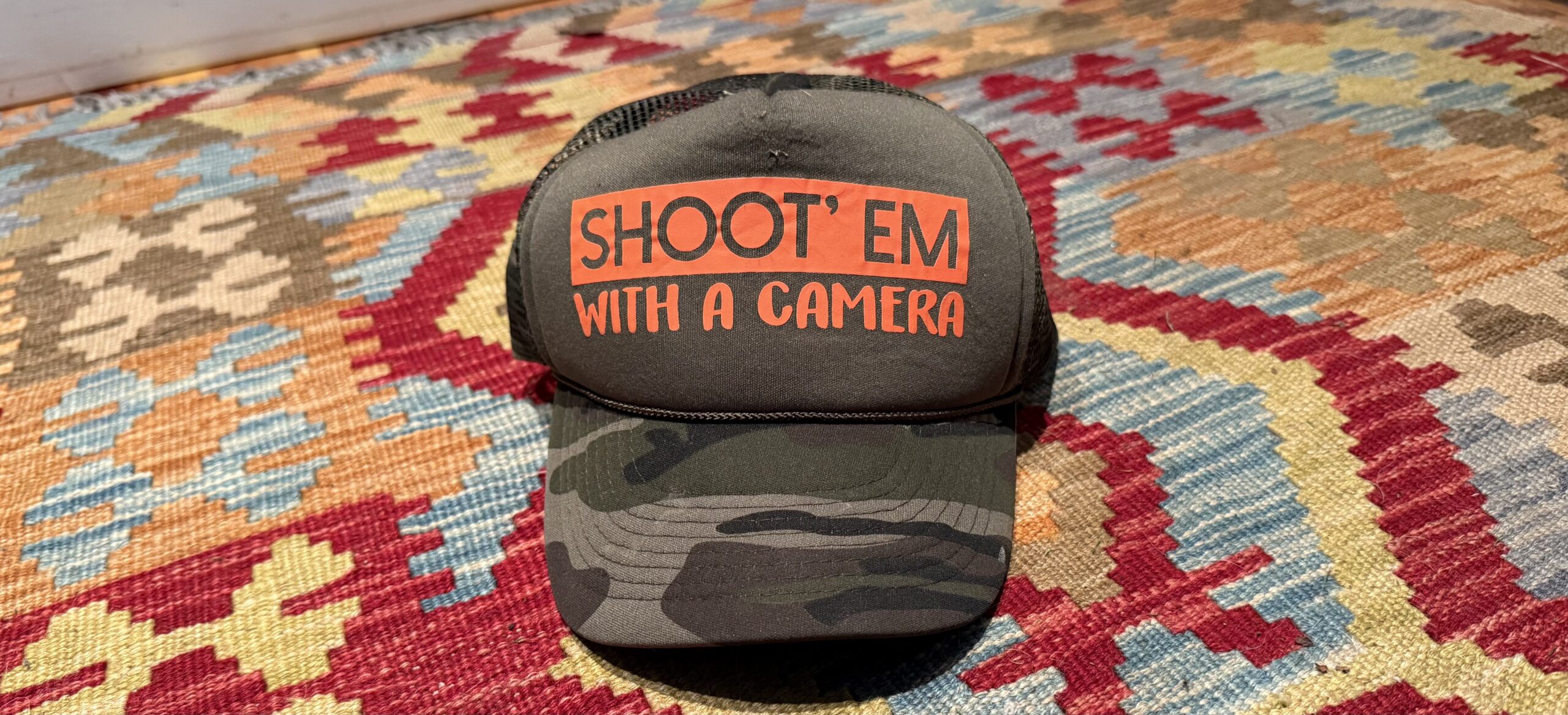
Although Goodall and Moss weren’t successful in defying the odds and landing a tag, Mangelsen was—and he used his flukey good fortune to be a symbol of procedural monkeywrenching that the state of Wyoming never saw coming. Goodall’s decision to enter the lottery made international news. The reality that an octogenarian (Goodall) who had no skill handling a rifle and never sighted one in would be allowed by Wyoming to nab a bear tag and head into the woods, potentially wounding a grizzly by being a bad shot, spoke to what Mangelsen and Goodall considered to among the hunt’s many absurdities.
As the regulations required, Mangelsen (who hunted ducks in his early years) had to first watch an instructional video on hunting safety, learn how to attach a tag to a dead bruin, and was even given suggestions for how to cook a grizzly if or when he felled it. [Most people who kill grizzlies are not motivated to have meat for the freezer but to display the hide as a trophy of derring accomplishment].
To use his tag, Mangelsen had to pony up $6000.Another requirement was that he enlist a licensed hunting guide, which he intended to do. Mangelsen’s plan was to set out with a group of wildlife advocate friends (Goodall and Moss were invited) to spy grizzlies in the wild. They had no intention of pointing a gun at them but capturing the living breathing essence of any bear they encountered with long camera lenses and then circulating those images as their trophies.
Both Mangelsen and promotors of Shoot’Em with a Camera wanted to show how a hunting tag could be used to spare a grizzly from death, to demonstrate how a wild ursid can deliver ongoing enjoyment to nature watchers— as opposed to being cashed out for the pleasure of a single individual claiming possession of the animal in its death. A few others who won a tag had similar thoughts.
Wyoming officials were nonplussed, and they vowed to somehow configure future lotteries so that such alleged chicanery would not be repeated. They implied that the express purpose of the lottery was to allow hunters, whom they said had been denied so much by not being able to trophy hunt a grizzly for two generations in Wyoming, the long-awaited opportunity to take one home as a personal prize.
The inaugural hunt didn’t happen. An 11th hour petition for injunction brought by attorney Tim Preso and the public-interest law firm EarthJustice on behalf of several groups and individuals, was successful.
The jurist hearing the case, US District Court Judge Dana Christiansen in Missoula, found the evidence presented by Preso to be compelling. Christiansen effectively stopped the hunt when he overturned delisting. He ordered the US Fish and Wildlife Service to assess the geographical disconnection and genetic isolation that existed between the island population of bears. One being that in Greater Yellowstone and the only other major congregation of bears found in the Northern Continental Divide Ecosystem, comprising Glacier National Park and the federal Bob Marshall/Scapegoat wilderness complexes pressing up against the US border with Canada.
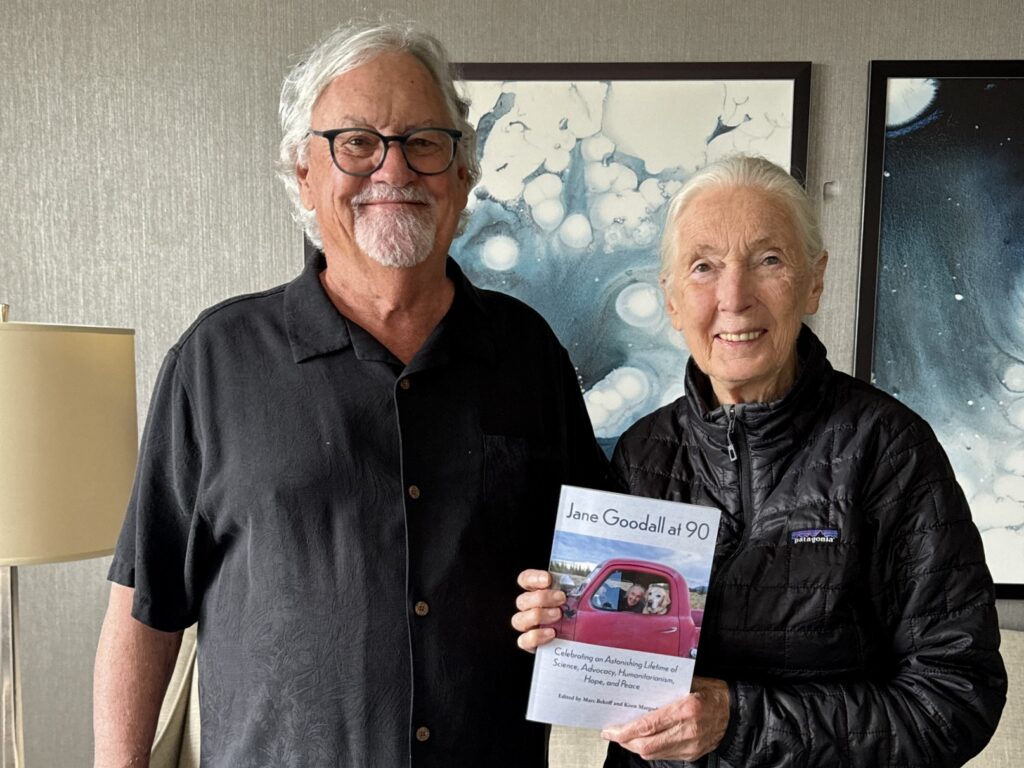
Hearing the news, Goodall was pleased. That night, she and Mangelsen got connected remotely via Zoom and looking at each other on their computer screens toasted the court decision with drams of Scotch. Judge Christiansen’s ruling was the second time delisting had been overturned—the first in 2007—based then on the lack of solid consideration of factors that might negatively affect grizzly recovery going forward.
The first challenge involved the effect of climate change on whitebark pine trees, the cone seeds of which have a disprortionately important role in bear nutrition and fattening them up before then go into hibernation.
In 2018, that ruling involved genetic disconnection—a remedy of which, states now claim, can simply be overcome by capturing bears from other regions and dumping them into an ecosystems where inbreeding might be a concern.
Predictably, politicians in the states of Wyoming, Montana and Idaho that have been aggressively pushing for delisting as a states’ rights issue, continue to claim afoul. They insist “the goal posts” of recovery have been moved after the metrics indicating recovery had been achieved or surpassed were met. And it’s why Wyoming Congresswoman Harriet Hageman is trying to force a legislative delisting that cannot be challenged in court. She and state officials and hunting and livestock industry groups eager to have a sport hunt restored, note that when bears were listed, the population of grizzlies in Greater Yellowstone had fallen to as few as 136 and today there are more than 1,000.
Numbers, however, don’t tell the whole story, says former national grizzly bear recovery coordinator Dr. Christopher Servheen who wrote the first grizzly bear recovery plan in 1993 and made the case for delisting in 2007. But he has changed his position and says the outlook for sustaining a healthy growing population is iffy at best. The goalposts of recovery haven’t been gratuitously changed to stymie delisting, he says; rather conditions on the ground confronting grizzlies have become more dire and need to be considered in any honest calculus of recovery. But states and members of Congress, Servheen says, don’t want to acknowledge them because they inconveniently don’t jibe with narrow, rigid talking points.
Goodall said Americans don’t seem to understand how fortunate they are to have a still-ecologically-healthy region like Greater Yellowstone with its full complement of species and that grizzlies were not a liability for Wyoming but assets that made it stand out positively in the world.
This summer she was incredulous that US. Sen. Mike Lee of Utah would do something she considered so heretical and disrespectful of public lands as divesting them to states and/or selling them off. Public lands are the landscapes where hope for the survival of America’s rich wildlife heritage. America has been a beacon, and anyone who would condone the squandering of that legacy is is a fool, she said.
In 2023, when Goodall learned that a young wolf in Wyoming, nicknamed Spirit, had been literally and deliberately run over by a snowmobiler in Sublette County, Wyoming, she expressed profound sadness. The fact that the snowmobiler also captured the badly injured wolf, wrapped its muzzle with duct tape and then paraded it before bar patrons in a saloon before shooting it, left her reeling in pondering the kind of cruelty that human beings are capable of. Goodall loved Wyoming, its wildlife, scenery, and so many of the people she met but she was disappointed. She wondered why elected leaders in the state didn’t take action to ban such behavior outright and make sure such meanness could never legally happen again.
She didn’t like cowards. A few years earlier in April 2016, I was asked by the late US Congressman Raul Grijalva, in his role as minority party chair of the House Natural Resources Committee, to moderate a panel discussion about large carnivore conservation and the benefits of grizzlies, wolves and mountain lions in wild ecosystems. Mangelsen was a member of the panel and he spoke about how 399 had transformed the way people around the world think of grizzlies. Goodall was invited to attend but she couldn’t make it so she made a video that was played in front of a large crowd of people gathered in the House of Representatives auditorium about her concern for grizzlies and it brought tears to peoples’ eyes. Click on it below.
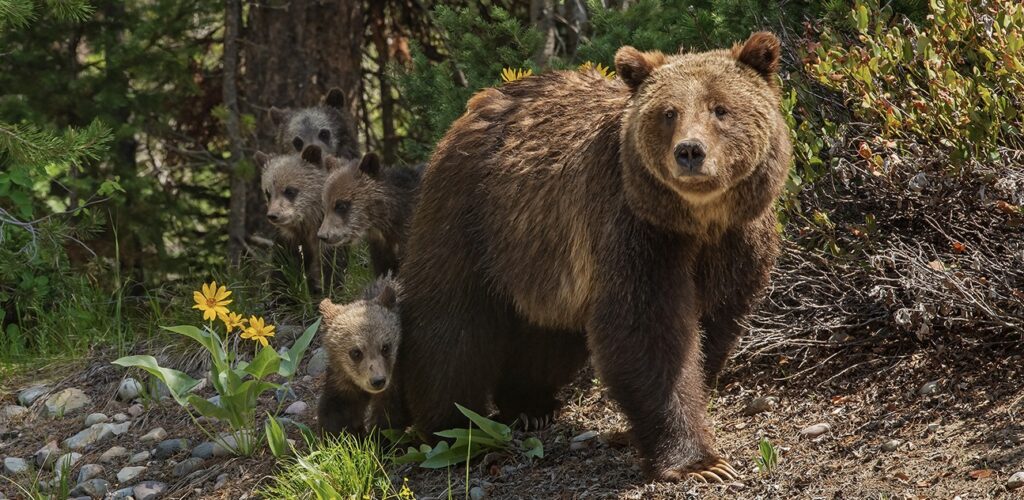
Most visibly in our region, Goodall became a kind of adoptive den mother of Grizzly 399 and 399’s many groups of cubs. In the same way that humans from every walk of life stood in vaunted awe of Goodall, Goodall had deep admiration for the bruin matriarch and wanted to lend her cachet to the cause of maintaining protection for grizzlies.
Goodall said that in terms of their intelligence, emotions and acumen in navigating challenging conditions, grizzlies were no different from the chimpanzees she famously studied in Gombe Stream National Park in Tanzania as a twentysomething researcher trying to find meaning int he world. Once upon a time, chimps and gorillas were killed for sport. Even today, chimps are killed as part of the bush meat trade.
In recent years, she kept a close protective eye on the controversy over how to make sure biological recovery could continue. “She was crushed when she heard that 399 was tragically struck and killed by a car last October [2024} and it left her yearling cub, that we called “Spirit” orphaned,” Mangelsen said. “She would always ask if anyone had seen Spirit. She was pleased that 399’s ashes were spread in and around Pilgrim Creek that had been her home.”
Grizzly 399 was an amazing 28 years old when she died. Just as some had earlier disparaged her as a nuisance celebrity roadside bear, some in Wyoming had also said Goodall had no business voicing her concerns about the fate of wildlife—as if to say, “Who the hell does Jane Goodall think she is?”
To which, Mangelsen didn’t miss a beat. “Well, she’s Jane ‘friggin’ Goodall. Do I really need to explain how dumb and childish it sounds to take a pot shot at her and suggest she has no credentials or isn’t quality to have an opinion?”
In the wake of Goodall’s passing, Mangelsen noted how millions upon millions of people around the world have been reflecting on the role she played as a galvanizing presence for humanity—at a time when it is most needed. This moment of unity, he says, should not be wasted. “Wildlife need our voice. We mustn’t squander this last gift she offered to us in death. She would be touched by all the remembrance but she would be disappointed and scold us if we don’t, together, make it mean something. Now that we’re together savoring the spirit of Jane, let’s not let it get lost in the chaos.”
Postscript: Upon her death, producer Brad Falchuk released the following clip of an interview he did with Goodall as part his Netflix series, “Famous Last Words.” The main condition was that it would only air after she passed. It’s poignant. By coincidence, the Museum of the Rockies in Bozeman just opened a new exhibition, “Becoming Jane: The Evolution of Jane Goodall” that features physical touchstones of her journey from young woman in England to chimp researcher and pathfinding advocate. A collaboration of The National Geographic Society and The Jane Goodall Institute, it is up through January 18, 2026.