EDITOR’S NOTE: Among our priorities at Yellowstonian is bringing forward perspectives shaped by our four decades of contacts and conversations with leading thinkers in conservation biology, private and public land protection and advocacy applied at the local, regional, national and global levels. We’re brought you unrivaled, in-depth analysis about the impacts of sprawl and industrial strength outdoor recreation. A related important topic is roads. One ecological analyst who is regarded as a leading expert on the impact of roads on wildlands globally is Dr. Reed Noss. Over the years I’ve turned to Noss often in writing about issues of biological connectivity affecting Greater Yellowstone and bioregions around the world. His view is especially poignant now as US Agriculture Secretary Brooke Rollins pushes to rescind the US Forest Service’s “Roadless Rule” and open up 45 million acres of roadless lands (the equivalent of 20 Yellowstones) in the West and Alaska to bulldozers and roadbuilding, and logging done in the name of “forest thinning” to reduce wildfires. It would also set the stage for inundation of those lands by motorized and mechanized recreation where, to date there has been none. With Noss’s permission, we are publishing this updated version of his detailed and widely-circulated overview on why roads threaten the health of wildlands. It is long but well worth your time. Sit with it, read it, absorb it. It is the most thorough overview available and we are giving it to our readers free as part of our public education mission. Send us your comments by clicking here. We’d like to hear from you. We operate on a shoestring and welcome your support. —Todd Wilkinson
by Dr. Reed Noss
I’ve made this observation before, many times over the years, based upon analyses conducted over the course of my now (very-long) career: nothing is more negatively consequential for the fate of a wild or natural landscape than the decision to build a road into it. Unfortunately, evidence on the ground has never proven that assessment wrong. While the value of our rare remaining roadless public lands is irrefutable, the rising risks of their undoing are now greater than ever, especially for ecosystems in the West such as Greater Yellowstone, the Northern Continental Divide and rainforests of Alaska.
The consequences of adding roads to any region are indeed consequential; moreover, more and more we are recognizing their negative impacts on public lands and wildlife as open natural lands found on nearby private property are developed and transformed into residential and commercial subdivisions. I first wrote an assessment titled The Ecological Effects of Roads in 1990 and below is an update that I hope readers of Yellowstonian find to be relevant.
Despite heightened recognition by informed people of the harmful effects of roads, road density actually continues to increase in wild areas in the US and other countries. Federal, state, and local transportation departments devote huge budgets to construction and upgrading of roads and related infrastructure. Multinational lending institutions, such as the World Bank, finance roads into pristine rainforest, which then usher in a flood of settlers who destroy both the rainforest and the indigenous cultures. It continues in places like the Amazon, Congo and other biodiversity hotspots in Asia.
In the US and Canada, public land-managing agencies have built thousands of miles of new roads to support private sector resource extraction activities, at a net cost to the taxpayer. Today we are facing a new onslaught and it appears that the hard lessons learned from previous generations about painful loss of wild places and presence of species are not being heeded.
The US Forest Service has been forced to decommission thousands of miles of logging roads that thoughtlessly fragmented public lands and caused a wide range of ecological problems. But now, with the agency’s Roadless Rule proposed by be rescinded by the Trump Administration’s Secretary of Agriculture Brooke Rollins, a new era of taxpayer-subsidized roadbuilding may be upon us—and there is much that we and generations of Americans in the future stand to lose.
I can cite a litany of examples. In the case of Greater Yellowstone grizzly bear recovery, road closures were required and safeguarding of roadless lands cemented in place by the Forest Service as a requirement of even considering the removal of grizzlies from federal protection under the Endangered Species Act. You can read more about that by clicking here to read the story by Todd Wilkinson in Yellowstonian.
Most public agencies still often disregard the ecological impacts of roads. They will again attempted to justify “tree thinning” timber roads as benefiting recreation and wildlife management. A related aspect of this is that even when a land manager recognizes the importance of closing roads, he or she usually contends that such closures would be unacceptable to the public. Vital right now is that the public understand the real toll of roadbuilding on natural areas that are part of our common, shared heritage and located not far from where they live.
This essay reviews some of ecological effects of roads, with emphasis on impacts to wildlife (broadly defined) and, where possible, I’ll provide some local reference points. I often invoke Florida where roads built to service commercial interests and a growing human population are at odds with protecting the state’s biological diversity, which offers a parallel of implications for the wildest areas of the West. My concern is with all roads, from primitive logging roads in regions like Greater Yellowstone to major four-lane highways and can probably be extended to high-use, high-intensity recreation trails. Although the effects of different types of roads vary, virtually all are bad from the perspective of preserving biological diversity, and the net effect of all roads is nothing short of catastrophic.
The technical literature that pertains to this topic is vast, expanding and an entire book would be needed to summarise the science as it relates to destruction of wild country. Consider this merely an introduction, or an “executive summary” of a massive tragedy in the making here and around the world.
Roadkills
Direct effects, such as flattened fauna, are easy to see. In contrast, many indirect effects of roads are cumulative and involve changes in community structure of wildlife as well as ecological processes that are not fully understood. Yet, these long-term effects signal a deterioration in ecosystems that far surpasses in importance the visual and olfactory insult to us of seeing a bloated deer by the roadside.
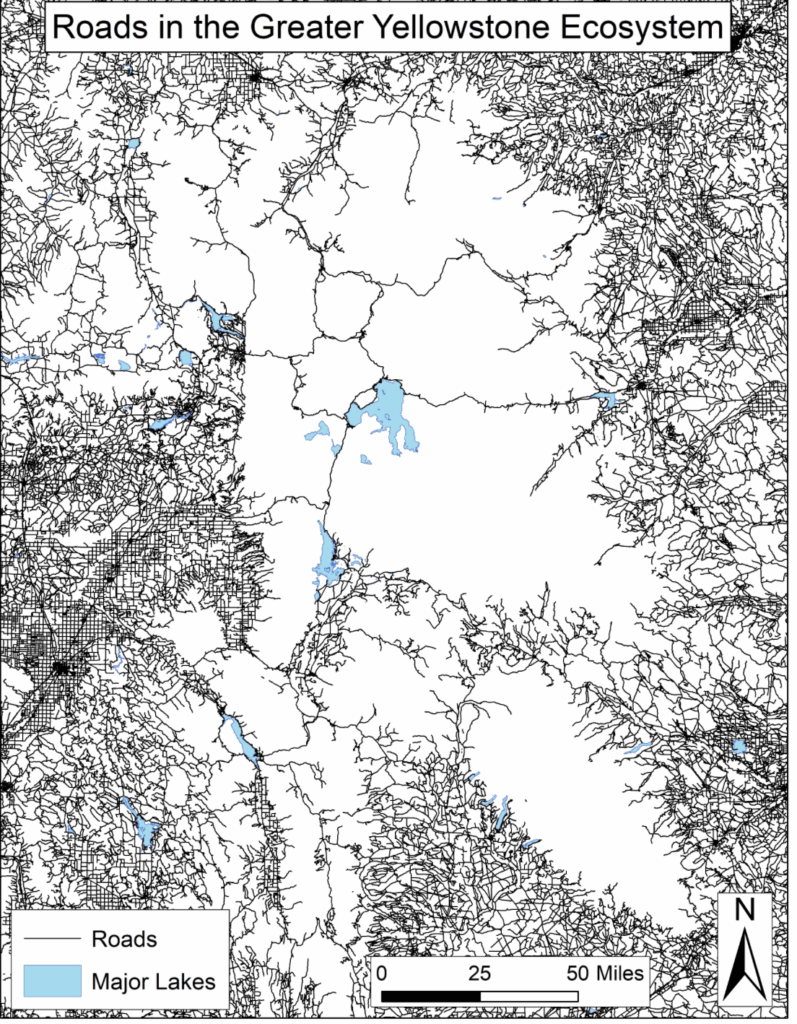
The above paragraph notwithstanding, roadkill can have a significant impact on wildlife populations. Humane World for Animals (formerly the Humane Society of the US) and the Urban Wildlife Research Centre have arrived at a conservative figure of one million animals killed each day on highways in the United States. Montana has the second highest rate of motorist-wildlife collisions, per capita, in the country and yet it is only our 43rd most populous state. To me the statistic means there are lots of roads that exist in places holding incredibly high value for biodiversity, especially large mammals. The question is what happens if the number of roads and densities increase? Toward the end of this overview is a map of existing roads in the Greater Yellowstone Ecosystem prepared by the USGS that demonstrates a level of human accessibility to public and private lands that already exists beyond protected national parks and Forest Service roadless areas, which in the context of the Northern Rockies is actually tiny.
While my focus here is on roads themselves, development trends on both sides of roads represent serious threats to biodiversity loss. The construction of wildlife bridges (overpasses and underpasses) is important in trying to maintain connectivity across roads, but it cannot alone fix a serous problem related to the failure and refusal of local towns, counties and states to mandate better ecologically-minded land use planning and zoning. Every road, big or small, has consequences that may, in the short term be touted as beneficial, but they bring downsides for wildlife that are usually unintended.
Sometimes it’s instructive to better understand one’s own bioregion by seeing what’s happened elsewhere. When I-75 was completed through a major deer wintering area in northern Michigan, deer road mortality increased by 500 percent. In Pennsylvania, 26,180 deer and 90 bears were killed by vehicles in a single year. These statistics do not account for animals that crawl off the road to die after being hit. Also, roadkill statistics are invariably biased toward mammals, against reptiles, amphibians, and probably birds, and do not include invertebrates at all (who wants to count the insects smashed on windshields and grills?). But even the decline of insects, as evidenced by our windshields having fewer bugs smashing against them, is worthy of discussion as its a reflection of biodiversity loss happening now in real time.
Vehicles on high-speed highways pose the greatest threat to wildlife. Unpaved roads, particularly when “unimproved,” are less dangerous. Roadkill usually increases with volume of traffic. This has been the case in southwest Montana along US Highway 191 linked to ongoing development happening in Big Sky and Bozeman, and how their unmitigated footprints of sprawl have spread across the Gallatin Valley.
Nearly two decades ago, my scientific colleagues at the Craighead Institute in Bozeman were enlisted to complete a roadkill study of animals struck and killed as they tried to cross Interstate 90 on Bozeman Pass between the Gallatin Range to the south and the Bridger and Bangtail mountains to the north. Overpasses and underpasses were identified as a critical need then—as was private land protection—but action has not been taken and soon it could become moot as sprawl continues unabated and traffic loads on the interstate continue to grow.
Projecting roadkill levels is not always intuitive. In one Texas study, mortality was greatest on roads with intermediate volumes, presumably because higher-volume roads had wider rights-of-way that allowed better visibility for animals and drivers alike. Increases in traffic volume do result in more collisions on any given road, and in our profligate society more people means more cars on virtually every road.
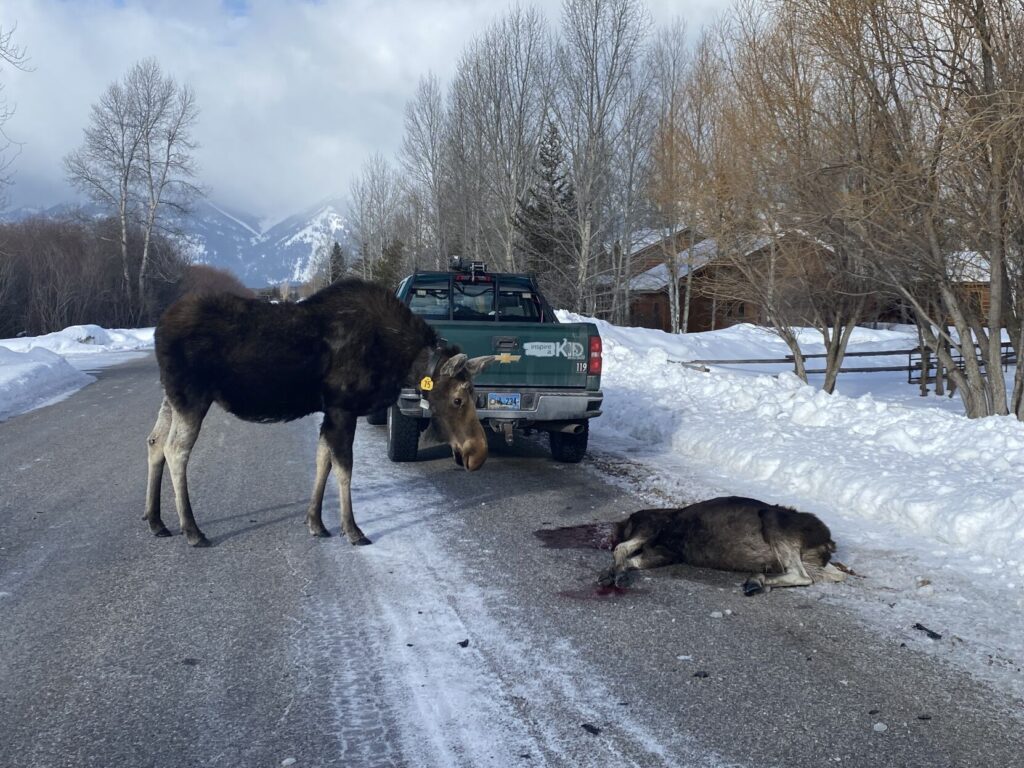
Florida, where I’ve long lived and taught as a university professor, is an ongoing rapidly developing state with more than 1200 new human residents arriving each day and 143 million tourists and visitors annually. Primary and interstate highway mileage driven has increased by at least 4.6 miles per day for the last 50 years (meaning a lot more humans flooding roads of every size). Hence it is no surprise that roadkills are the leading known cause of death for all large mammals except White-tailed Deer.
Roadkills of Florida Black Bear, a subspecies listed as threatened by the state, have been rising sharply in recent years, from two to three per year in the 1970s to 44 in 1989 and over 230 today. Many of the bears are killed on roads through public lands, in particular the Ocala National Forest.
Seventeen Florida Panthers, one of the most endangered subspecies of mammals in the world, are known to have been killed between 1972 and the early 1990s. Since 1981, a huge percentage of documented Florida Panther deaths have been roadkills. As of autumn 2025, the total number of dead panthers has grown from 230 to nearly 700, this in a state where there are only 200 alive. Roadkills can ripple at the population level. Sometimes, a rising population of a given species, be it panthers or grizzly bears, cloaks a bigger problem in the making which is rising levels of conflicts with an expanding human population that, over time, will result in, at best, a population that flattens or, more likely, starts to decline.
When I wrote this assessment in 1990, an average of 41 Key Deer, a species listed as Endangered by the US Fish and Wildlife Service, were killed on roads yearly from 1980 through 1986, and 57 were killed in 1987. Between 1966 and 2017, road mortality accounted for nearly 72 percent of all Key Deer that died and, according to the organization, Save Our Key Deer, between 90 and 120 are dying every year on roads. Populations of any species cannot be sustained when they are caught between habitat loss and mortality that eventually outpaces reproduction.
Roadkill has been a persistent cause of mortality for the American Crocodile (different from more common alligators) and listed as threatened under the Endangered Species Act and is considered a key indicator species in assessing the health of the Florida Everglades. The Florida Scrub Jay, a Threatened species, has been found to suffer considerable mortality from collision with vehicles, and researchers have concluded that these birds cannot maintain stable populations along roads with considerable high-speed traffic.
Snakes are particularly vulnerable to roadkill, as the warm asphalt attracts them; yet their carcasses are seldom tallied. Herpetologists have noted dramatic declines of snakes in Paynes Prairie State Preserve near Gainesville, Florida, which is crossed by two four-lane highways. This preserve was once legendary for its diversity and density of snakes, but no more. Similarly, a study of south Florida herpetofauna by Wilson and Porras attributed declines in many snakes to the increasing road traffic in that region. These observations and datapoints for Florida were significant in the 1980s and the human pressures which have borne down on the state in the last 40 years, with further fragmentation catalyzed by expanding roads bringing more access and development into natural areas has been staggering.
Roadkill is a classic death-trap phenomenon. Animals are attracted to roads for a variety of reasons, often to their demise. Snakes and other ectotherms go there to bask, some birds use roadside gravel to aid their digestion of seeds, mammals go to eat de-icing salts, deer and other browsing herbivores are attracted to the dense vegetation of roadside edge, rodents proliferate in the artificial grasslands of road verges, and many large mammals find roads to be efficient travelways. Songbirds come to dustbathe on dirt roads, where they are vulnerable to vehicles as well as predators. Vultures, Crows, Coyotes, Raccoons, and other scavengers seek out roadkills, often only to become roadkills themselves. The sight of roadkills is a sign of trouble, not of co-existence or animal abundance.
Road Aversion and other Behavioral Modifications
Places in the rural West can still take aversive action to prevent the worst effects but time is not on your side. The effects of punching new roads into wild country for a variety of natural extraction reasons are insidious and may not be readily apparent to motorists driving down roads. The impacts can be startlingly erosive on species out of the public eye that need solitude from humans and room in roam in order to survive.
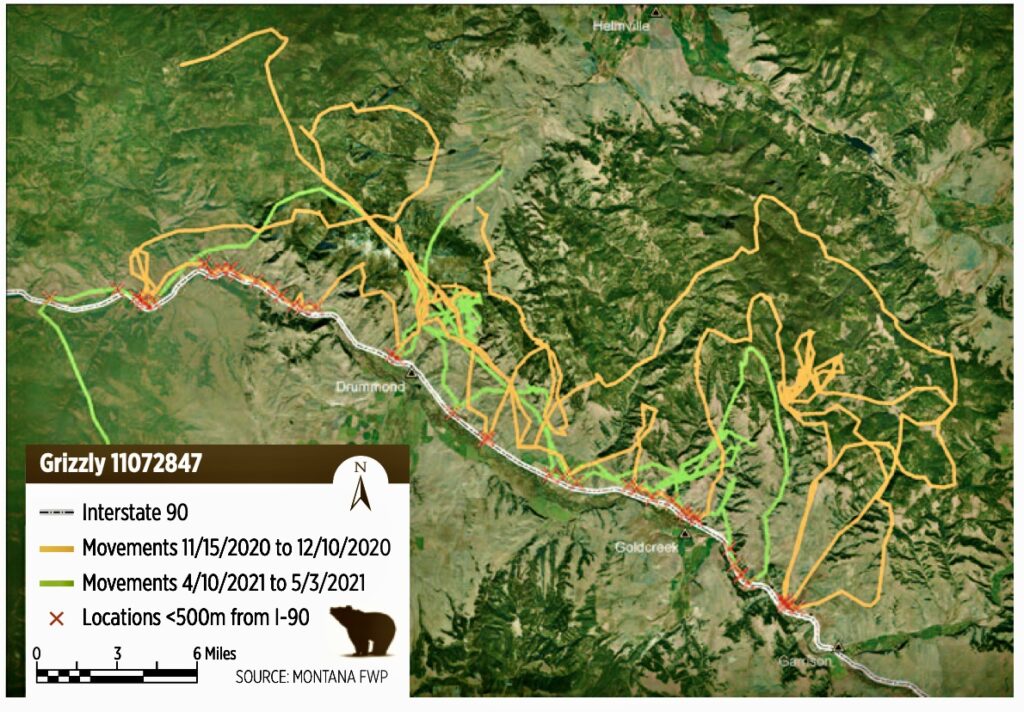
Not all animals are attracted to roads. Some have learned that roads bring unpleasant things, such as people with guns. Species that show road aversion exhibit decreasing population densities around roads. The more roads the bigger the area of avoidance. Various studies report that Turkey, White-tailed Deer, Mule Deer, Elk, Mountain Lions, Grizzly Bear, and Black Bear avoid roads. When these animals are disturbed by vehicles, they waste valuable energy in flight to evade humans. Other studies show conflicting results, which usually can be explained by differences in road use. Certain bird species also have been found to avoid roads, or the forest edges associated with roads. In the Netherlands, researchers found some bird species to be displaced up to 2000 meters (more than a mile) from busy highways. Drs Andrew Hansen and Jay Rotella, as research professors at Montana State University, documented how people are attracted to live in the same places on the landscape—areas along rivers— where bird diversity is highest. As more people move into an area, fragmented habitats favor generalist bird species that outcompete specialists. The difference between having more people in a hotspot, or less, is density of roads. If a road is built, invariably more people will come, unless access is controlled.
The American Elk is one of the best-studied species with respect to road aversion. Elk avoidance of roads is clearly a learned response (they do not avoid natural edges), and is related to traffic volume and hunting pressure. In western Montana, Jack Lyon found that Elk avoid areas within 1/4 to 1/2 mile of roads, depending on traffic, road quality, and the density of cover near the road. Roads have the potential to sever a migration if the teachers of way-finding die off from being hit by vehicles.
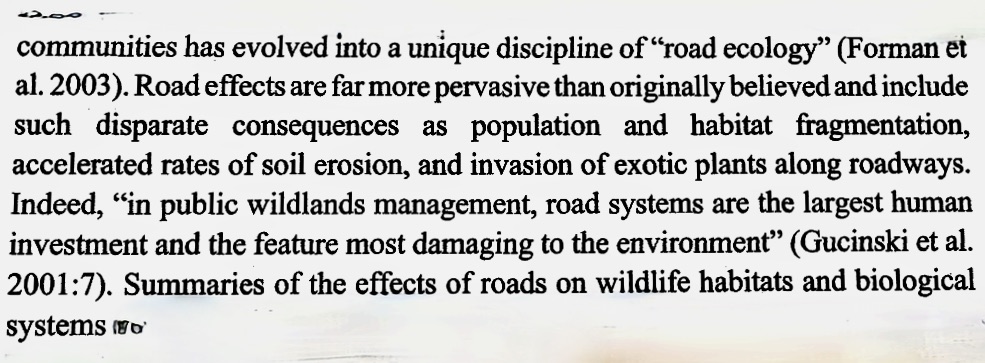
According to work by the late elk biologist Jack Ward Thomas in Oregon—before he became chief of the Forest Service— a road density of one per square mile of land results in a 25 percent reduction in habitat use by Elk; two miles of road per square mile can cut Elk habitat use by half. As road density increases to six miles of road per square mile, Elk and Mule Deer habitat use falls to zero. Elk in some areas have learned that roads are dangerous only in the hunting season, and do not show road aversion in other seasons. Other studies suggest that Elk avoid open roads, but not closed roads. Where hunting pressure is high however, even closed roads may be avoided because so many hunters walk them, drive their ATVs on them and, ever increasing ride their bicycles and e-bikes.
According to former National US Grizzly Bear Recovery Coordinator Chris Servheen who worked for the Fish and Wildlife Service for 35 years, roads displace Gizzlies. So can more recreation trails, with trailheads along road stems, that become busy with people. Disruption levels are highest when recreationists are accompanied by dogs off leash.
In British Columbia, Grizzlies were found to avoid areas within 1/2 mile of roads. A study in the Cabinet Mountains of northwestern Montana determined that the mean distance of Grizzly radio-telemetry signals from open roads was significantly greater than the mean distance from closed roads. Other studies have found that Grizzlies avoid areas near roads, especially by day, even when preferred habitat and forage are located there.
This is particularly alarming, because in Yellowstone National Park, which has the second largest Grizzly population in the lower 48, roads and developments are situated near the most productive Grizzly Bear habitat. Natural movements of Grizzly Bears can be deflected by roads, as the late researcher Chuck Jonkel documented in Montana. In Yellowstone, road densities are actually small but on adjacent national forests outside of roadless lands, the grid is extensive. Again, see the graphic created by USGS near the end of this essay.
In other cases, however, Grizzlies may use roads as travelways, particularly when they find off-road travel difficult due to dense brush or logging slash. Grizzlies have also learned to exploit the hastened growth of forage plants near roads in spring and berries in fall, as with Grizzlies and Black Bears in Grand Teton National Park drawn to Hawthorn berries along the Moose-Wilson Road. Similarly, the abundance of soft mast such as Pokeberry and Blackberry along road edges attracts Appalachian Black Bears in summer. Any advantages associated with roads for either bear species are outweighed by the increase in sometimes fatal (usually for the bear, unfortunately) encounters with humans.
According to work by the late elk biologist Jack Ward Thomas in Oregon—before he became chief of the Forest Service— a road density of one per square mile of land results in a 25 percent reduction in habitat use by Elk; two miles of road per square mile can cut Elk habitat use by half. As road density increases to six miles of road per square mile, Elk and Mule Deer habitat use falls to zero.
Wild animals can become habituated to roads. Until a half century ago, for example, bears in Yellowstone, the Great Smokies, and other parks often sat along the roadsides and picnic areas waiting for handouts from tourists. When parks disallowed handouts and relocated habituated hears, the attraction subsided. In any area where animals are exposed to frequent human activity, and this includes facilities built along roads where humans eat and toss their trash, habituation can be expected. This is not necessarily a desirable response, however.
Although animals that are attracted to roads and vehicles do not waste energy reserves in flight response, some of them become aggressive toward people. It only takes one human irresponsibly failing to dispose of one food item and an animal can become food conditioned; roads bring more people into areas and heighten the risks of that happening. Aggressive behavior of habituated animals has been noted in bears, Mule Deer, Elk, Bighorn Sheep, Bison, Coyotes, Foxes, Raccoons, Chipmunks and other species. Conflicts occur most often when humans approach animals closely in order to feed or photograph them. Sometimes, food is tossed out in order to lure an animal in to secure a Selfie.
A few years ago in the Smoky Mountains, a bear reportedly chomped on a baby’s face when a parent held it close for a kissing photo – the baby’s cheek had been smeared with honey. Such encounters usually result in relocation or killing of the “problem” animals, though the real problem is human stupidity. Studies of Grizzly Bears in Montana and British Columbia have found that bears habituated to human activity, especially moving vehicles, are more vulnerable to legal and illegal shooting.
Need I remind readers here that on October 20, 2024, the famous Grizzly Bear 399 and her cub were eating an elk carcass that had been killed along US Highway 189 and she herself was struck and killed by a motorist. The cub was left orphaned. She was 28 years old and the whole of her adult life she had to navigate roadways with lots of drivers exceeding posted speed limits. Again, one roadkilled animal can lead to the roadkill death of another feeding on it.
Fragmentation and Isolation of Populations
Some species of animals simply refuse to cross barriers as wide as a road. For these species, a road effectively cuts the population in half. A network of roads fragments the population further. The remaining small populations are then vulnerable to all the problems associated with rarity: genetic deterioration from inbreeding and random drift in gene frequencies, environmental catastrophes, fluctuations in habitat conditions, and demographic stochasticity (i.e., chance variation in age and sex ratios).
Thus, roads contribute to what many conservation biologists consider the major threat to biological diversity: habitat fragmentation. Such fragmentation may be especially ominous in the face of rapid climate change. If organisms are prevented from migrating to track shifting climatic conditions, and cannot adapt quickly enough because of limited genetic variation, then extinction is inevitable.
In one of the first studies on habitat isolation by roads, D.J. Oxley and co-workers in southeastern Ontario and Quebec found that small forest mammals such as the Eastern Chipmunk, Grey Squirrel, and White-footed Mouse rarely ventured onto road surfaces when the distance between forest margins (road clearance) exceeded 20 meters. The authors suggested that divided highways with a clearance of 90 meters or more maybe as effective barriers to the dispersal of small mammals as water bodies twice as wide. Earlier work in Africa had shown that tortoises, and young Ostrich, Wart hogs, and African Elephants, had difficulty crossing roads with steep embankments. In Germany, Mader found that several species of woodland carabid beetles and two species of forest-dwelling mice rarely or never crossed two-lane roads. Even a small, unpaved forest road closed to public traffic constituted a barrier. All of these animals were physically capable of crossing roads but appeared to be psychologically constrained from venturing into such openings. In Ontario, Merriam and co-workers found that narrow gravel roads were “quantitative barriers” to White-footed Mice in forest fragments; many fewer mice crossed roads than moved an equal distance in the forest alongside roads.
Expect that the barrier effect of roads would be less severe in more open habitats, where the contrast between the road and adjoining habitat is less. Yet, a study by Garland and Bradley of the effects of a four-lane highway on rodents in the Mojave Desert found that rodents almost never crossed the road. Of eight species captured, marked, and recaptured, only an adult male Antelope Ground Squirrel crossed the entire highway. No roadkills were observed, suggesting that few rodents ever ventured onto the highway.
Animals far more mobile than rodents and beetles may hesitate to cross roads. In the Southern Appalachians, Brody and Pelton found that radio collared Black Bears almost never crossed an interstate highway. In general, the frequency at which bears crossed roads varied inversely with traffic volume. Bears appeared to react to increasing road densities by shifting their home ranges to areas of lower road density. The power of flight may not override the barrier effect of roads for some bird species. Many tropical forest birds are known to be averse to crossing water gaps no wider than a highway. Further research is needed to determine if these species react to road clearings as they do to water gaps.
“Roads contribute to what many conservation biologists consider the major threat to biological diversity: habitat fragmentation. Such fragmentation may be especially ominous in the face of rapid climate change. If organisms are prevented from migrating to track shifting climatic conditions, and cannot adapt quickly enough because of limited genetic variation, then extinction is inevitable.”
Thus, populations of many animal species divided by a heavily travelled road may be just as isolated from one another as if they were separated by many miles of barren urban or agricultural land. Larry Harris and Peter Gallagher, writing in a publication from Defenders of Wildlife on habitat corridors put the road fragmentation problem into proper perspective: “Consider this triple jeopardy,” they wrote. “At the same time that development reduces the total amount of habitat, squeezing remaining wildlife into smaller and more isolated patches, the high-speed traffic of larger and wider highways eliminates more and more of the remaining populations.” If the Roadless Rule is rescinded, roading high-quality Forest Service backcountry will make the problem a lot worse.
Pollution
Pollution from roads begins with construction. An immediate impact is noise from construction equipment, and noise remains a problem along highways with heavy traffic. Animals respond to noise pollution by altering activity patterns, and with an increase in heart rate and production of stress hormones. Sometimes animals become habituated to increased noise levels, and apparently resume normal activity. But birds and other wildlife that communicate by auditory signals may be at a disadvantage near roads. Highway noise can also disrupt territory establishment and defense. A study by Andrew Barrass found that toads and tree frogs showed abnormal reproductive behaviour in response to highway noise.
Vehicles emit a variety of pollutants, including heavy metals, carbon dioxide, and carbon monoxide, all of which may have serious cumulative effects. Combustion of gasoline containing tetraethyl lead, and wear of tires containing lead oxide, result in lead contamination of roadsides.
Many studies have documented increasing levels of lead in plants with proximity to roads, and with increases in traffic volume. Plant roots take up lead from the soil, and leaves take it up from contaminated air or from particulate matter on the leaf surface. This lead moves up the food chain, with sometimes severe toxic effects on animals, including reproductive impairment, renal abnormalities, and increased mortality rates. Food chain effects can switch between aquatic and terrestrial pathways. Lead concentrations in tadpoles living near highways can be high enough to cause physiological and reproductive impairment in birds and mammals that prey on tadpoles.
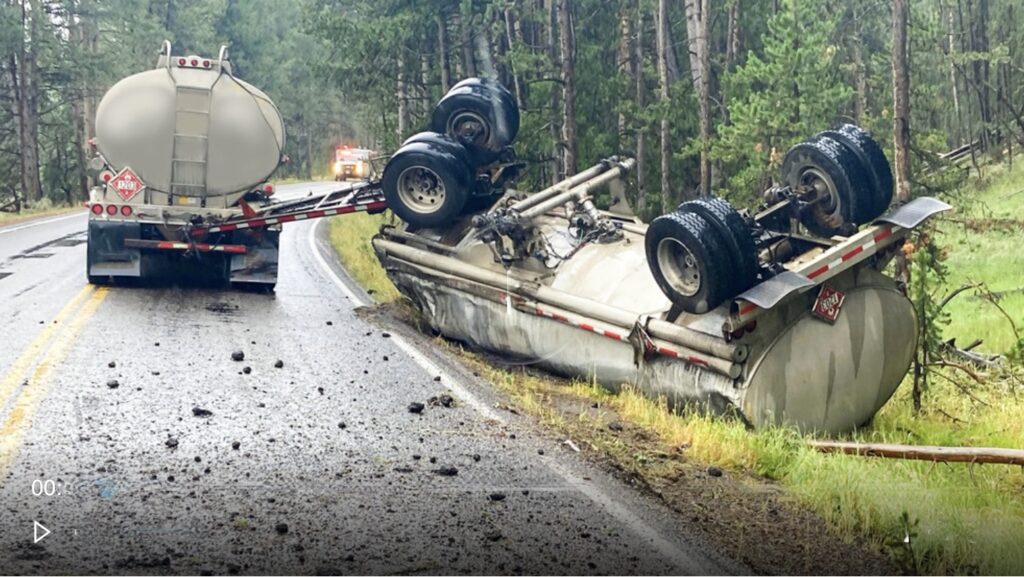
The maintenance of roads and roadsides also introduces a variety of pollutants into roadside ecosystems. Americans like their roads free of ice and dust, and their roadsides free of weeds. The effects of herbicides on wildlife and ecosystems have been poorly studied, but anyone who has witnessed the destruction of wild flowers and other plants along roadsides (even through parks) for the sake of tidiness has cause to complain.
Highway de-icing programs are notorious sources of saline pollution. In the early 1970s, it was estimated that 9 to 10 million tons of sodium chloride, 11 million tons of abrasives, and 30,000 tons of calcium chloride were used in the US each year for highway de-icing. That’s 50 years ago. As noted above, many animals are attracted to this salt and end up as roadkills or at least get a dose of the salt’s toxic additives, including cyanide compounds. Drainage of salt-laden water from roads into aquatic ecosystems may stimulate growth of blue-green algae; the chloride concentration of major water bodies near urban areas has been found to increase by as much as 500 percent. Furthermore, sodium and calcium ion exchange with mercury releases toxic mercury into these Systems. The cyanide ions from rust-inhibiting additives are extremely toxic to fish.
In many rural areas, waste oil from crankcases were sprayed onto unpaved roads for dust control. A 1974 study estimated that some 100 million gallons of waste oil are sprayed on dirt roads in the US each year. Only about 1 percent of this oil remains in the top inch of a road surface. Much of it reaches water bodies, where it coats the surface, limiting oxygen exchange and sunlight penetration and having toxic effects on aquatic organisms.
Impacts on Terrestrial Habitats
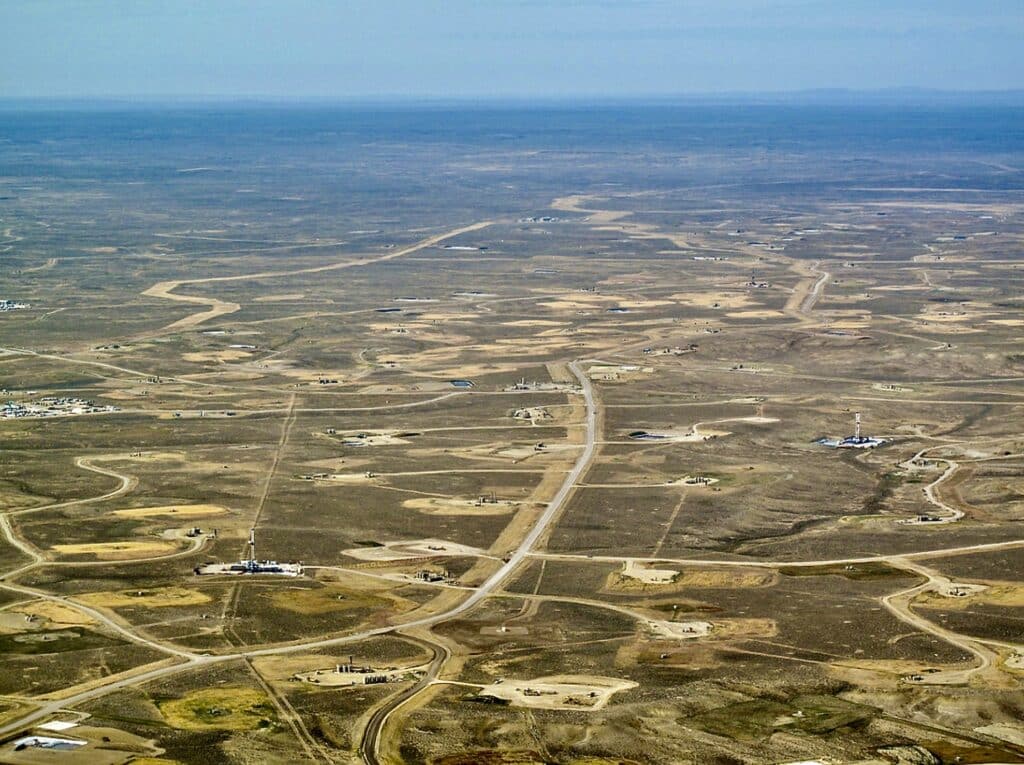
The impacts of roads on terrestrial ecosystems include direct habitat loss; facilitated invasion of weeds, pests, and pathogens, many of which are exotic (alien); and a variety of edge effects. Roads themselves essentially preempt wildlife habitat. A 1974 report by the Council on Environmental Quality estimated that one mile of interstate highway consumes up to 48 acres of habitat. Not calculated in that assessment was the volume of high quality habitat consumed by the spaghetti pattern of roads circuiting off of the interstates.There’s never been an effect wildlife bridge built across an extensive exurban subdivision that has replaced natural lands across square miles.
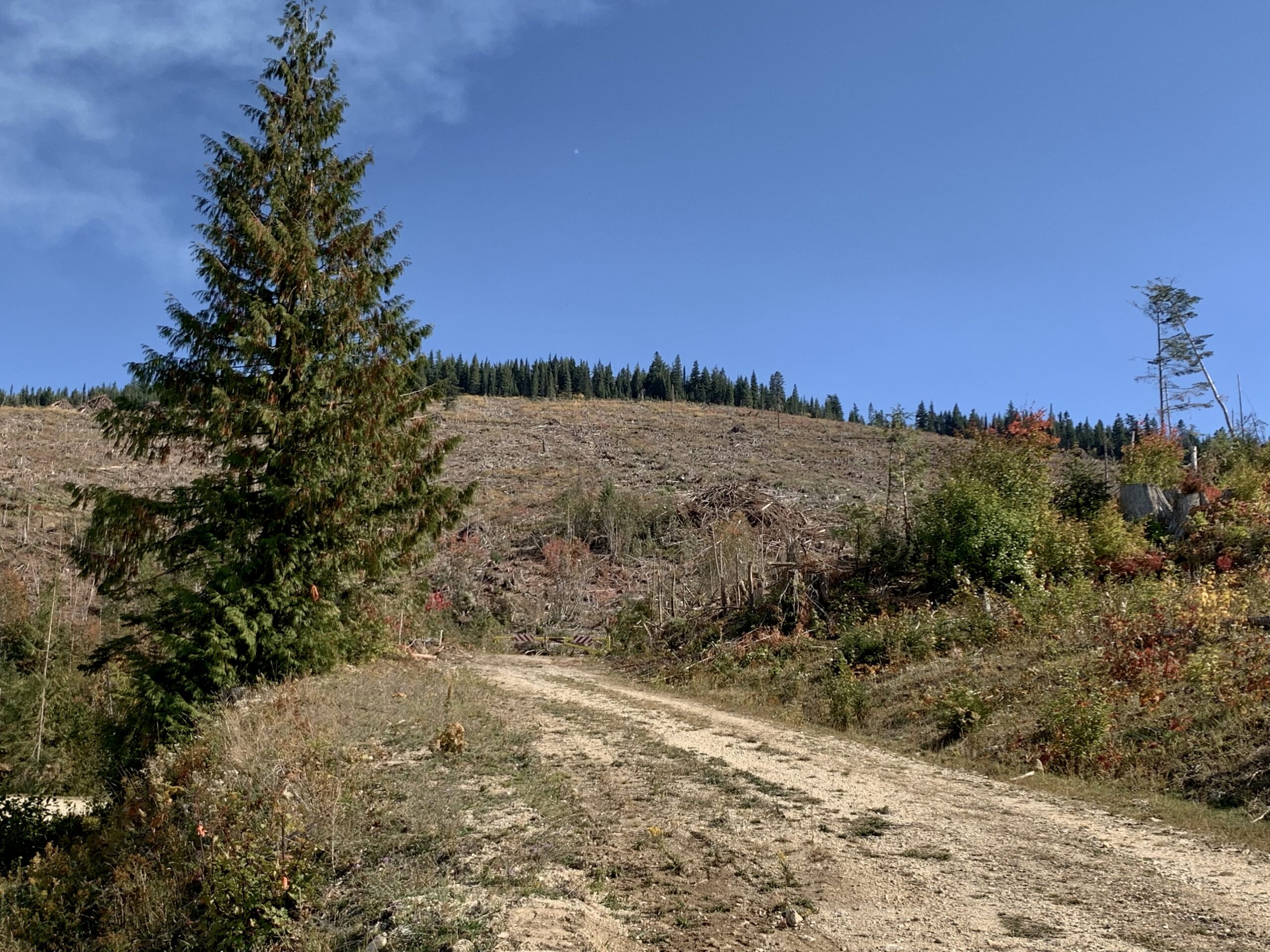
Logging roads on public lands result in the clearing of about 50 acres for each square mile of commercial forest (i.e., 10 acres are deforested for every mile of road, and each square mile of forest averages five miles of road). Road construction also kills animals and plants directly, and may limit long-term site productivity of roadsides by exposing low nutrient subsoils, reducing soil water holding capacity, and compacting surface materials. It also makes slopes more vulnerable to landslides and erosion, which in turn remove additional terrestrial wildlife habitat and degrade aquatic habitats.
A 1974 report by the Council on Environmental Quality estimated that one mile of interstate highway consumes up to 48 acres of habitat. Not calculated in that assessment was the volume of high quality habitat consumed by the spaghetti pattern of roads circuiting off of the interstates. There’s never been an effect wildlife bridge built across an extensive exurban subdivision that has replaced natural lands across square miles.
Some species thrive on roadsides, but most of these are weedy species. In the Great Basin, rabbit brush is usually more abundant and vigorous along hard-surfaced roads than anywhere else, because it takes advantage of the runoff water channelled to the shoulders, Although certainly attractive, the common rabbit brush species are in no danger of decline, as they invade disturbed areas such as abandoned farmsteads and fence rows, and are considered an indicator of overgrazing. In the Mojave Desert, Creosote Bush is another abundant species that opportunistically exploits the increased moisture levels along roadsides.
Many of the weedy plants that dominate and disperse along roadsides are exotics. In some cases, these species spread from roadsides into adjacent native communities.In much of the west, Spotted Knapweed has become a serious agricultural pest. This Eurasian weed invades native communities from roadsides, as does the noxious Tansy Ragwort. In Florida, a state plagued by exotic plants, one of the biggest offenders is Brazilian Pepper. This tall, fast-growing shrub readily colonises roadside habitats. When soil in adjacent native habitats is disturbed by off-road vehicles, Brazilian Pepper invades. Invasion by Brazilian Pepper and other roadside exotics is becoming a serious problem in the Atlantic coastal scrubs of south Florida, communities endemic to Florida and containing many rare species. Another invasive exotic, Melaleuca, is expanding from roadsides and dominating south Florida wetlands. In southwest Oregon and northwest California, an apparently introduced root-rot fungus is spreading from logging roads and eliminating populations of the endemic Port Orford Cedar.
The same as industrial agriculture through its focus on monoculture has resulted in dramatic loss of plant and animal diversity, invasives can alter pollination and the frequency of fire, the nutrition and composition of native species, and landscape resiliency. Roads can become the first point of entry for plants that in a few decades could leave backcountry areas with plants that were never there for the last 12,000 years.
On the upside, opportunistic animal species also may benefit from roads. Grassland rodents, for example, sometimes extend their ranges by dispersing along highway verges. In 1941, L.M. Huey documented a range extension of pocket gophers along a new road in the arid Southwest. Meadow voles have been found to colonise new areas by dispersing along the grassy rights-of-way (ROWs) of interstate highways.
Roads also facilitate dispersal of prairie dogs. In 1983, Adams and Geis reported that more species of rodents may be found in highway ROWs than in adjacent habitats, though several species avoid ROW habitat. Birds associated with grassland or edge habitat, such as the European Starling, Brewer’s and Red-winged Blackbirds, Brown-headed Cowbird, Indigo Bunting, White-throated Sparrow, Song Sparrow, and Killdeer, all have been found to increase in abundance near roads. Cliff and Barn Swallows, Starlings, House Sparrows, and Rock Doves (the latter three are exotic species in North America) often nest and roost in highway bridges. Many species of birds and mammals feed on roadkill carrion.
Some people claim that increases in grassland, edge, and other opportunistic species near roads constitute a benefit of roads. But increased density near roads may not be favorable for the animals involved, if the road exposes them to higher mortality from heavy metal poisoning or collision with vehicles. In this sense, a road can be an “ecological trap” and a “mortality sink” for animal populations. Furthermore, the species that may benefit from roads are primarily those that tolerate or even thrive on human disturbance of natural landscapes, and therefore do not need attention from conservationists (except occasional control). Many of these weedy species are exotic, and have detrimental effects on native species.
Edge effects, once considered favorable for wildlife because many game species (e.g., White-tailed Deer, Eastern Cottontail, Northern Bobwhite) are edge-adapted, are now seen as one of the most harmful consequences of habitat fragmentation. Especially when it cuts through an intact forest, a road introduces a long swath of edge habitat. Forest edge is not a line, but rather a zone of influence that varies in width depending on what is measured. Changes in microclimate, increased blowdowns, and other impacts on vegetation may extend two to three tree-heights into a closed-canopy forest. Shade-intolerant plants, many of them exotic weeds, colonise the edge and gradually invade openings in the forest interior. Dan Janzen found weedy plant species invading treefall gaps in a Costa Rican forest up to 5 kilometers from the forest edge. Changes in vegetation structure and composition from edge effects can be more persistent than effects of clearcutting, from which at least some forest types will eventually recover, if left alone.
The Brown-headed Cowbird, originally abundant in the Great Plains but now throughout most of North America because of forest fragmentation, is known to penetrate forests at least 200 meters from edge. The cowbird is a brood parasite that lays its eggs in the nests of other bird species and can significantly reduce the reproductive success of its hosts. Forest birds, most of which did not evolve with the cowbird and are not well adapted to its parasitism, may show serious declines in areas where cowbirds have become common. In addition, many opportunistic nest predators, such as jays, crows, Raccoons, and Opossums, are common in roadside environments (partially because of supplemental food in the form of carrion) and often concentrate their predatory activities near edges. Increases in nest predation from these opportunists can extend up to 600 meters from an edge) as shown by David Wilcove using artificial nest experiments.
A narrow logging road with no maintained verge would not be expected to generate substantial edge effects, particularly if surrounded by a tall forest canopy. In this sense, the road would not differ much from hiking trail (even trails create some edge effects, however, such as invasion of weedy plants caused by pant-legs dispersal). As forest roads are “improved,” road clearance increases and allows more penetration of sunlight and wind. Edge species are then attracted to these openings. Two-lane roads with maintained rights-of-way and all interstate highways are lined by edge habitat. A forest criss-crossed by improved roads may be largely edge habitat, and its value for conservation of native flora and fauna diminished accordingly.
Impacts on Hydrology and Aquatic Habitats
Road construction alters the hydrology of watersheds through changes in water quantity and quality, stream channel morphology, and ground water levels. Paved roads increase the amount of impervious surface in a watershed, resulting in substantial increases in peak runoff and storm discharges. That usually means flooding downstream. Reduced evapo-transpiration within road rights-of-way may also result in increased runoff and streamflows. However, increases in streamflows in forested watersheds are not usually significant unless 15% or more of the forest cover is removed by road construction and associated activities such as logging.
When a road bed is raised above the surrounding land surface, as is normally the case, it will act as a dam and alter surface sheet flow patterns, restricting the amount of water reaching downstream areas. Mike Duever and co-workers found this to be a significant problem in the Big Cypress Everglades ecosystem of South Florida. Ditches dug for road drainage often drain adjacent wetlands as well. The US Fish and Wildlife Service, in 1962, estimated that 99,292 acres of wetlands in western Minnesota had been drained as a result of highway construction. This drainage occurred at a rate of 2.33, 2.62, and 4.10 acres of wetland per mile of road for state and federal, county, and township highways, respectively.
Researchers found that erosion from logging roads in Idaho was 220 times greater than erosion from undisturbed sites. Much of the sedimentation associated with roads occurs during mass movements (i.e., landslides) rather than chronic surface erosion. Roads dramatically increase the frequency of landslides and debris flows. Studies in Oregon have found that roads trigger up to 130 times more debris torrents than intact forest.
Roads concentrate surface water flows, which in turn increases erosion. Megahan and Kidd, in 1972, found that erosion from logging roads in Idaho was 220 times greater than erosion from undisturbed sites. Logging roads used by more than 16 trucks per day may produce 130 times more sediment than do roads used only by passenger cars. Incision of a slope by roadcuts in mountainous areas may intercept subsurface flow zones, converting subsurface flow to surface flow and increasing streamflow rates. Water tables are almost always lowered in the vicinity of a road.
Where a road crosses a stream, engineers usually divert, channelise, or otherwise alter the stream. Culverts and bridges alter flow patterns and can restrict a passage of fish. Channelization removes natural diverse substrate materials, increases sediment loads, creates a shifting bed load inimical to bottom-dwelling organisms, simplifies current patterns, lowers the stream channel and drains adjacent wetlands, reduces the stability of banks, and exacerbates downstream flooding.
The impacts of roads on fish and fisheries have long concerned biologists. Increased erosion of terrestrial surfaces almost inevitably results in increased sedimentation of streams and other water bodies. Even the best designed roads produce sediment, and unpaved roads continue to produce sediment for as long as they remain unvegetated. A divided highway requiring exposure of 10 to 35 acres per mile during construction produces as much as 3000 tons of sediment per mile.
In a study of the Scott Run Basin in Virginia, Guy and Ferguson found that highway construction contributed 85% of the sediment within the basin. The yield was 10 times that normally expected from cultivated land, 200 times that from grasslands, and 2000 times that from forest land. Studies in northwestern California show that about 40% of total sediment is derived from roads and 60 percent from logged areas. Much of the sedimentation associated with roads occurs during mass movements (i.e., landslides) rather than chronic surface erosion. Roads dramatically increase the frequency of landslides and debris flows. Studies in Oregon have found that roads trigger up to 130 times more debris torrents than intact forest.
Increased sediment loads in streams have been implicated in fish declines in many areas. A 1959 study on a Montana stream, reported by Leedy in 1975, found a 94% reduction in numbers and weight in large game fish due to sedimentation from roads. Salmonids are especially vulnerable to sedimentation because they lay their eggs in gravel and small rubble with water flow sufficient to maintain oxygen supply. Fine sediments may cement spawning gravels, impeding the construction of redds. Increases in fine sediments also reduce the availability of oxygen to eggs and increase embryo mortality. Stowell and co-workers reported that deposition of 25% fine sediments in spawning rubble or gravel reduces fry emergence by 50%. Sedimentation also has negative effects on the invertebrate food supply of many fish. Furthermore, destruction of riparian vegetation by road construction results in higher water temperatures, which reduces dissolved oxygen concentrations and increases fish oxygen demands (a “double whammy”). If the fishing public was adequately informed of the negative effects of roads on fisheries, perhaps all but the laziest would demand that most roads on public lands be closed and revegetated!
Indirect Effects
Access
Roads appease calls for increased access but does any resident wildlife species accrue benefits by having more people descend on areas that previously were secluded. Do hunters, anglers, solitude-seeking hikers who try to be sensitive in moving through the backcountry enjoy having more people motoring into places that took effort to reach away from the crowds? People may come and go but wildlife must endure more intrusion every day until human presence surpasses their level of tolerance. This is another consequence of roads.
The most insidious of all effects of roads is the access they provide to humans and their tools of destruction. Let’s face it, the vast majority of humans do not know how to behave in natural environments. Fearful of experiencing Nature on its own terms, they bring along their chainsaws, ATVs, guns, dogs and heavy metal blasters. They harrass virtually every creature they meet, and leave their mark on every place they visit. The more inaccessible we can keep our remaining wild areas to these cretins, the safer and healthier these areas will be. Those humans who respect the land are willing to walk long distances. If this is an “elitist” attitude, so be it; the health of the land demands restrictions on human access and behaviour.
Many animal species decline with increasing road density precisely because roads bring humans with guns. Backcountry areas becoming shooting and sometimes poaching ranges. For many large mammals, road aversion is not related to any intrinsic qualities of the road, but rather to their learned association of roads with danger. In other cases, mammals may continue to use roads because they provide convenient travelways or food supply, but are unable to maintain populations where road densities are high because of the mortality they suffer from legal or illegal hunting, roadkill or human pressure that results in permanent displacement.
An historical study by Richard Thiel in northern Wisconsin, supplemented by modern radio-telemetry, showed that road density was the best predictor of Gray Wolf habitat suitability. As road density increased in the study area, the Wolf population declined. Wolves failed to survive when road densities exceeded .93 mile per square mile (.58 km per square km). Similar studies in Michigan and Ontario by Jensen and co-workers, and in Minnesota by L. David Mech and co-workers, found a virtually identical threshold level for the occurrence of Wolves.
Roads themselves do not deter Wolves. In fact, Wolves often use roads for easy travel or to prey on the edge-adapted White-tailed Deer. But roads provide access to people who shoot, snare, trap, or otherwise harass wolves. Mech found that over half of all known Wolf mortality was caused by humans, despite their “protection” of the Endangered Species Act.
Many other large mammal species have been found to decline with increasing road access. The Florida Panther once ranged throughout the Southeast, from South Carolina through southern Tennessee into Arkansas, Louisiana and extreme eastern Texas. It is now restricted to south Florida, an area of poor deer and marginal Panther habitat, but the last large roadless area available in its range.
A few decades ago, Seminole Chief James Billie shot a Panther with a shotgun from his pickup truck in the Big Cypress Swamp, ate it, and claimed this killing was a native religious ritual. Billie eventually won his case, not on religious grounds, but because taxonomists could not prove beyond all reasonable doubt that the skull found in Billie’s possession was that of a Florida Panther, Felis concolor subspecies coryi (the various subspecies of Cougar differ little from one another in morphology).
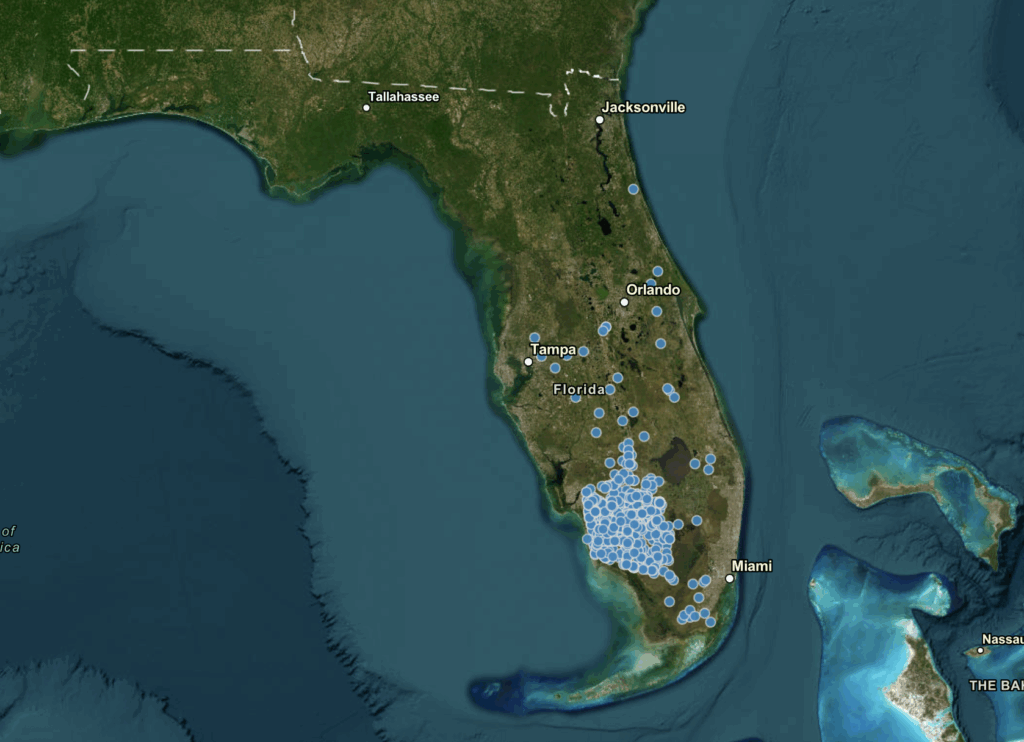
Biologists agree that the only longterm hope for the Panther is reestablishment of populations elsewhere within its historic range. But is there anywhere with low enough road density to be safe? Decades ago, the best opportunities seemed to be the 1.2 million acres in and around Okefenokee National Wildlife Refuge in southern Georgia and Osceola National Forest in north Florida, recently connected by purchase of Pinhook Swamp and its transfer to the Forest Service.
Here, I need to mention some good news, that didn’t exist when I originally wrote this analysis. Florida today has more wildlife overpasses and underpasses than any other state or Canadian province. It has made an investment in connectivity which is widely supported by a public that values nature. The Panther population has grown and reproduction is outpacing mortality because more cats are able to access what remains of unfragmented habitat that previously was beyond reach largely to roads. This is, in a way, hopeful, and it has implications for re-wilding efforts in other regions like Europe with Eurasian lynx, bears and wolves.
However, Florida’s human built environment continues to bulge, encircling protected areas. Panthers have been showing up in the outskirts of Fort Meyers and Naples. Their outward expansion is being met by more people and settlements driven by roads coming from the other direction. In the collision of humans and wildlife, wildlife never wins. With scattershot exurban sprawl moving through the mountain valleys of Greater Yellowstone, filling up the crucial interstitial spaces of habitat on private land, located between public land, the challenges in Florida should be viewed as a prelude. And let it be known that there to limits to what human engineering can do, i.e. wildlife overpasses and underpasses, in addressing the larger issue of habitat loss.
Indeed, in addition to Florida Panthers, other prominent large mammals that suffer from road access include Cougars and Grizzly Bears. A radio-telemetry study in Arizona and Utah, by Van Dyke and co-workers, found that Cougars avoided roads (especially paved and improved dirt roads) whenever possible, and established home ranges in areas with the lowest road densities. This observation was also made by the late scientist Dr. David J. Mattson, who studied cougars around Flagstaff but who is best known for his renowned analysis of Grizzly Bear behavior in Greater Yellowstone.
In southeastern British Columbia, McLellan and Mace found that a disproportionate amount of Grizzly Bear mortality occurred near roads. Of 11 known deaths, seven bears were definitely shot and another three were probably shot from roads. Dood and co-workers found that 32 percent of all hunting mortality and 48 percent of all non-hunting mortality of Grizzlies in Montana occurred within one mile of a road. Knick and Kasworm found that illegal shooting was the primary cause of death for Grizzlies in the Selkirk and Cabinet-Yaak ecosystems where there is still fear the population could disappear, and concluded that the ability of regions to maintain viable populations of Grizzly Bears is related to road density and human access.
In southeastern British Columbia, McLellan and Mace found that a disproportionate amount of Grizzly Bear mortality occurred near roads. Of 11 known deaths, seven bears were definitely shot and another three were probably shot from roads. Dood and co-workers found that 32 percent of all hunting mortality and 48 percent of all non-hunting mortality of Grizzlies in Montana occurred within one mile of a road. Knick and Kasworm recently found that illegal shooting was the primary cause of death for Grizzlies in the Selkirk and Cabinet-Yaak ecosystems, and concluded that the ability of regions to maintain viable populations of Grizzly Bears is related to road density and human access.
Road access imperils Black Bears, too. In the Southern Appalachians, Mike Pelton estimated that bears cannot maintain viable populations when road density exceeds .8 miles of road per square mile. Later studies found that the situation is more complicated, and is related to traffic volume and other road use factors. The primary effect of roads on bears in the Southern Appalachians is to expose them to increased hunting and habituation to human foods. When I wrote this piece, hunting with the aid of trained hounds was the major source of mortality for bears in this region, including within national parks and other sanctuaries. In the West, more liberal hunting regulations allowing houndsmen to pursue Black Bears in states where it was previously outlawed, is certain to result in Grizzlies being killed through mistaken identity, former National Grizzly Bear Recovery Coordinator Servheen says. He also believes that putting more roads in the backcountry will markedly impair habitat security for Grizzlies and it could result in more hounding of wildlife and trapping pressure aimed at Wolves that could result in more unintended killing of Wolverines, Lynx and Grizzlies via snares and traps.
The problem of road access and overhunting is often attributed to inadequacies of human ethics and law enforcement, rather than to any effect of the roads themselves. But as Richard Thiel pointed out, in discussing the Grey Wolf in northern Wisconsin, “Ultimately, the survival of wolves will depend on a change in human attitudes. Until then road densities are important in determining whether an area can sustain a viable population of wolves.” We may have to wait a long time before attitudes toward Nature improve, but roads can be closed today or prevented from being built at all.
Other consequences of road access include over collecting of rare plants (e.g., cacti, orchids, and ginseng) and animals (e.g., snakes for the pet trade), the removal of snags near roadsides by firewood cutters, and increased frequency of fire ignitions. Removal of snags eliminates habitat for the many cavity-nesting and roosting birds and mammals. In the Blue Mountains of eastern Oregon and Washington, for example, 39 bird and 23 mammal species use snags for nesting or shelter. Woodpeckers are among the cavity-nesting birds known to be critically important in dampening forest insect outbreak. Thus, snag removal along roadsides is an anthropogenic edge effect that may have far-reaching effects on entire ecosystems.
The Connection Between Roads and Fires
The arguments being advanced by the Trump Administration and associated politicians is that punching roads into roadless lands, which often are not near any major human settlements, is necessary to thin forests and control wildlife. More access to public lands is likely to spur more human settlement in nearby wildland urban interfaces [WUI] on private land, which will make the wildfire threat greater. But beside that point, those promoting the rescinding of the Roadless Rule are again ignoring scientific evidence.
Humans are suspected to cause at least 90 percent of wildfires in the US, over half of which begin along roads. In 1941, Shaw and co-workers reported 78 percent of all anthropogenic fires occurred within 265 feet of a road. In New Jersey, the origins of 75 percent of all forest fires were traced to roadsides. Although fire is a natural process with beneficial effects on many ecosystems, natural fires and anthropogenic fires differ in many ways. One important difference is frequency; anthropogenic fires may occur more frequently than the natural fire return interval for a given ecosystem type. Another important difference is seasonality.
Humans are suspected to cause at least 90 percent of wildfires in the US, over half of which begin along roads. In 1941, Shaw and co-workers reported 78 percent of all anthropogenic fires occurred within 265 feet of a road. In New Jersey, the origins of 75 percent of all forest fires were traced to roadsides.
In Florida, for example, most anthropogenic fires occur in winter, whereas natural lightning fires occur in late spring and summer. Research in longleaf Pine-Wiregrass communities, which under natural conditions experience low-intensity ground fires at two to five- year intervals, has determined that summer fires promote higher herbaceous plant diversity and flowering. Winter fires caused by humans tend to promote monotonous, shrub-dominated (eg. saw palmetto) communities. It is a curious contradiction that the US Forest Service often justifies high road densities as necessary to provide fire control, when again, in fact, most fires begin along roads.
It is a curious contradiction that the US Forest Service often justifies high road densities as necessary to provide fire control, when again, in fact, most fires begin along roads.
Of the disturbances promoted by road access, perhaps the most devastating is development. Highways introduce pressures for commercial development of nearby land. Highway interchanges inevitably become nodes of ugly commercialism. Arterial streets encourage commercial strip development, and new rural and suburban roads bring in commercial, industrial, and residential development. Internationally funded road-building in Third World countries introduces hordes of immigrants, who quickly cut and burn the native forest. In Brazilian Amazonia, Philip Fearnside reported that road development funded by the World Bank facilitates the entry of settlers whose land claims (established by clearing the forest) justify building more roads. Thus, roads and deforestation interact in a positive feedback relationship. Roads bring settlement and development, which in turn call for more roads.
Cumulative Effects
Everything adds up in assessing direct and seemingly indirect effects of roads. So far, this article has discussed effects of roads mostly in isolation from one another. Indeed, almost all research on road problems has looked at one factor at a time, be it roadkill, edge effects, or access. In real ecosystems, however, these factors interact in complex ways, with long-term effects at several levels of biological organisation.
To illustrate the complexity of possible impacts, consider this scenario: A network of roads is built into prime Grey Wolf habitat in northern hardwoods forest. Hunters flock into the area, depressing the Wolf population. Some Wolves are killed by vehicles. Eventually, the Wolf becomes extinct in this region. In the absence of Wolf predation, and with the abundance of brushy roadside edge habitat, the White-tailed Deer population explodes. Fires started by humans along roadsides create even more deer habitat. Hunters and vehicles take some deer, but they cannot keep up. The burgeoning deer population overbrowses the forest eliminating regeneration of favoured Eastern Hemlock, Arbor Vitae, Canada Yew, and a number of rare herbaceous plants.
As a result, the floristic composition and vegetation structure of the forest gradually change. With reduced understory density due to heavy browsing, many warblers and other forest songbirds undergo serious declines. With Wolves gone, opportunistic medium-sized mammals (“mesopredators”) such as Opossums and Raccoons increase in abundance and feed on the eggs and nestlings of songbirds, many of which nest on or near the ground, further depressing their numbers. Brown-headed Cowbirds parasitise these beleaguered songbirds within 200 meters or so of road edges. Cutting of snags for firewood along the roadsides decimates cavity-nesting bird populations. Populations of insect pests now cycle with greater amplitude, resulting in massive defoliation. The roads also bring in developers, who create new residential complexes, and still more roads. Roadside pollutants from increased traffic levels poison the food chain. The original forest ecosystem has been irretrievably destroyed.
This scenario is fictitious, but every part of it has been documented somewhere. Because many of the animal species most sensitive to roads are large predators, we can expect a cascade of secondary extinctions when these species are eliminated or greatly reduced. Recent research confirms that top predators are often “keystone species”, upon which the diversity of a large part of the community depends.
When top predators are eliminated, such as through roadkill or because of increased access to hunters, opportunistic mesopredators increase in abundance, leading to declines of many songbirds and ground-dwelling reptiles and amphibians. In the tropics, predator removal can lead to an increased abundance of mammals that eat large-seeded plants, which in turn may result in changes in plant community composition and diversity (see scientist John Terborgh’s article, “The Big Things that Run the World—A Sequel to E.O. Wilson“).
Other keystone species may be similarly vulnerable to roads. The Gopher Tortoise of the southeastern US, for example, digs burrows up to 30 feet long and 15 feet deep. By a recent count, 362 species of commensal invertebrates and vertebrates have been found in its burrows, and many of them can live nowhere else. Yet, the slow-moving Gopher Tortoise is extremely vulnerable to roadkill on the busy highways of this high growth region. Roads also provide access to developers and poachers, the tortoise’s biggest enemies. But the effects of roads on Gopher Tortoises can be more subtle. Good Gopher Tortoise habitat is longleaf Pine-Wiregrass, which requires frequent summer fires to maintain its open structure. Although, as discussed above, many fires are ignited along roadsides, the net effect of roads on this habitat has been to stop the spread of fires that once covered areas the size of several counties. Those roadside fires that do ignite are mostly winter burns, which are less effective in controlling shrub invasion. As shrubs, oaks, and other hardwoods overtake this ecosystem, they shade out the herbaceous plants upon which the herbivorous Gopher Tortoise depends.
The net, cumulative effect of roads is to diminish the native diversity of ecosystems everywhere. Habitats in many different places around the would are invaded by virtually the same set of cosmopolitan weeds. Regions gradually are homogenised – they lose their “character”. Every place of similar climate begins to look the same and most ecosystems are incomplete and missing the apex of the food chain. The end result is an impoverishment of global biodiversity.
What Can Be Done
Mitigation?
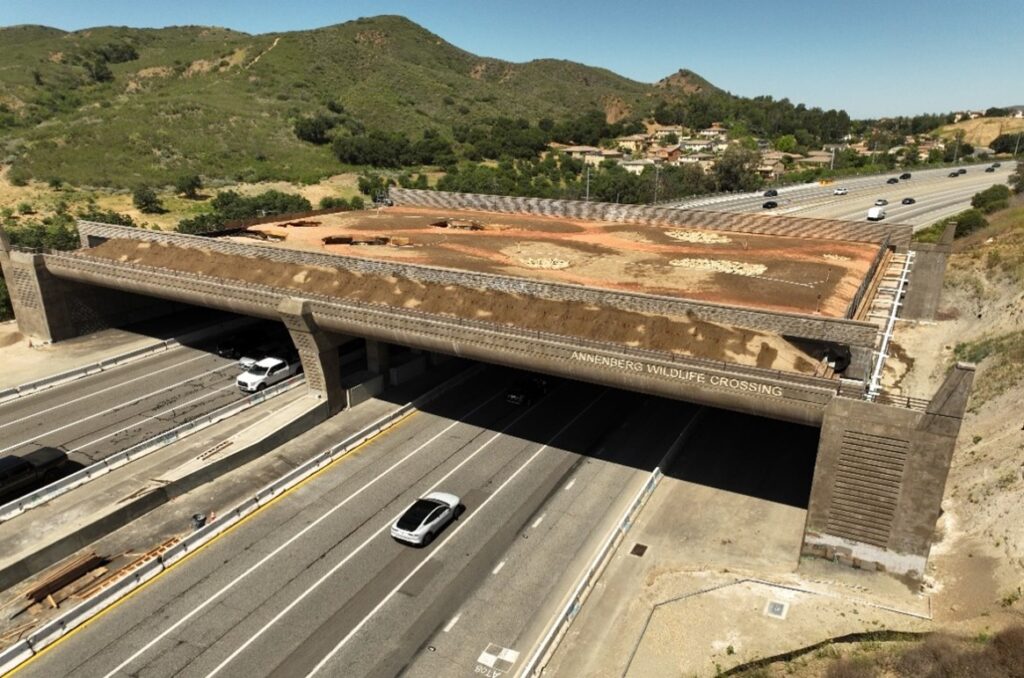
The traditional response of public agencies to road-wildlife conflicts, in those rare instances when they do respond, is “mitigation,” i.e., build the road but design it so as to minimise its impacts. Or, in recent years, build expensive wildlife crossings over or under roads. Indeed, they can reduce human and animal deaths and save millions of dollars by preventing property damage. But roads bring many consequences that cannot be mitigated by wildlife bridges and indeed for wildlife crossings is often an expression or poor land use planning.
As for various other kinds of mitigation, barren roadsides can be planted and stabilised by wire netting in order to reduce erosion, landslides, and sedimentation of streams. Stream culverts can be designed to minimise disruption of flow and bed morphology. New roads can be located, and existing roads relocated, outside of critical wildlife habitats (such as moist meadows, shrub fields, riparian zones, and other Grizzly Bear feeding areas). Speed bumps and warning signs can be installed to slow down motorists and reduce roadkill. Reflective mirrors along roadsides and hood-mounted ultrasonic whistles are devices intended to warn animals of approaching death-machines, but are still of unproven benefit.
Road rights-of-way (ROWs) can be managed to maximise their potential as native wildlife habitat and dispersal corridors. If wide swaths of old-growth longleaf Pines are maintained along highway ROWs in the Southeast for example, they may serve to connect isolated Red-cockaded Woodpecker populations. Such corridors were recommended by a committee of the American Ornithologists’ Union. Some evdence suggests that Red-cockaded Woodpeckers may indeed disperse along such corridors, but not across long expanses of unsuitable habitat. The management of”roadside verges” for fauna and flora has a long history in Britain, as reviewed by J.M.Way in 1977.
Undoubtedly, mitigation measures, if implemented intelligently, can reduce the harmful effects of roads on wildlife. A 1982 report by Leedy and Adams, for the US Department of Transportation and Fish and Wildlife Service, summarises a variety of design and construction options to mitigate the effects of roads. For reducing roadkiIIs, a combination of fencing and underpasses has proven effective in many instances. Tunnels under roads were used as early as 1958 in the United Kingdom to reduce roadkill of badgers and have been used in several countries to reduce roadkill of amphibians (many frogs toads, and salamanders migrate to their breeding ponds on wet spring nights).
Toad tunnels were constructed as early as 1969 in Switzerland, and have been built throughout much of the United Kingdom, West Germany, the Netherlands, and other countries under the auspices of the Fauna and Flora Preservation Society and Herpetofauna Consultants international. A private firm, ACO Polymer products Limited even specialises in the design and production of amphibian tunnel and fencing systems.
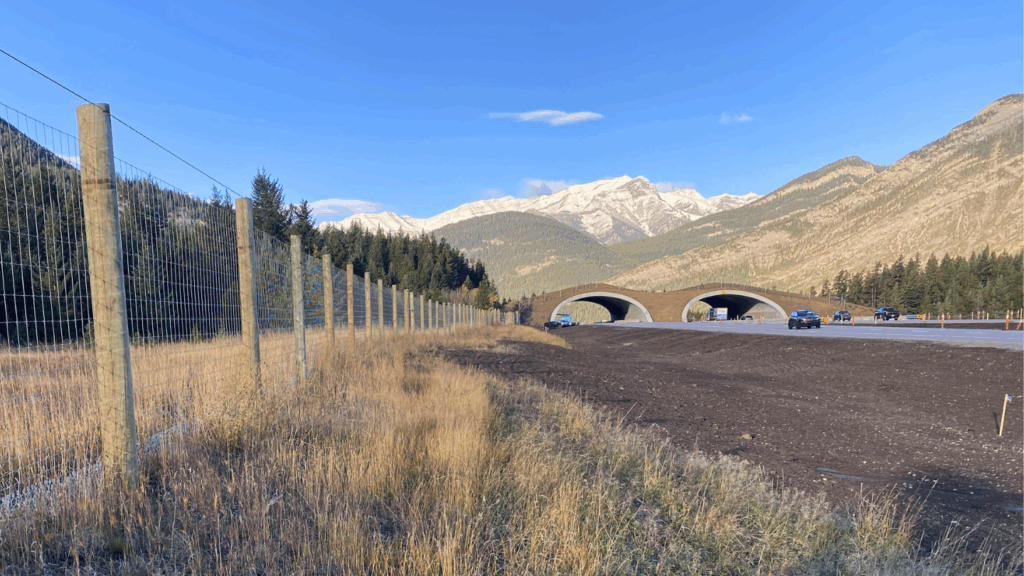
In Colorado, underpasses and deer-proof fencing were constructed on I-70 to channel movement of Mule Deer along a major migratory route, and have proved successful. Wildlife bridges have helped elk and dramatically reduced vehicle-wildlife collisions on places where they’ve been built. D.F. Reed and co-workers found that many individual deer were reluctant to use a narrow underpass (three meters wide and high, and 30 meters long), and recommended that underpasses be significantly wider. Thanks to science-driven organizations like the Center for Large Landscape Conservation, based in Bozeman, the engineering of overpasses and underpasses that accommodate a wide range of species is improving all the time
Biologists in various Western states are experimenting with one-way gates that keep most deer off the highway but allow deer that get into the highway ROW to escape. However, in order to be effective, wildlife bridges often be accompanied by fencing flanking highways that help steer wildlife toward the crossing structure which creates pinch points and, in their own way, disruptions to animal movement.
In southeastern Austialia, Mansergh and Scott constructed a funnel-shaped rocky corridor and two tunnels of .9 X 1.2 meters each beneath a road that bisected the breeding area of the rare Mountain Pygmy-possum (the only marsupial hibernator known). The design proved very successful in restoring natural movement and breeding behaviour of the Pygmy-possums.
Overpasses and underpasses are costly to construct. There are limited resources. And arguably, their effectiveness is minimized by habitat loss on both sides of roadways. If one side of a road has protected habitat and another is covered by sprawl, or begins as natural lands when the structure is built and then turns to sprawl, they become bridges to nowhere. In southwest Montana, where a wildlife bridge has been proposed in the outskirts of Big Sky, there is a belief among some developers that they can continue to build with impunity, and negatively affect habitat, so long as an expensive multi-million-dollar wildlife crossing structure is put in place nearby over US Highway 191. This defies logic.
Greater Yellowstone doesn’t need to become like Florida but it doesn’t take a road grid and human population size like Florida’s to re-create problems like those befalling the nature-challenged Front Range of Colorado and the increasingly crowded mountain valleys around ski towns where all different kinds of roads have caused fragmentation that can never be undone.
The Real Preferred Alternative
In evaluating various mitigation options for road-wildlife problems, it must be remembered that each is a compromise, addresses only a subset of the multiple ecological impacts of roads, and is far less satisfactory than outright road closure and obliteration. The serious conservationist recognises that mitigation options should be applied only to roads already constructed, and which will be difficult to close in the near future (i.e., major highways). In such cases, construction of viaducts over important wildlife movement corridors (as documented by roadkills) and other critical natural areas should be vigorously pursued. Amphibian tunnels and other smaller underpasses also should be constructed where needed. But the bottom line is that no new roads should be built, and many secondary roads on remote public lands should be closed and obliterated. This is the preferred alternative and it is the only way to offset the ongoing perpetual loss of finite wild country.
A priority system for determining which roads should be closed first is necessary to guide conservation actions toward the most deserving targets. The Grizzly Bear Compendium specifies which kinds of roads should be closed on public lands to protect Grizzlies: Access roads should be closed after harvesting and restocking, temporary roads and landings should be obliterated, collector roads and loop roads should be closed in most instances, local roads should be closed within one season after use, and seismic trails and roads should be closed after operations have ceased.
Bear biologist Chuck Jonkel long recommended an aggressive road closure program on public lands. Public education on the rationale for closures, and strong law enforcement must accompany road closure programs if they are to be effective. Illegal invasion of backcountry by motorized and mountain bikers is an ongoing serious threat as it is and will only increase if more backcountry is opened up. Although it’s decades’ old, The Grizzly Bear Compendium shows how roads were a concern several decades ago because wildland areas were even swarmed by waves of new settlement on private land and industrial outdoor recreation pressure. The compendium recommended that road use restrictions, such as seasonal closures of roads in areas used only seasonally by bears, at the very least be placed on roads that cannot be permanently closed.
In a series of earlier publications, I recommended that large core areas of public lands be managed as roadless “wilderness recovery areas” and while I can’t take credit for it, this idea was the genesis that informed the Roadless Rule implemented in 2001. Buffer zones surrounding these core areas should also have limited access for recreation and other multiple-use” activities consistent with preservation of the core preserves. Buffer zones also would insulate the core areas from the intensive uses of the humanised landscape. These large preserve complexes would be connected by broad corridors of natural habitat to form a regional network. I write all of this, assuming that the public wants to have wildlife in the future in ecosystems like Greater Yellowstone and other areas of the Northern Rockies.
Humans are relentlessly pushing to take more even as they realize there is less and less wild county. As Keith Hammer has documented, road closures that appear on paper may not function as such on the ground. Keith found that 38 percent of the putative road closures on the Flathead National Forest in Montana would not bar passenger vehicles. The road miles behind the ineffective barriers represented 44 percent of the roads reported by the Forest Service as being closed to all motorised vehicles year-round. A similar strategy was adopted on the Caribou-Targhee National Forest in Idaho where logging roads were documented to have huge negative effects on Grizzly Bears and Elk migrations. Gates, earthen berms, and other structures are not usually effective in restricting road use. This is especially true in more open-structured habitats, such as Longleaf Pine in the Southeast and Ponderosa Pine forests in the Southwest, where motorists can easily drive around barriers. It may be that the only effective road closures are those where the road is “ripped” and revegetated.
“The serious conservationist recognises that mitigation options should be applied only to roads already constructed, and which will be difficult to close in the near future (i.e., major highways). In such cases, construction of viaducts over important wildlife movement corridors (as documented by roadkills) and other critical natural areas should be vigorously pursued… But the bottom line is that no new roads should be built, and most existing roads especially on public lands – should be closed and obliterated. This is the preferred alternative.“
The Forest Service and other public agencies will claim that road closures, revegetation, and other restorative measures are too expensive to be implemented on a broad scale. But much of hundreds of millions of taxpayer dollars that was squandered by the Forest Service on below-cost timber sales went to road-building. Road maintenance is also expensive. Money made available to blaze new roads into hard to reach roadless areas should instead be channelled into road closures, associated habitat restoration and construction of overpasses and underpasses.
This work would be labor-intensive, and providing income to the many laid off loggers, timber sale planners, and road engineers – for noble jobs, rather than jobs of destruction; likewise, the huge budgets of federal, state, and county highway departments could be directed to road closures and revegetation, as well as viaducts and bridges to minimize roadkill on roads kept open.
We cannot expect our public agencies to shift to a more enlightened roads policy without a fight and making persuasive arguments based on science. Perhaps a major catalyst could be much deserved pushback against the the US Department of Agriculture’s move to rescind the Forest Service Roadless Rule. It’s important to understand the motivations and vested interests of those pushing the abolition of the Roadless Rule and other laws that protect healthy ecosystems.
A lot of people make a lot of money designing and building roads, and exploiting the resources to which roads lead. One cannot expect a slothful, ignorant populace to give up what they see as the benefits of roads (fast transportation, easy access to recreational areas, scenery without a sweat, seeking glory on social media for Selfies taken in those areas, etc) for the sake of bears and toads. Education of the public, the politicians, and sometimes even our fellow environmentalists about the multiple and far-reaching impacts of roads, is critical. I hope that you, reader of Yellowstonian, have found this helpful. Let me repeat what I wrote in the first sentence: Nothing is more negatively consequential for the fate of a wild or natural landscape than the decision to build a road into it.
As Aldo Leopold noted, “recreational development is a job not of building roads into lovely country, but of building receptivity into the still unlovely human mind” The greatest near-term need is direct action in defence of existing roadless areas, and to close roads where they are causing the most problems for native biodiversity. Every road involves a human choice between protecting an irreplaceable natural place and doing something that is certain to harm it, like opening a wound that will never heal. No engineer can ever say he left a wild place in better condition that he found it—if part of his blueprint is designing roads to ruin.
Dr. Noss has been a member of the Board of Governors of the Society for Conservation Biology. He is also the science editor of Wild Earth and advisor to PAW NET and the Wildlands Project. Nothing is worse for sensitive wildlife than a road. Over the last few decades, studies in a variety of terrestrial and aquatic ecosystems have demonstrated that many of the most pervasive threats to biological diversity – habitat destruction and fragmentation, edge effects, exotic species invasions, pollution, and overhunting – are aggravated by roads. Roads have been implicated as mortality sinks for animals ranging from snake to wolves, as displacement factors affecting animal distribution and movement patterns, as population fragmenting factors, as sources of sediments that clog streams and destroy fisheries, as sources of deleterious edge effects, and as access corridors that encourage development, logging and poaching of rare plants and animals. Road-building in national forests and other public lands threatens the existence of de facto wilderness and species that depend on wilderness-caliber habitat.
For Further Reading: