They Wanted More Realness In A World Full Of Artifice, So They Started Raising Bison
The story of first-generation ranchers Matt and Sarah Skoglund, as advocates for nature— and their kids' future—ranks among the most inspirational of any you’ve heard about life-changing reinvention in the modern American West
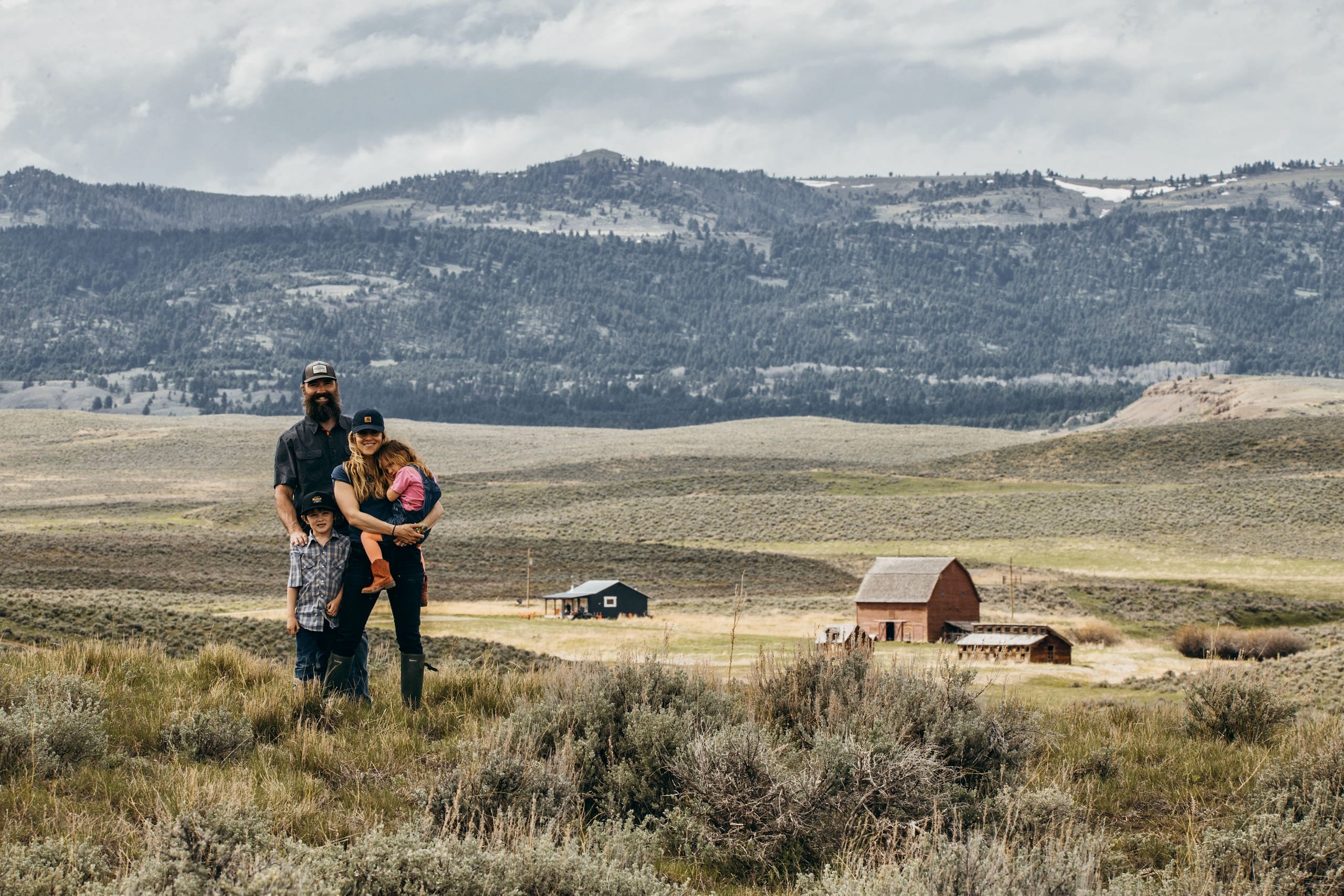
The Skoglund family on their protected land in the North Bridgers/Shields Valley where they raise bison and use them as ecological allies to achieve preservation of biodiversity. Photo courtesy Skoglund family
by Todd Wilkinson
A long time ago, or what seems like it, I met Matt Skoglund when he was an environmental attorney working for the Natural Resources Defense Council, a conservation organization, oversing its Northern Rockies office in downtown Bozeman, Montana. He and his wife, Sarah, had moved out West from Chicago. I interviewed Skoglund for newspaper and magazine stories I wrote, and often our conversations would drift into chats about playing our love of playing hockey, hunting and the gruesome plight of Yellowstone bison moving out of the world’s first national park into Montana.
Skoglund had a special place in his heart for bison.
As a couple, the Skoglunds struck me as those kinds of young incredibly bright and conscientious people who give you hope. Sarah had been involved with fine art in the Windy City selling nature-related lithographs by John James Audubon and others. But her real passion was helping people who in their personal lives encounter struggle. It was a true joy to get to know them better and watch them bring two kids into the world.
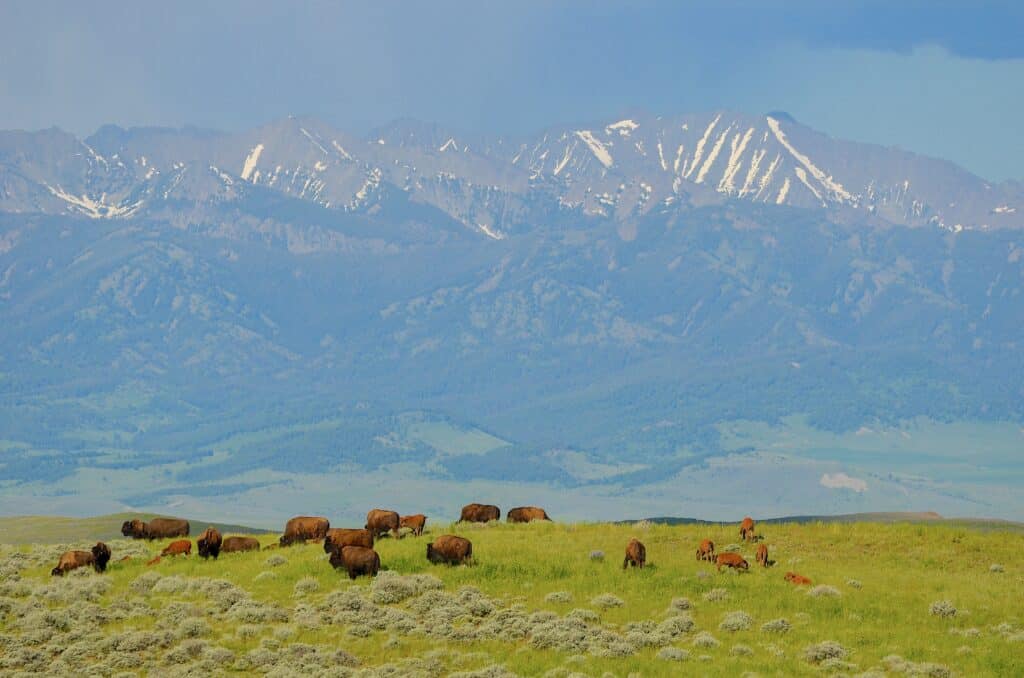
Herd with a view: the living dream of Matt and Sarah Skoglund realized at North Bridger Bison
A few years later, in 2018, the Skoglunds bought some land on the western edge of the Shields Valley between the Bridger and Crazy mountains, left the North Side of Bozeman, and daringly founded an operation raising grassfed field-harvested buffalo called North Bridger Bison. They were inspired by Ted Turner and by Dan O’Brien, founder of Wild Idea Buffalo Company in South Dakota and author of the acclaimed book, Wild Idea: Buffalo and Family in a Difficult Land.
Proudly, they may be first-generation ranchers but they are at the forefront of a land ethic made for the challenges of the 21st century. Part of it involves lots of conversations with their multi-generation landowners across wildlife-friendly fencelines.
There’s an expression: “If you love the wild West, live in town.” But there’s an important caveat that goes something like this, to which the Skoglunds are arguably models for emulation: “If you love the West and choose to live outside of town, then learn about your wild neighborhood and of its inhabitants, be an advocate for their protection and, where possible, leave the essence of place in better condition than you found it.”
There’s an expression: “If you love the wild West, live in town.” But there’s an important caveat that goes something like this, to which the Skoglunds are arguably models for emulation: “If you love the West and choose to live outside of town, then learn about your wild neighborhood and of its inhabitants, be an advocate for their protection and, where possible, leave the essence of place in better condition than you found it.”
North Bridger Bison is located in the northern reaches of Greater Yellowstone yet within a corridor of biological connectivity stretching northward toward the Rocky Mountain Front and Northern Continental Divide Ecosystem. As North Bridger Bison has grown in number of animals and acres it stewards, so too has the Skoglunds’ dauntless enthusiasm for unlocking secrets of co-existence. Their zen koans involve such things as how to make ends meet and keep nature’s balance sheet intact, how to raise sentient beings while pondering the deeper meaning of humaneness, and how to constantly learn from lessons nature is constantly imparting. Today, there’s around 200 bison in their herd.
The core of re-generative agriculture is working with Nature and not against it, and a bi-product, Skoglund says with a smile, “is insanely delicious food.”
Sarah Skogund is a board member of the Gallatin Valley Land Trust, an organization with which the Skoglunds placed a conservation easement on their 791 acres in 2021. In late 2025 it was announced that the family expanded their holdings by another 1,000 acres (brining total acreage to 2500 under management). This is natural land that surely could have otherwise been turned into subdivisions given the spread of sprawl outward from Bozeman and Livingston into the Shields Valley.
The Skoglunds aren’t whiners and believe the worst response to our challenging world is apathy. They are living their principles and serving as examples for others. Even if we’re not in a place to replicate their deeds, we can support what they do by purchasing their products and those of other wildlife-friendly farmers and ranchers.
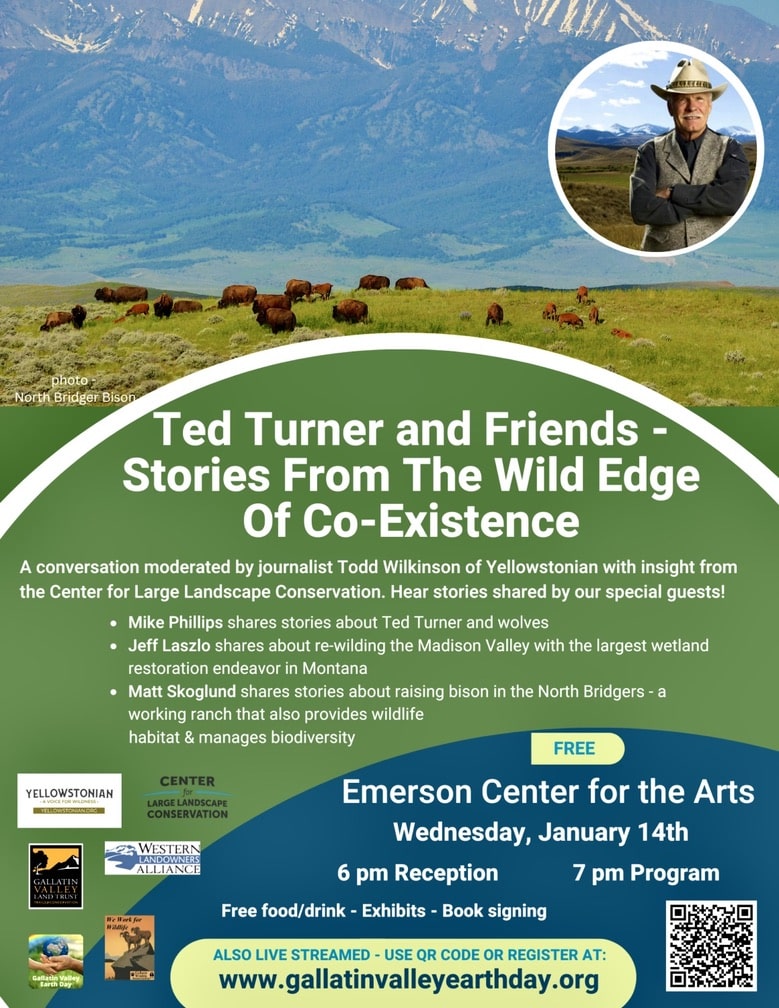
Matt Skoglund is one of the featured guests at a special live event in Bozeman, co-hosted by Yellowstonian and Gallatin Valley Earth Day, on Wednesday, January 14 at the Emerson Cultural Center titled Ted Turner & Friends: Stories from the Wild Edge of Co-Existence.” It starts at 7 pm but there is a special reception beforehand at 6 pm featuring several conservation groups present to talk about their work and bison chili provided by Ted’s Montana Grill restaurant. Readers who are not able to attend event in Bozeman can watch a free livestream by clicking here. Below is the Yellowstonian interview with Matt Skoglund.
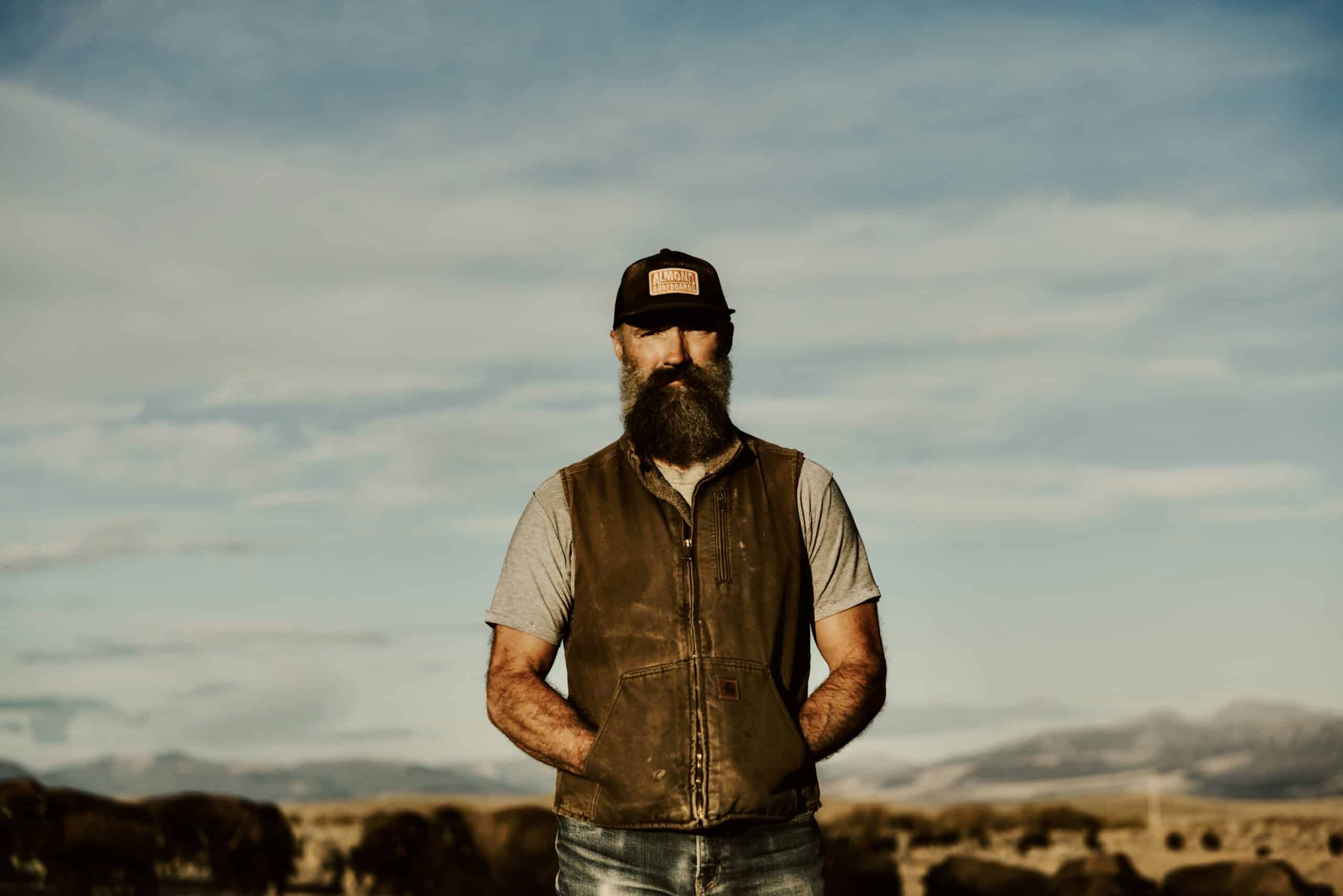
Standing apart from the usual herd, first generation family rancher (and helluva former D3 college hockey player) Matt Skoglund. At Middlebury College, his team won two national championships and he was named to the All American team.
The Yellowstonian Interview with Matt Skoglund
TODD WILKINSON: It’s been fun watching you come into your own, the two of you finding your voice, and your case, your sagaciousness is reflected in the length of your beard. Here’s a short intro for readers: You’re a kid who grew up in a Chicago suburb and played college hockey at Middlebury, then went to law school. You were once a young attorney who oversaw the Northern Rockies office of the Natural Resources Defense Council. Among the issues you provided leadership on with that NGO was trying to create more space for Yellowstone bison to roam outside the park. You learned a lot, including a love of bison that deepened through your advocacy for public wildlife. What made you and Sarah to, pun fully intended, to grab the bull by the horns and start a passionate project that blends business, wildlife and land protection?
MATT SKOGLUND: After ten years at NRDC, I came to the conclusion that if we really want to protect the natural world, it is only going to happen through the business world, not the NGO world. Yvon Chouinard of Patagonia is a huge hero of mine, and I love how he’s using Patagonia to make the world a better place. I also saw how tenuous many environmental “victories” in the NGO world are – you get a new governor or a new president in office, and then you powerlessly watch a “victory” get reversed. I found that very frustrating – and definitely not sustainable.
TW: “Sustainability” itself can be a word cloud full of differing interpretations. What does it mean to you?
SKOGLUND: If we are going to meaningfully protect nature, we have to change how we consume and how we produce things. Donating fifty dollars to the Sierra Club feels good, but it doesn’t do a damn thing. And I think people have been lured into complacency. Many environmental NGOs are big businesses with huge budgets – the idea that they are “nonprofits” is laughable; they are selling a product, and they are making a ton of money. The product they are selling is “donate to us to save the planet and feel good” – and then don’t worry about the way you live or consume because you donated to “save the elephants” or “save the whales” or “save the whatever.” I saw that system up close, and it simply will not protect the natural world.
I wanted to do something more tangible and real. Something you could touch, see, smell, and feel. Something that would endure. And I kept coming back to food because when you think about it, we all have to eat. And if we’re lucky, we get to eat three meals a day. You factor that out across billions of people on the planet, and you realize very quickly that the production and consumption of food has massive environmental and social impacts.
So if our family could start a ranch and produce food that benefited biodiversity and permanently conserved land at the same time, that strongly appealed to me.
“I wanted to do something more tangible and real. Something you could touch, see, smell, and feel. Something that would endure. And I kept coming back to food because when you think about it, we all have to eat. And if we’re lucky, we get to eat three meals a day. You factor that out across billions of people on the planet, and you realize very quickly that the production and consumption of food has massive environmental and social impacts.”
—Matt Skoglund
TW: You and Sarah are parents of kids growing up way too fast. What has given the two of you the greatest delight in exposing them to a family operation that is part of them and leaving an imprint that will shape them for the rest of their lives?
SKOGLUND: Raising Otto and Greta on the ranch has been the best part of this whole journey. We made a decision early on that we weren’t going to shield them from anything on the ranch. They see the timeless dance of life and death playing out year-round on the ranch. And they have become passionate naturalists. They care deeply about wildlife, birds, and the natural world. When we’re driving around Bozeman, they hate seeing new developments under construction – Otto will point one out and say, “Look, Dad, more nature being destroyed.”
I’m also amazed at how much they’re learning on their own and through osmosis up here. The have an ecological vocabulary and understanding that blows my mind. They’re deeply connected to the natural world, and I just think it’s super cool.
TW: It’s an important mindshift and reframing that others might heed—not deeper into the tempest of the digital world but you’re doing sometthing gently and naturally by choice, as it was done forever until the present, and that is: keeping them immersed in the physical world of nature and having tactile contact. You’re resisting surrendering them to gadgets and virtual reality.
SKOGLUND: Sarah and I also talk to them a lot about the importance of hard work. They see me field-harvesting bison, doing pasture moves, talking to customers on the phone, working on the weekend, etc., and I want them to understand that working hard on something you believe in is what life is all about. Modern American culture seems to portray that living next to a beach doing nothing and relying on Amazon and other tech companies to do everything for you should be the ultimate dream life. I couldn’t disagree more with that. Otto and Greta see how hard we work, they see the sacrifices we make, and they understand how valuable and rewarding that is.
“Sarah and I also talk to them a lot about the importance of hard work. They see me field-harvesting bison, doing pasture moves, talking to customers on the phone, working on the weekend, etc., and I want them to understand that working hard on something you believe in is what life is all about. Modern American culture seems to portray that living next to a beach doing nothing and relying on Amazon and other tech companies to do everything for you should be the ultimate dream life. I couldn’t disagree more with that.”
—Matt Skoglund
TW: For the record, we couldn’t agree with you and Sarah more but that attitude proliferates in our entitled mountain towns where there seems to be a Hakuna Matata slacker focus on playing, luxury relaxation, deflecting accountability, and looking the other way in the face of genuine suffering among other humans, wildlife and the land. And, of course, addiction to digital media is anesthetizing us and destroying attention spans. Mom and pop farmers and ranchers everywhere can relate to the imprint of experience you’re giving your kids.
SKOGLUND: I’m so curious to see what they[our kids] end up doing. They know there is zero pressure from us to take over the ranch; we want them to chase their dreams, whatever those turn out to be. But growing up on a ranch in rural Montana in an entrepreneurial household is unique, and I’m so curious to see what they do. Just like their love of nature and their ecological vocabulary, they have an incredible entrepreneurial vocabulary and are super interested in the business side of North Bridger Bison, and they both come up with some great ideas. I love talking to them about the business side of this whole thing – and, again, we don’t shield them from it – they’re exposed to all sorts of things with our business.
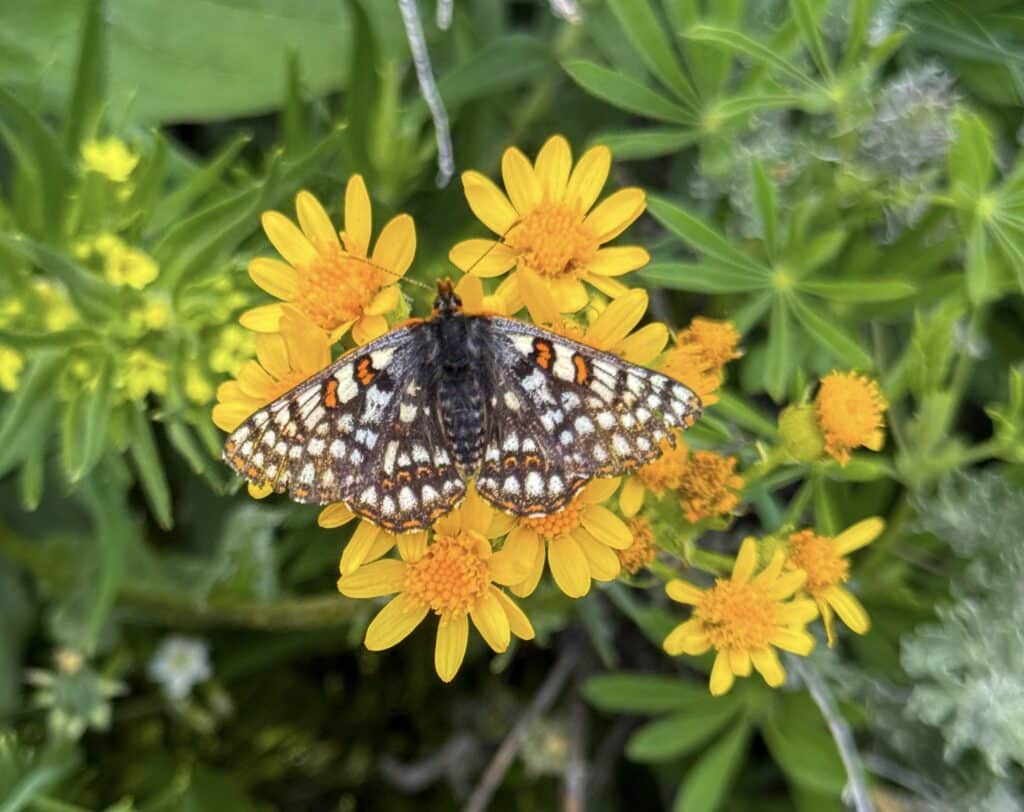
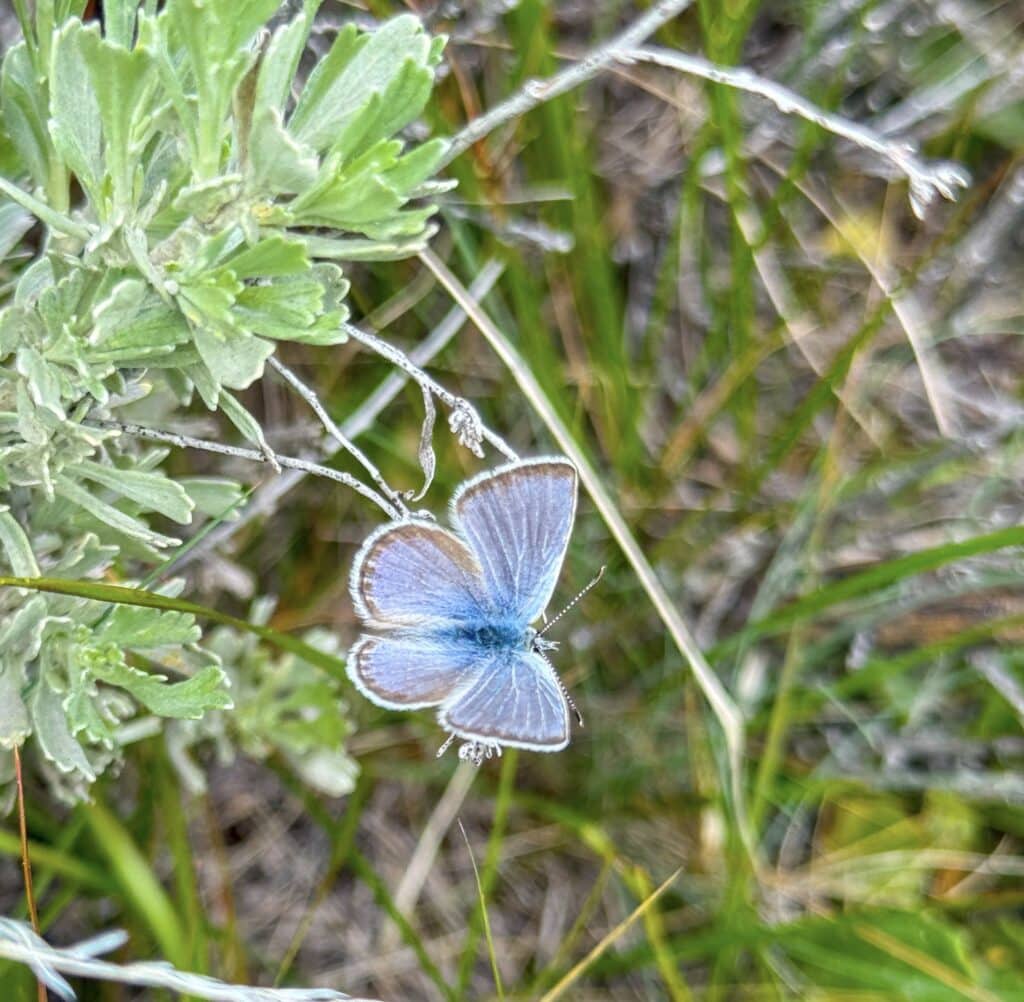
Above: Bison are huge creatures but part of the Skoglund’s focus is also paying attention to smaller things in the complicated web of life. Many humans don’t realize that roughly every three bites of food in a well-balanced diet is owed to the work of pollinators and their interactions with plants. The Skoglunds are protectors of native sagebrush meadows. Through their collaboration with the Xerxes Society, they’ve made their land a safe haven for a wide array of pollinators and species of the winged, feathered and invertebrate variety. Photos courtesy Skoglund family
TW: John Muir said, and this is the correct quote, that “when we try to pick out anything by itself, we find it hitched to everything else in the Universe.” On your land in the North Bridgers, how long did it take you to discover how a “bison ranch” is connected to a natural world far deeper than one can imagine? And how do you deal with the dual feelings of being awestruck every day and overwhelmed by the complexity?
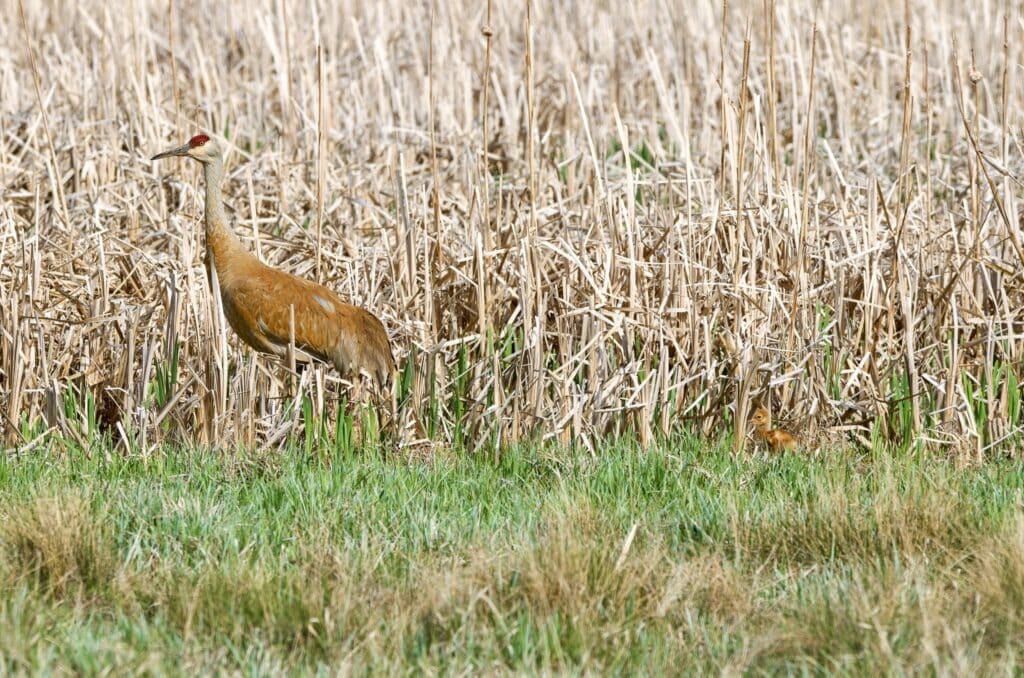
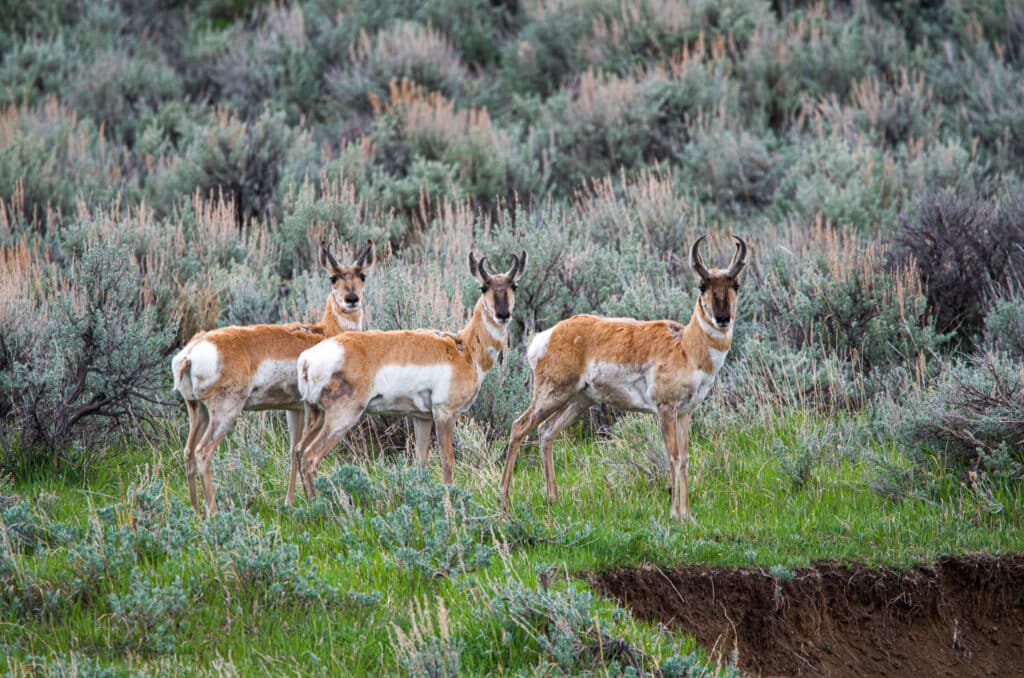
SKOGLUND: It took no time at all. When you see and hear the first sandhill crane on the ranch in the spring, you realize very quickly that those magical birds rely on ranches like ours to migrate to in the summer, to nest, and to raise the next generation of sandhills. Same for the pronghorn that show up in the spring to have their fawns here. I find it extremely powerful. And I could go on and on and on with examples.
I am constantly awestruck, but I am not overwhelmed by the complexity – I am more terrified about what we are losing. I look at our ranch – and I look at all of our neighbors’ ranches – and it is just so clear to me that this is the best way to raise food in harmony with nature and in a way that supports and promotes biodiversity. But things are changing in Montana so fast right now that I find it scary – and it’s more important than ever for folks to be thinking about how they can support family ranches and working lands in Montana and neighboring states.
“I am constantly awestruck, but I am not overwhelmed by the complexity— I am more terrified about what we are losing. I look at our ranch —and I look at all of our neighbors’ ranches —and it is just so clear to me that this is the best way to raise food in harmony with nature and in a way that supports and promotes biodiversity. But things are changing in Montana so fast right now that I find it scary – and it’s more important than ever for folks to be thinking about how they can support family ranches and working lands in Montana and neighboring states.”
—Matt Skoglund
TW: We’ve spoken about this many times—the feeling that sprawl related to human population growth is rapidly spreading across mountain valleys and there’s little civic conscious awareness about its immediate and long-term impacts. And by not talking about it, scrutinizing it, having inconvenient conversion, we as communities are accomplices. The stories in Yellowstonian are intended to help foster a wake-up call.
As part of your own ethic and wanting to make a difference, you put a conservation easement on your land through the Gallatin Valley Land Trust. How was that decision made and for others with land who want to make a positive difference in ways that will outlast their own lives, how does it give you and Sarah meaning?
SKOGLUND: Aldo Leopold is a massive hero of mine, and I love land. In law school over 20 years ago, I wrote my thesis (my “note”) on conservation easements, and I’ve been obsessed with them ever since. They’re such an amazing tool to permanently protect land from development, and they are also super flexible and landowner-friendly. Conservation easements are win-win-win-win across the board.
I had daydreamed for a long time about putting a big chunk of land under a conservation easement, and so for Sarah and me, the decision was easy. We are passionate conservationists, and we were going to back that up with action.
TW: Conservation easements are not about completing an action, but commencing a new relationship. Is that also your experience?
SKOGLUND: Now that we’ve done it, I am surprised by how much joy it continues to bring me, and I think about it a lot. I’ll be somewhere on the ranch working, and I’ll look up and think to myself, “Long after I’m dead, this land is going to look exactly like this.” I find it very powerful.
And lastly – and not insignificantly – I love how we’ve made this decision for Otto and Greta. As you know, there are so many horrible stories about families being torn apart and siblings suing siblings over the family ranch (e.g., one wants to subdivide it and cash out, and the other wants to keep ranching). For Otto and Greta, they’ll never be in a fight over whether to sell off a chunk of the ranch – because they can’t – our ranch can’t be subdivided – and it feels good that we’ve taken that off the table forever.
TW: A practical question based on the fact that your operation allows conservation minded humans to advance their own conservation values with their wallets. You raise bison that people can purchase as sustenance to feed their families. Your operation is not industrial but prioritized to be sensitive and minimize the trauma. How does that work?
SKOGLUND: We strive to operate a zero-stress operation totally in sync with nature. For pasture moves, the bison follow me, I don’t push them. We also don’t wean the calves – we let the moms take care of that. And then when it’s time to kill a bison, we don’t ship them to a slaughterhouse, which is super high stress for bison (and negatively impacts the quality of the meat). Instead, I personally field-harvest each bison on the ranch wherever they are that day. It’s zero stress for the bison, and zero stress in the meat. And as far as food goes, it’s the most humane, ethical, environmentally friendly way to produce food, and that’s inarguable.
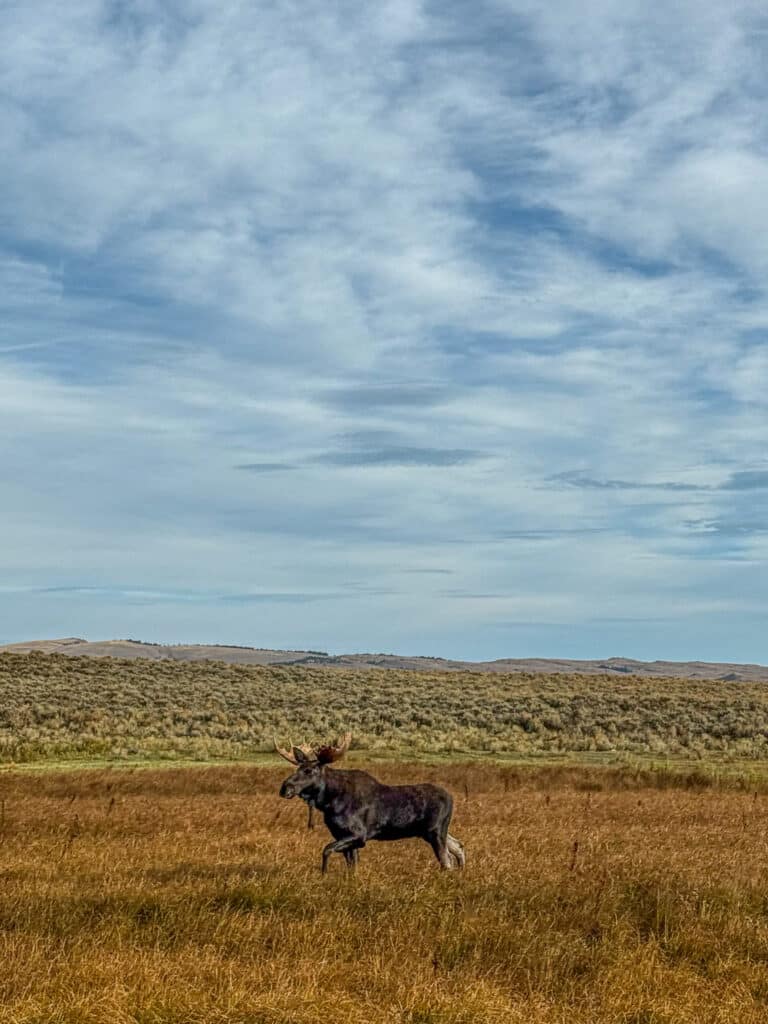
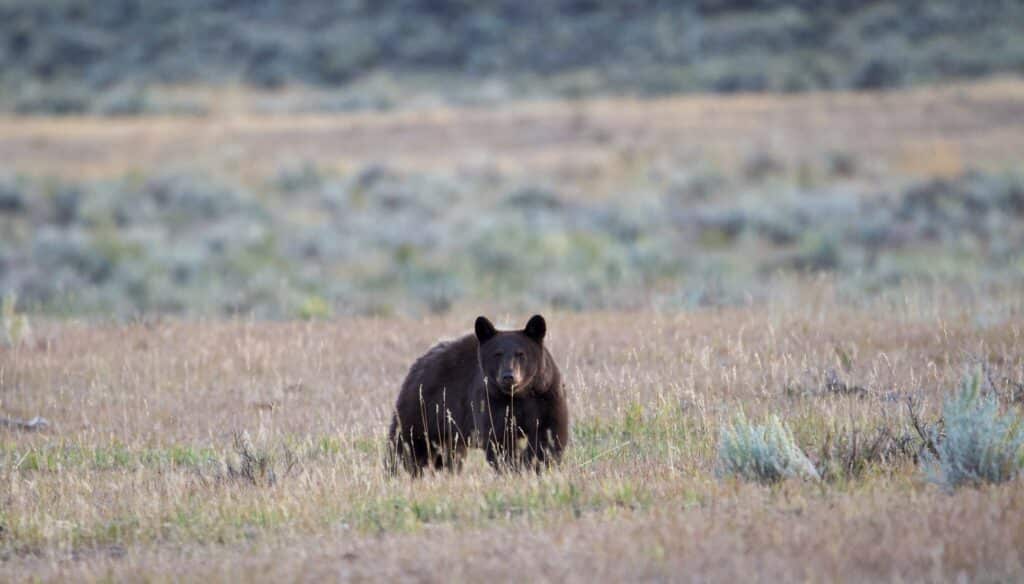
Ranchettes chopped into ranchettes, fragmented with a gauntlet of wildlife-unfriendly fences, roaming dogs off leash and other trappings of exurban sprawl, are no place for wildlife to persist. North Bridger Bison welcomes its wild neighbors. Here, in gallery above, a bull moose, a mother Sandhill crane with her colt, a band of pronghorn and a black bear were spotted on the Skoglund place. Grizzlies are rumored to be in the vicinity. As at Ted Turner’s Flying D bison ranch, where grizzlies already roam, they haven’t represented much of a threat to buffalo. They want to offer a welcoming presence to their wild neighbors and are teaching their kids how to co-exist. Photos courtesy Skoglund family
TW: Please, for those who don’t know, elaborate on the nutritional attributes of locally-grown grassfed bison, how people can buy it from you directly or where it’s found in the region.
SKOGLUND: We eat so much bison in our house that I’m pretty sure Otto and Greta are going to grow horns at some point. All bad jokes aside, bison meat is the center of our diet year-round. It’s a delicious, healthy, nutrient-dense food that our bodies digest easily and can effectively absorb nutrients from.
We all now know that processed foods are horrible for us – they’re fueling the obesity epidemic – and recent research has shown that what you eat is more important than going to the gym. We should be eating whole foods – fruits, vegetables, meat, fish, etc.
The nutritional profile of 100 percent grassfed bison is incredible – it’s truly a superfood. And it tastes great and fills you up. It’s a super easy and simple way to improve your physical and mental health without feeling like you’re depriving yourself by going on the latest diet trend.
And then to know that the bison meat on your plate is also conserving land and supporting and promoting biodiversity – how can you not want to fill your freezer with it?
TW: I know you respect the work of Jeff Laszlo. Ted Turner has been a catalyst for what some call “the Renaissance of public respect and appreciation” for the role of America’s official national land mammal, the bison. How did Ted’s forerunning actions influence you and what message do they send to the world about searching for better ways of co-existence, especially conservation on private land?
SKOGLUND: Ted is amazing. What he’s done for bison and land conversation is just incredible. I know a lot of the folks from Turner Ranches, and they’re awesome people. Ted is a visionary, and I am just extremely grateful for all that he’s done.
TW: Anything else you want to say?
SKOGLUND: l’ll close by saying that if folks are concerned about the global extinction crisis we’re currently living through – or the rapid changes unfolding in Montana right now – I think the most meaningful thing they can do is to buy meat or produce from a local farm or ranch. It’s voting with your dollars for the world you want to see, and it’s tangible and real – you can see the farm or ranch, and you receive food in exchange for your purchase.
We’re losing our farms, ranches, and working lands at an alarming rate. And once they’re gone, they’re never coming back. If you care about wildlife and biodiversity, you have to care about working farms and ranches. We’re at a tipping point right now, and more folks need to be aware of this reality. Fortunately, buying direct from local farmers and ranchers has never been easier, and I can’t stress enough how important it is for folks to do so.
TW: These are tough times for land protection groups whether focused on public or private lands. Who do you support?
SKOGLUND: We have been a corporate sponsor of Backcountry Hunters & Anglers (BHA) for several years, and they are, in our opinion, the leading group fighting to protect our public lands. Given the attacks on public lands these days, I can’t think of a better cause to support, and BHA is an incredible organization doing tangible work. Also, groups like the Gallatin Valley Land Trust (GVLT) are also doing amazing, tangible work. They’re the ones protecting land from development through conservation easements, which is the only way we’re going to protect the Greater Yellowstone Ecosystem, wildlife corridors, etc. GVLT and similar land trust groups no matter where you live need—and are worthy of—all of the funding we can give them.)
TW: Fortunately, we get the last words, and they are this. We’re proud to have conscientious readers. If they If want to support the persistence of people like you and Sarah Skoglund, and eat from their own bioregion, they can buy from local producers of food and fiber. Readers who would like serve bison on their dinner table that is locally raised in the globally-iconic Greater Yellowstone Ecosystem can contact North Bridger Bison by clicking here. Another proponent of linking consumers with conversation-focused farmers and ranchers is the Western Sustainability Exchange based in Livingston, Montana
———————————————
Readers are invited to attend the live public event “Ted Turner & Friends” at the Emerson Cultural Center in Bozeman, Montana on Wednesday, January 14. It features a discussion with Mike Phillips, Jeff Laszlo, Matt Skoglund and Liz Fairbank with the Center for Large Landscape Conservation. It is a celebration of private land stewardship. The event starts at 7 pm but get there early and you can converse with the panelists and meet representatives from a dozen different conservation groups doing great work in the Northern Rockies. You can even enjoy a bowl of bison chili courtesy Ted’s Montana Grill restaurant in Bozeman. Note: if you cannot physically make it to Bozeman, you can tune in via a free livestream by clicking on this link. It is important that you sign-up beforehand. Please let your friends know.
Todd Wilkinson, co-founder of Yellowstonian, has been an award-winning American journalist for almost 40 years, known foremost for his writing about the environment and his knowledge of the Greater Yellowstone Ecosystem. In addition to his books on topics ranging from scientific whistleblowers and Ted Turner to Grizzly 399 (that book featuring images by photographer Tom Mangelsen) and coffee table volumes on a number of prominent fine artists, Wilkinson has written for National Geographic, The Guardian, The Washington Post, Christian Science Monitor and many other publications. He started his career as a violent crime reporter with the City News Bureau of Chicago. He is also a writing fellow of the Northern Rockies Conservation Cooperative based in Jackson Hole.
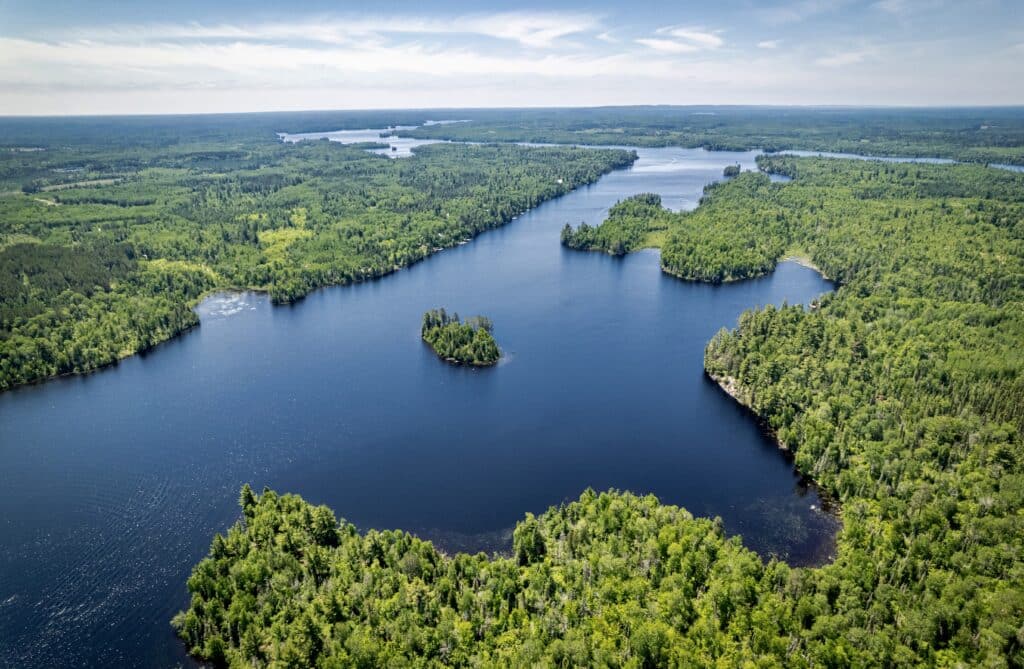
The Boundary Waters of northern Minnesota is a beloved American crown jewel—as treasured as Yellowstone, Glacier and the Grand Canyon. So why, millions wonder, is it being put at risk?
In his latest column, Brad Orsted reflects on how the fur is flying in the wolf watching community of America's oldest national park. What's behind it?
Science under siege: If Steve Daines, Tim Sheehy and others prevail in the quest to de-regulate industry on public lands, what will the West look like in another 20 years, on top of the looming impacts of climate and AI? They're afraid to discuss it