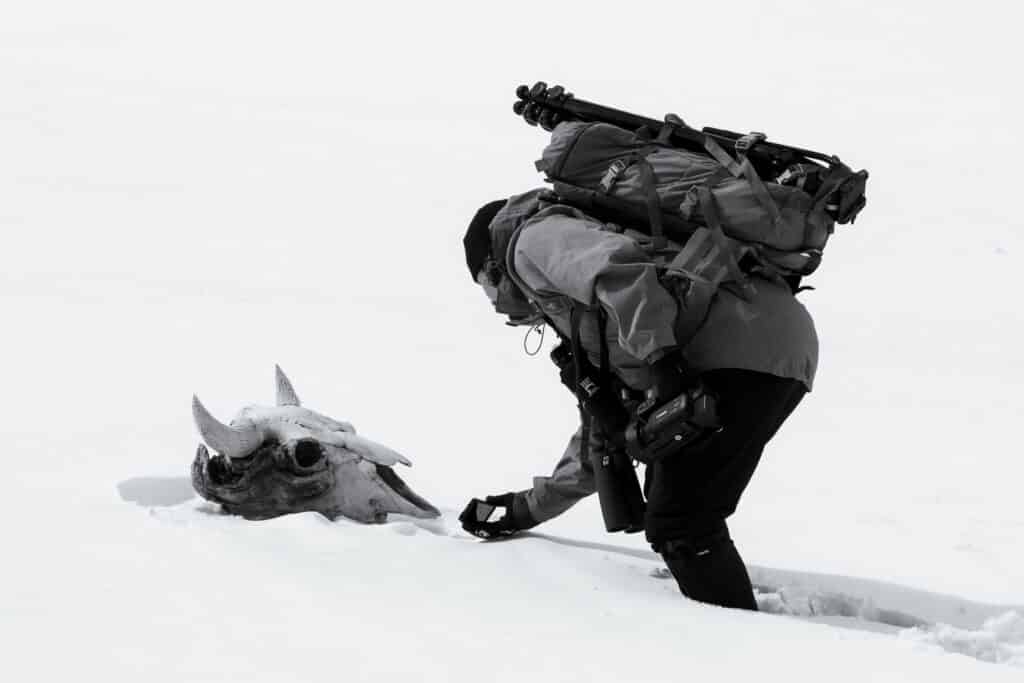
EDITOR’S NOTE: We at Yellowstonian draw upon a perspective shaped by four decades of writing about the Greater Yellowstone Ecosystem, meeting and interviewing literally thousands of individuals who have made contributions large and small to public understanding of a bioregion that is without parallel in the Lower 48 of America—as is a bellwether for the world. Understanding the history of how Greater Yellowstone came to be is vitally important.
Rather astoundingly, Norman Bishop will turn 93 years old in November 2025. Besides his longevity, Norm has demonstrated a lifelong tireless devotion to educating the public about the wonders and natural history history of wildlife. A native Coloradan by origin, he is most closely associated with giving citizens a true picture about wolves in Yellowstone. During the latter part of his 36-year tenure with the National Park Service, Bishop, as an expert interpretor and translator of science, helped lay the groundwork for the return of wolves to Yellowstone in 1995. He hosted upwards of 400 public meetings in the Northern Rockies and across the country to make the case for restoring wolves and their ecological value in this nation’s premiere national park.
Some of those meetings were held in communities where local residents didn’t want to hear the truth and they greeted Bishop with open hostility. As a result of his fearless promotion of science, Bishop was given the Stephen T. Mather Award by the National Parks Conservation Association, the Stewardship Award from the Greater Yellowstone Coalition, the Alpha Award from the Wolf Education and Research Center and he received the Meritorious Service Award, the highest given to a career civil servant, from the National Park Service. Notably, Bishop was a lead reviewer of the four-volume series Wolves for Yellowstone, that played a key role in the historic return of wolves to the ecosystem. Let it also be known that for years after his retirement, Norm was an avid cross country skier, legendary for competing in long-distance events. A valued friend of ours, we are publishing this retrospective essay on wolves that he penned for Yellowstonian. We believe that elders often offer the most important perspectives on where our society has been and where it is going. As a nonagenarian, Bishop is the epitome of what it means to be a wildlife advocate with selflessness and courage. —Todd Wilkinson
Thirty Years with Wolves: A Story of Science, Foresight and People Committed To Achieving Something Bigger Than Themselves
by Norman Bishop
By chance, I arrived in Yellowstone in 1980, about the time an interagency Northern Rocky Mountain Wolf Recovery Team completed the first plan to restore wolves to Yellowstone and the Northern Rocky Mountains. Seven years later, a second such plan was signed by the US Fish and Wildlife Service.
A team of us in the Yellowstone Center for Resources, led by Director John Varley, began preparations for returning wolves to the park. My job was public education. I gave 400 talks and sent thousands of custom responses to requests for information about the wolf project.
It took Congress four more years before they authorized the Fish and Wildlife Service (FWS) and the National Park Service to take the next step under the .Endangered Species Act; preparing an environmental impact statement (EIS). First, Congress demanded two sets of reports to be prepared, titled, “Wolves for Yellowstone.” Fortunately John Varley had brought aboard a “master bureaucrat,” former endangered species specialist, Wayne Brewster, who co-authored “Wolves for “Yellowstone” with John. Finally, in late 1991, Congress directed the agencies to prepare an EIS, to be completed by 1994. In an extensive effort to gather public input, some 160,000 comments were gathered and analyzed. The EiS was released in May of 1994.
In the EIS, two alternatives were proposed. In the abstract, it was emphasized that reintroduction would result in wolf population recovery (ten breeding pairs, about 100 wolves/area for three successive years) in and around Yellowstone National Park and in central Idaho by 2002. What’s important to note is that this was an absolute minimum aimed at achieving a lower minimum threshold.
Alternative 1 involved reintroduction of two nonessential experimental populations as authorized by the Fish and Wildlife Service through Section 10(j) of the Endangered Species Act;
Alternative 2 was to do nothing, i.e. the “take no action” alternative, to rely upon and hope that wolf recolonization of former habitat would occur based on natural dispersal of wolves from Canada and transboundary wolves along the US-Canada border. This alternative had the possibility, scientists speculated, of resulting in recovered wolf populations in central Idaho by about 2012 and in the Yellowstone area about 2025, this year.
Could that have happened? Maybe, it’s possible. As was in those years and it still exists today, there were forces present who vehemently opposed the natural dispersal of wolves, the same sentiments present now for grizzly bears. Would we have had the geographical distribution of wolves in and beyond Yellowstone and Grand Teton national parks and federal wilderness in Idaho as we know it today? Would there be wolves in Oregon, Washington, northern California and Colorado? Many doubted that a viable core population could be established in Yellowstone and that, at best, it would take decades and many human generations.
To emphasize the point: the Fish and Wildlife Service spent $30 million to restore wolves to Yellowstone across the span of a human generation. Today, and each year, the presence of wolves alone generates more than $82 million in economic activity that benefits the region. Similar dividends can be seen in the value of grizzly bears.
Would Yellowstone have become the best venue for reliably observing wolves in the wild that it is today, generating tens of millions of dollars annually from people who come from around the world to experience them? How different would the public perception of wolves be if none of the below had happened?
Fortunately, we don’t have to guess about the latter.
Alternative 1 was chosen, and in 1995-996, 31 wolves were captured in Canada, and transported to Yellowstone, held in acclimation pens for ten weeks, and released. Another ten wolves from northwest Montana known as the “Sawtooth’ pups”—were released in the park later, bringing the total to 41.
In 2002, the results predicted by experts had come about: Yellowstone had 148 wolves in 14 packs. That number has held over time, if only at a slightly smaller population, as wolf density is a function of prey and favorable terrain. Readers can learn more by clicking here.
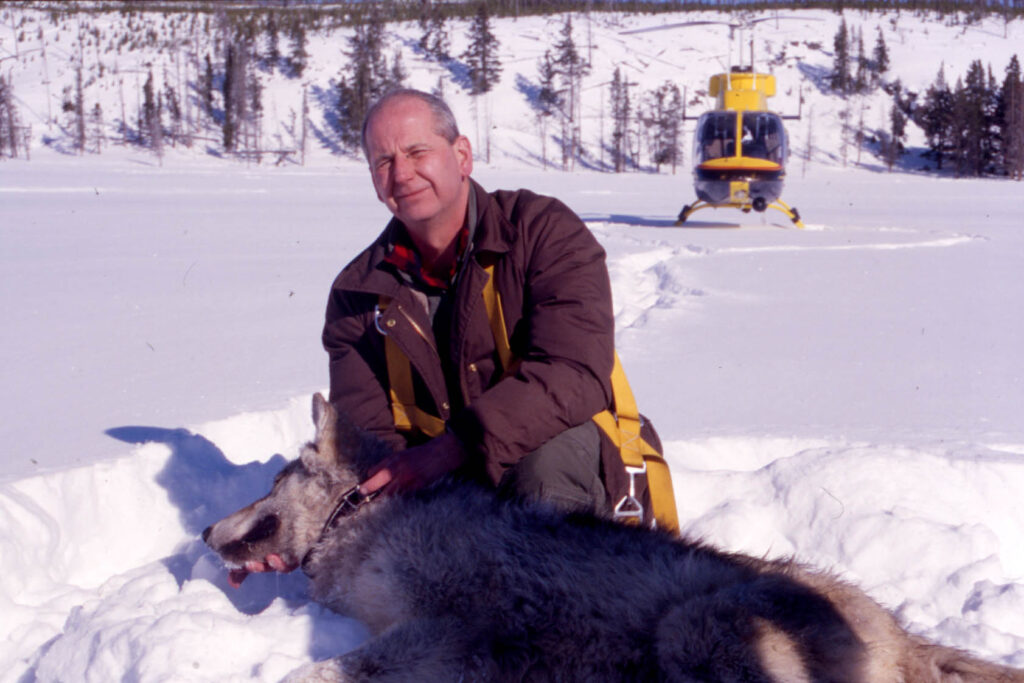
Back then, the Fish and Wildlife Service’s Gray Wolf recovery leader was Ed Bangs. He wrote, “It would be impossible to come up with the most important person (in Yellowstone wolf restoration) because without Canada purposely restoring wolves to SW Canada starting in the 1960’s and those wolves eventually spilling over into Montana, wolf reintroduction to [Idaho] and [Greater Yellowstone] would have never happened. The [Endangered Species Act] itself made wolf restoration possible throughout the lower 48. The fact they were coming is the only reason that reintroduction to ID & YNP could jump the political hurtles. Many people led various parts of the long journey towards the actual reintroduction. I can tell you as a fact that the number one reason wolves were restored is the wolves themselves. Wolf biology, behavior, intelligence, dispersal ability, and resilience is the only reason they spread across the US Pacific Northwest. People might have tried to help, but wolves themselves are the only reason it succeeded.”
Early in the process of preparing for returning wolves to the park, John Varley hired Mark R. Johnson a wildlife veterinarian and CEO of Global Wildlife Resources. Very briefly, Mark was the only person who participated in every aspect of the introduction. He wrote a protocol for capturing, processing, transporting, and holding the wolves to come. He designed the pens used to acclimatize the wolves, based on consultation with more than twenty zoos and similar facilities. He led several other veterinarians in handling the wolves in Canada, and rode with the wolves during their transportation from Canada to the park. I recall him riding on the mule-drawn sled with wolves headed for one of the pens.
In 1994, two highly qualified wolf biologists were hired: Mike Phillips as Yellowstone’s wolf project leader, and Doug Smith as the project biologist.
How qualified were they? Mike Phillips began working with wolves in 1980 as a field biologist for Dave Mech’s seminal study of the species in northeastern Minnesota. Following that he conducted research on wolves in Alaska before serving as the first leader of the red wolf restoration effort in northeastern North Carolina from 1986 thru 1994. When selected to lead the Yellowstone restoration effort, Mike had more experience restoring wolves via reintroductions than anyone in the world. Mike went on to co-found, with Ted Turner, the Turner Endangered Species Fund that specializes in restoring imperiled species and increasing biological diversity on private lands. Together, and with expert monitoring provided by field biologist Val Asher, Turner and Phillips welcome wolves dispersing from Yellowstone and reaching Turner’s Flying D Ranch just outside of Bozeman.
Mike also ran successfully and won seats in both the House and Senate of the Montana legislature, realizing how important it is to have laws based on a scientific underpinning.

Doug Smith began working with wolves in 1979 as a field biologist for Rolf Peterson’s seminal study of the species on Isle Royale National Park. Succeeding Mike, he would serve in this position for nine summers and two winters over the next 15 years. He also logged time on Dave Mech’s study in Minnesota. During this period he and his work ethic became known to Mike. He declined an offer to work on the red wolf project in North Carolina in order to complete his Ph.D. studies. When he applied to the Yellowstone project he too was well known as one of the most experienced wolf field biologists in the country. Not surprisingly, both Peterson and Mech wrote strong letters of recommendations on his behalf. Beyond that, Rolf called John Varley directly on his behalf.
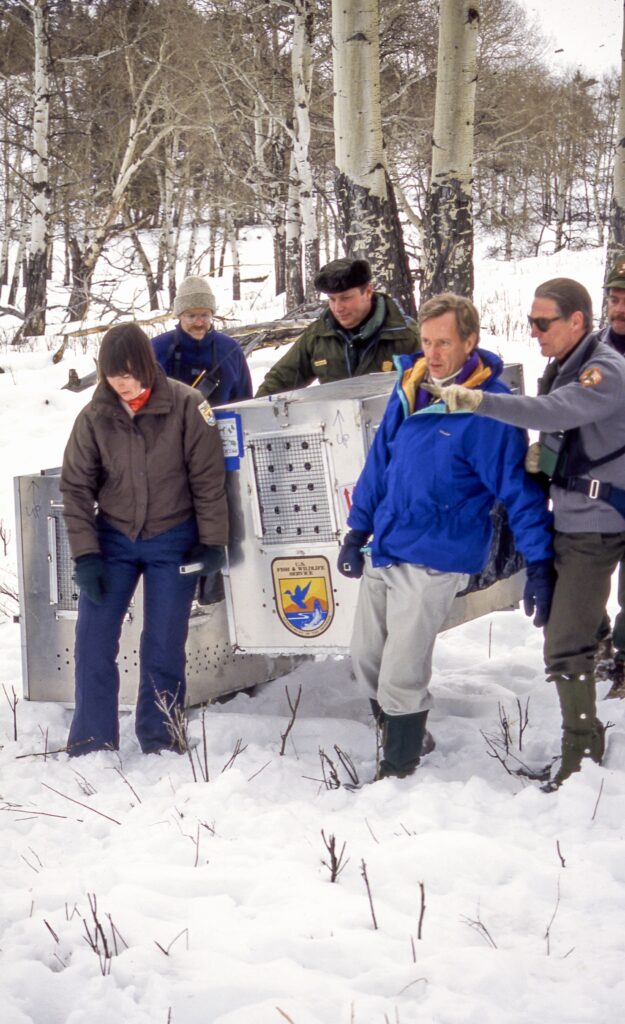
Mike and Doug were on hand to receive the wolves that arrived in January of 1995 and 1996, and they helped carry the wolves to acclimation pens where they were to remain for ten weeks to settle in.
In response to credible threats to the wolves, the park assembled a team of well-armed rangers to guard the pens 24/7 while wolves were present in them.
The day the wolves began to be released from their acclimation pens, Doug began intensive observation of the wolves, and in the fall, he initiated an annual series of winter studies—a month in November/December, and a month in March – to investigate numerous aspects of wolf ecology and behavior. He engaged visiting biologists to advise the program, and produced many articles and publications based on the field observations.
Besides annual reports, Doug and his team published a summary of “Ten Years of Yellowstone Wolves” in the journal Yellowstone Science Volume 13 Number 1, Winter 2005. that featured a story “Perspectives on Wolf Restoration, Ten Years of Yellowstone Wolves 1995-2005,” Wolf EIS Predictions and Ten-Year Appraisals, and a list of 97 Technical Publications on Yellowstone Wolves, 1995-2004. Two pages were given to a list of current research and other collaborators or indirect assistance projects.
Ten years after that, Doug and his team published another overview in Yellowstone Science, Volume 24 Issue 16, June 2016, It featured a baker’s dozen articles, He and six others wrote”Wolf Restoration in Yellowstone: Reintroduction to Recovery.”
“I tallied the number of accounts of wolves hunting different prey the authors selected to share with us: 63 hunts of white-tailed deer; 78 of moose; 56 of caribou; 26 of elk; 49 of mountain sheep; 7 of mountain goats; 7 of bison; 29 of musk oxen; 3 of pronghorn; 1 of a wild horse; 53 of arctic hares; 3 of snowshoe hares; 4 of waterfowl; 4 of mice. That’s 383 accounts of wolves hunting fourteen species of prey. They list five wolf prey species that have killed wolves: white-tailed deer, Moos, Musk oxen, Mule deer, Elk, and Bison. Of course, the most lethal predator of wolves are people.”
Wildlife researcher Dr. Dan MacNulty and four others, including Smith and current Yellowstone wolf coordinator Dan Stahler, published a report titled “The Challenge of Understanding Northern Yellowstone Elk Dynamics after Wolf Reintroduction.” It clearly shows the contrast between the effects on the elk from human hunters versus wolves. Hunters focused on taking reproductive-age elk cows, while wolves took the young and very old individuals. MacNulty and others also shared a peer-reviewed paper, “Understanding the Limits to Wolf Hunting Ability,” where we can learn why wolves can’t take just any elk they choose.
The Yellowstone Institute—today known as Yellowstone Forever— offered courses on wolves, first taught pre-restoration by John Weaver, author of a 1978 report,The Wolves of Yellowstone, in which he wrote about his two-year search for wolves in the park, found none, and suggested that wolves be reintroduced from Canada. Numerous activities are listed on their website under Experience. The Park Shop offers books snd other media to enrich the visitor experience.
Dr. James Halfpenny, who established an entity called A Naturalist’s World in Gardiner, Montana, reminds us that the original thought behind wolf reintroduction was management, research, and education. Responding to minimal Park Service funding available for education, he began a myriad of educational programs, producing programs, charts, apps and books. His $5 laminated charts have sold 50,000 copies, raising countless dollars in donated revenue to the park. Those were followed with five books on the genealogy of park wolves. Their sales have supported the wolf restoration project.
In 201, Jim wrote Charting Yellowstone Wolves: A Record of Wolf Restoration. In it, he copied color wolf charts from 1995 through 2011. Appendix I lists wolf programs by 25 presenters. That is just one of many publications he wrote, all of which can be ordered from A Naturalist’s World.
Renowned wolf biologist L. David Mech joined Doug Smith and Dan MacNulty in writing a remarkable book, Wolves on the Hunt, in 2015. The authors provide us with answers to knotty questions like, “Are wolves killing machines?” “Do they kill more than they need?” “Can they kill anything they want anytime they choose?” “Can they live on mice?” I tallied the number of accounts of wolves hunting different prey the authors selected to share with us: 63 hunts of white-tailed deer; 78 of moose; 56 of caribou; 26 of elk; 49 of mountain sheep; 7 of mountain goats; 7 of bison; 29 of musk oxen; 3 of pronghorn; 1 of a wild horse; 53 of arctic hares; 3 of snowshoe hares; 4 of waterfowl; 4 of mice. That’s 383 accounts of wolves hunting fourteen species of prey. They list five wolf prey species that have killed wolves: white-tailed deer, Moose, Musk oxen, Mule deer, Elk, and Bison. Of course, the most lethal predator of wolves are people.
The capstone of books about the park’s wolves is, without question, the volume: Yellowstone Wolves: Science and Discovery in the World’s First National Park, edited by Douglas W. Smith, Daniel R. Stahler, and Daniel R. MacNulty. (2020. University of Chicago Press.) This book is as wide-ranging and awe-inspiring as the Yellowstone restoration effort itself. In it, we learn about individual wolves, population dynamics, wolf-prey relationships, genetics, disease, management and policy, newly studied behaviors and interactions with other species, and the rippling ecosystem effects wolves have had on Yellowstone’s wild and rare landscape.
Perhaps most importantly of all, the book also offers solutions to ongoing controversies and debates. In an Afterword, we see a reference identified as figure A.1 and it highlights the Yellowstone Wolf Project’s collective ongoing effort to grow the scientific baseline of human knowledge about wolves. It includes; articles in 85 scientific publications, three major books, plus 22 book chapters, 27 technical reports, 4,305 formal public presentations, and 14,767 informal presentations. And it continues to grow. It represents yet another example of how science in Yellowstone and Greater Yellowstone are making valuable contributions to global wildlife conservation and demonstrating what is possible.
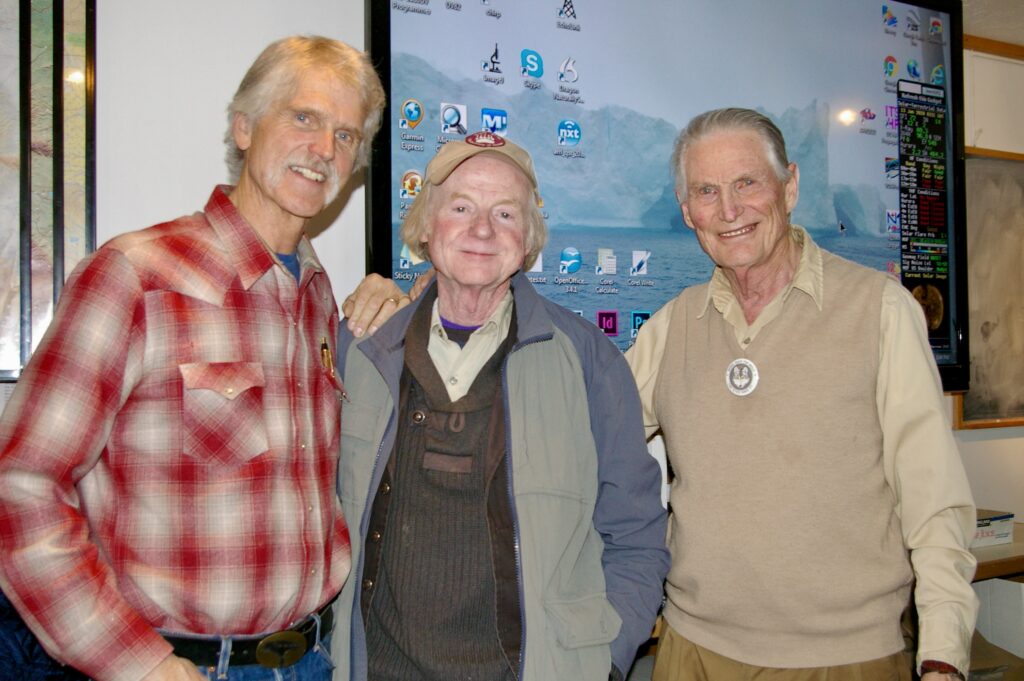
Indeed, a new portrait of wolves has emerged, one that revises the negative portrayal of wolves as told by non-scientific authors in fairy tales. Naturalist and wolf author Rick McIntyre worked in Yellowstone’s Interpretive Division as Wolf Interpreter for four summers, 1994-1997 and then transferred to the Wolf Project in1998, working year round in 1999 to 2018. Rick monitored wolves in Lamar Valley, and offered informal and formal talks at roadside, often with wolves in sight. He gave more than 200 such talks per year. He spent 7,895 days afield, equivalent to 21.6 years; at one stretch, going out every day for over 15 years. To 2023, he had watched wolves for 9,500 days, and hoped to continue for 10,000. He stopped counting wolf sightings when he got to 100,000. He has written five well-received books on the Yellowstone wolves: The Rise of Wolf 8, The Reign of Wolf 21, The Redemption of Wolf 302, The Alpha Female Wolf, and Thinking Like a Wolf.
In addition to the positive ecological impacts of restoring wolves as a keystone species, the economic effects of wolves have had is striking. The Fish and Wildlife Service reported spending $30 million total on restoration over twenty years. The annual net benefit of wolf restoration to the counties surrounding Yellowstone was estimated in 2005, two decades ago, to be $35.5 million, as noted by researcher John Duffield and colleagues.
Just as the value of public lands, especially wildlands, continues to grow over time, so, too, is the value of preserving species and their ability to persist. Visitation to Yellowstone during 2005 was 2,835,651, but by 2017, park visits had risen 45 percent to 4,116,525. An estimate of the proportion increase in annual economic impact of wolves, adjusted for 23 perent inflation over the period, was $65.5 million annually. In the 2022 Greater Yellowstone Ecosystem Wildlife Report on page 28, we see this reference: “Total estimated annual visitor spending in the three states related to wolves: $82,732,702.”
To emphasize the point: the Fish and Wildlife Service spent $30 million to restore wolves to Yellowstone across the span of a human generation. Today, and each year, the presence of wolves alone generates more than $82 million in economic activity that benefits the region. Similar dividends can be seen in the value of grizzly bears and even a single Yellowstone bobcat.
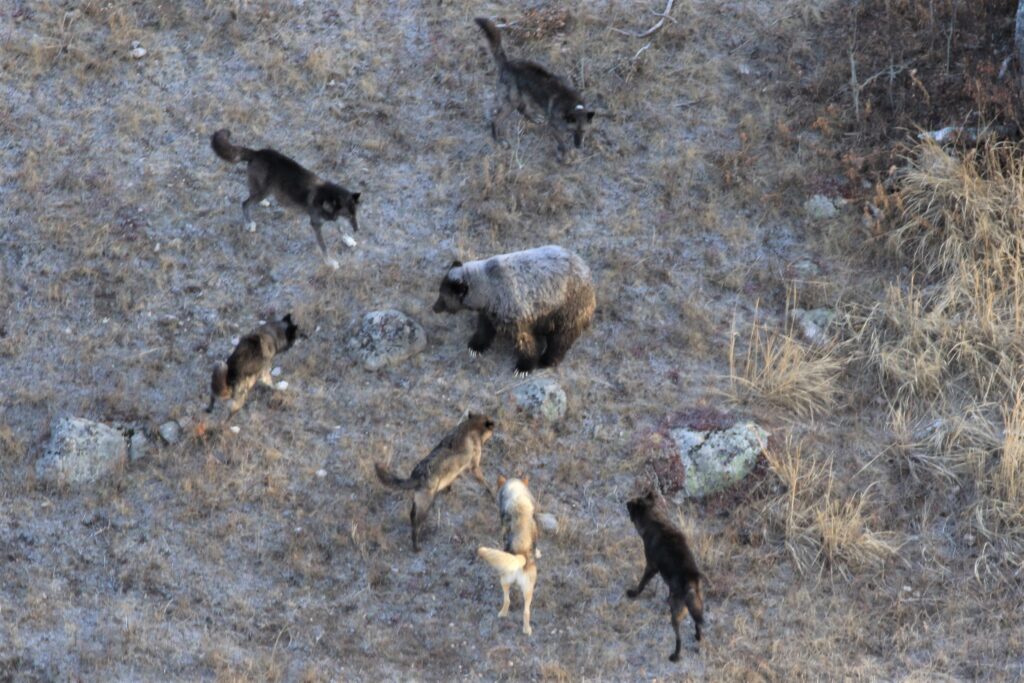
On page 260 of the document, Yellowstone Wolves, we read: “In 1995, the first year wolves were transplanted to the park,130 tour companies operated in the park with commercial use authorizations (CUAs). By 2019, over 300 CUAs had been issued.” Ask any of the tour operators and they will say that wolf and grizzly watching is a priority interest for their clients.
In a document published in May 2022 and authored by Chris Neher, John Duffield and Alec Patterson, they note: “Estimates from the 2005 visitor survey indicate that conservatively 325,000 park visitors saw wolves
in 2005 but it could have been as high as 379,000.
In the thirty years in which wolves have been back on the ground in Yellowstone, numerous studies of their effects on the ecosystem have added to our understanding of wolf-prey dynamics and ecosystem effects and species interactions. If you want to know more, these concepts are presented in Parts 4 and 5 of Yellowstone Wolves (2020).
None of these truly historical events and processes we have witnessed and recorded in Yellowstone in the past thirty years would have happened if wolves had not been actively restored to the park in 1995-96.
Mike and Doug were on hand to receive the wolves that arrived in January of 1995 and 1996, and they helped carry the wolves to acclimation pens where they were to remain for ten weeks to settle in. Leadership was also demonstrated by the late Yellowstone Park Superintendent Bob Barbee and Mike Finley who was accompanied on the day wolves were escorted back along with Interior Secretary Bruce Babbitt (a former governor of Arizona) and the late Fish and Wildlife Service Director Mollie Beattie.
These were public servants working for the public interest and on behalf of citizens who profoundly value the presence and existence of wildlife and giving species a second chance at biologically recovery, which is a never-ending, ongoing responsibility for each new generation. The voices of advocates like Renee Askins, Hank Fischer, Tom France, Suzanne Asha Stone, Bob Landis, Carter Niemeyer, conservation organizations and others too numerous to mention, were, of course, essential.
How fortunate we are to have had key people like them present at a pivotal moment in time, who championed science even when some didn’t want to listen or who dismissed the truth because it was unpopular or inconvenient to hear.
Also Read: