EDITOR’S NOTE: This piece was originally published in Dan Stroud’s hometown newspaper, The Pinedale Roundup. We encourage you to read the journalism being done by our friends at that newspaper located on the western flanks of the Wind River Mountains.
by Dan Stroud
Twenty two million dollars: pocket change any more to some of the people in the US. That’s the asking price for a 1.1 million acre ranch including millions of acres of BLM lands attached. This property has been the home of one of Wyoming’s families for over 120 years. The ranch houses domestic sheep that travel over 100 miles from their summer to winter ranges.
From a wildlife perspective, it is part of one of the most abundant habitats in Wyoming, and perhaps the world. A wildlife coordinator looked at the area on a map years ago and referred to it as The Golden Triangle because of its shape and its importance to sage-grouse. The Nature Conservancy examined areas of importance for mitigation in the Upper Green River Basin and declared it of major significance.
This area stretches across millions of acres of the most intact sagebrush system. Intact sagebrush communities are rare these days, yet the sagebrush systems here are the most intact in the world. It’s a sagebrush sea, rich with all of the indigenous species known to occupy sagebrush systems. This place is home to the world’s largest density of sage-grouse in the United States and the world. While many shun the word ecosystem, this area, like it or not, is tied to the Yellowstone Ecosystem, or Greater Yellowstone as some call it.
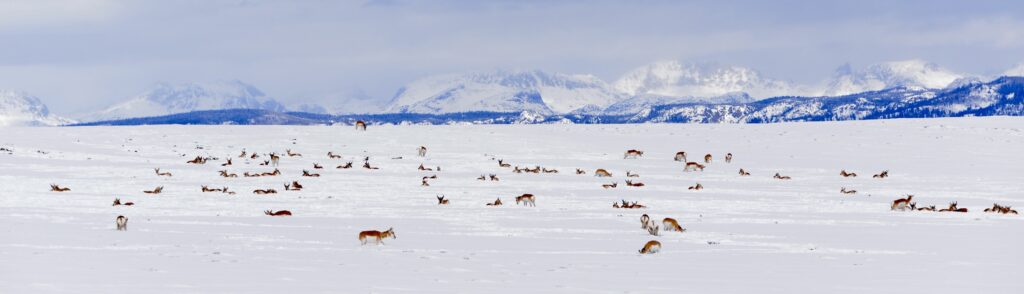
Many may call it a desert, rightfully so. Parts of it only receive 7 to 9 inches of precipitation a year, not much moisture if you’re a pronghorn in a bad winter living on the annual sagebrush production. Yet this place thrives with life, both human and wild.
The area contains one of North America’s longest ungulate migration corridors and is home to almost every native wildlife species in the lower 48. It also contains the culmination of one of the longest pronghorn migrations anywhere; one that is currently being debated as to whether or not it deserves a political designation for greater protection. Elk, pronghorn and mule deer all winter there and die there during harsh winters.
From a wildlife perspective, this place knows no boundaries in Wyoming. One cannot describe the importance and potential of it from a wildlife perspective. Spanning several million acres of private, state and mostly BLM lands, the area contains seasonal habitats that exceed the potential of any place in the state, or perhaps western United States.
The place is intimately tied to Yellowstone, a few hundred miles away, although not well known by most. Wildlife migrations, some from interior reaches of Greater Yellowstone pass through here spring and fall. In particular are mule deer and pronghorns, who have been found to travel over 100 miles from winter to summer range, summer range on the border of Yellowstone.
Some refer to a portion of this area as the Big Sandy Foothills, a triangle of land with rolling hills bordering the Wind River Mountains. Bighorn sheep roamed some of the area as recently as the 1970s. The area itself ranges from over 12000 feet to lower elevations of 7000 feet.
Tribes passed through this breadbasket, and gathered, hunted and left their mark in sacred places for thousands of years.
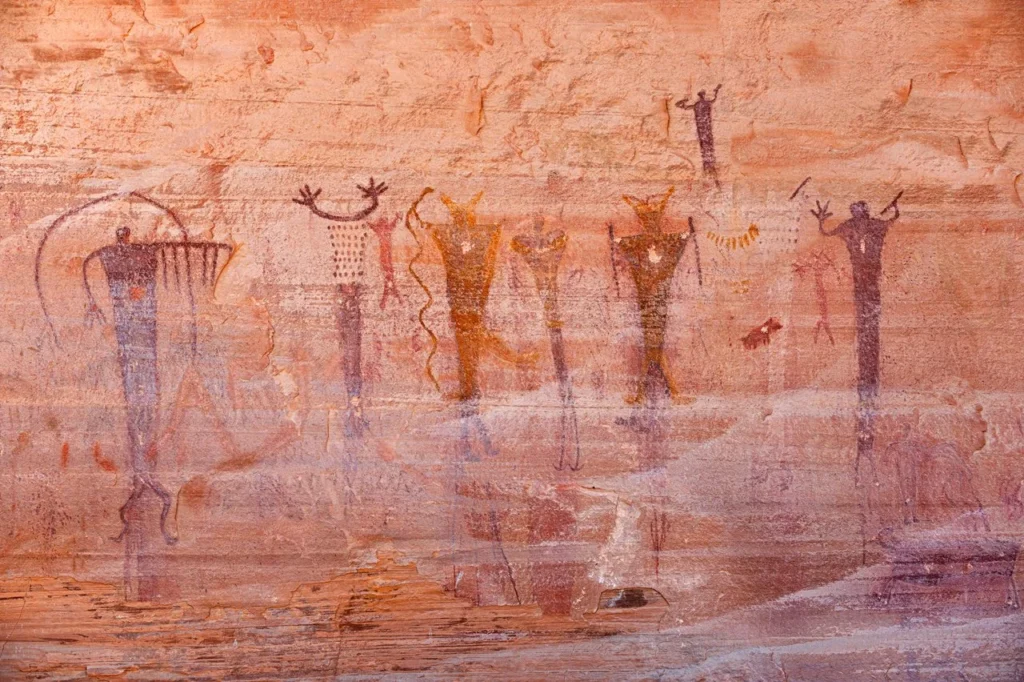
This place is where travelers went through on wagon trains searching for a better life. Where they braved cold, harsh temperatures because they left too late, some died here. Several trails traverse the area, the Oregon Trail is one. The story has told itself time and time again. It’s also been the home to several of Sublette County’s long time sheep ranches.
This place, is an important part of the Red Desert and known to many who pass through it during the summer months. It is a place where two lesser known rivers begin. Yet two of perhaps the most important rivers in the state; the Sweetwater and Big Sandy.
It’s a place that sees temperatures that, at one time, rarely exceeded temperatures in the 80’s in the summer while falling to the 50’s at night.
This place, this place! It harbors temperatures that plunge to subzero in winter. A place that you could be alone but never lonely in.
Now, I don’t know about you,or what you are thinking but in the back of my mind, a place such as this should get the recognition it deserves.
Mr. Stroud offers the links, below, for further reading:
Our Top Five High Desert Landscapes in the Rock Springs Area — Wyoming Outdoor Council
“UNWIRED: Making space for pronghorn in Wyoming’s Red Desert” Film – Wyoming Migration Initiative
Migration Corridors – Wyoming Wildlife Federation Red Desert to Hoback Migration; Sublette Antelope