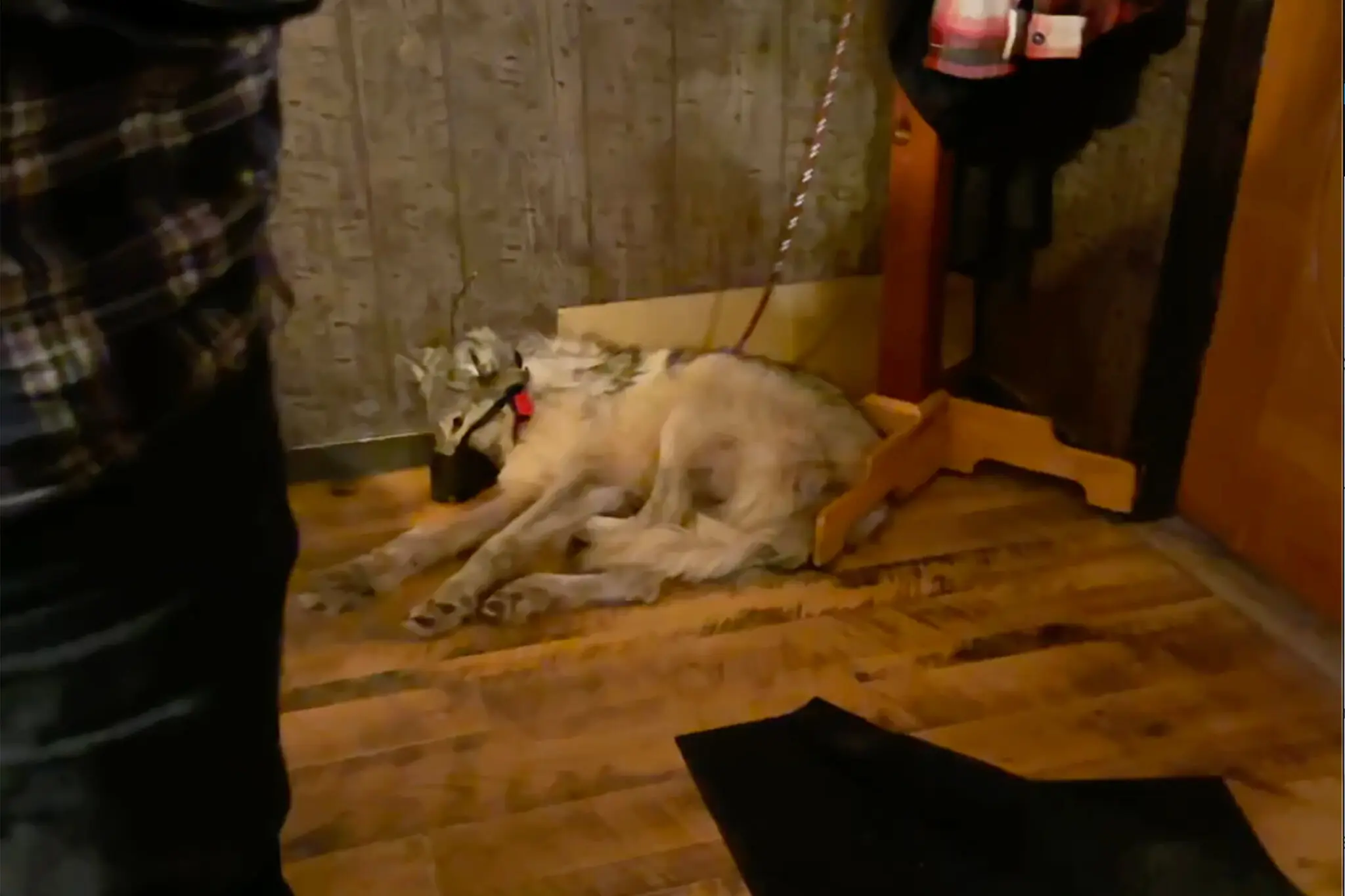
EDITOR’S NOTE: In winter 2024, a man in Wyoming notoriously drove over a young wild wolf with his snowmobile, captured the injured animal, duct-taped its muzzle, brought it to a local saloon to show off and then later killed it. The incident, when brought to public light, shocked the world because of this obvious expression of cruelty to animals. And yet despite condemnation from high-ranking officials in the state, no laws still have been passed to outright ban and criminalize the “sport” of running down coyotes, wolves and other animals with snowmobiles. In August, the Sublette County, Wyoming attorney brought evidence before a grand jury and it decided that charges were warranted 18 months after the incident happened. Below is an op-ed penned by Wendy Keefover for Writers on the Range. Her opinions are her own.
By Wendy Keefover/Writers on the Range
The Wyoming man who deliberately ran down a wolf with his snowmobile in 2024 didn’t initially face any consequences, unless you count a $250 fine for “possessing a live animal.” But as graphic photos of the wolf’s suffering spread across the nation, public reaction could be summed up as “horrified.”
Still, the Wyoming state legislature failed to make illegal what the suspect, Cody Roberts, did. After allegedly running over the young female wolf with his snowmobile, Roberts paraded the dazed animal—its mouth taped shut—through a bar in Daniel, Wyoming in the southern half of the Greater Yellowstone Ecosystem. Then he allegedly shot the wolf dead.
In reaction, the Wyoming’s governor and legislature passed a bill with no substance, HB 275, blandly labeled “The treatment of animals.” In passing it, Wyoming lawmakers sanctioned killing wildlife with vehicles.
At a hearing before the vote, representatives of Wyoming’s agricultural community defended the practice. One argued that without access to M-44 sodium-cyanide bombs that are now virtually prohibited, they needed to run over wolves and other wildlife with vehicles to protect their livestock.
For a while it seemed that the old ways of the Cowboy State would persist without question. But over a year later, an attorney for Sublette County convened a grand jury to examine Cody Roberts’ actions, and last week it indicted Roberts on “felony animal cruelty,” an offense punishable by up to two years in prison, a fine of $5,000, or both.
Wyoming’s decision leaders may not realize it, but they now face a new landscape that increasingly demands responsible, nuanced responses, as well as humane policies involving animals. This ethic has already emerged in the West. For the most part, Wyoming leaders seem to be taking bad advice from the wrong people and find themselves badly out of step with the rest of the nation.
Wyoming’s decision leaders may not realize it, but they now face a new landscape that increasingly demands responsible, nuanced responses, as well as humane policies involving animals. This ethic has already emerged in the West. For the most part, Wyoming leaders seem to be taking bad advice from the wrong people and find themselves badly out of step with the rest of the nation.
In a better world, those who work with animals—whether wild or domestic—would use ingenuity to prevent negative interactions with wildlife. Using the blunt force of a snowmobile to “manage” wildlife isn’t wildlife management at all: It is state-sanctioned cruelty.
Roberts needs to be punished. But what’s really at stake is achieving a changed relationship with wildlife in Wyoming. Ethics, not indifference, and a responsible attitude should prevail. And the state’s politicians and leaders need to be at the head of the parade on passing and enforcing laws that reflect the values of their fellow citizens.
In two separate polls, an overwhelming majority of Wyoming residents—including 74 percent of sportsmen—agreed that running over animals with vehicles is neither ethical nor “fair chase.” Our poll showed 71 percent of Wyoming residents do not approve of animal cruelty.
In two separate polls, an overwhelming majority of Wyoming residents—including 74 percent of sportsmen—agreed that running over animals with vehicles is neither ethical nor “fair chase.” Our poll showed 71 percent of Wyoming residents do not approve of animal cruelty.
The coming years could pose a rare opportunity for sportsmen, conservationists—and also the agricultural community— to find common ground, building a future where humane wildlife stewardship is the norm.
I believe this can happen because precedents exist. Simultaneously with the passage of its HB275 wolf bill this year, another nightmare had been brewing: Two legislators proposed a bill to allow year-round hunting and trapping of mountain lions. But hunters and wildlife advocates stood together and shouted a collective “No!”
The legislature listened. That moment proved something important. When we rise above division and focus on fairness and respect for wildlife, we can protect what makes Wyoming wild and wonderful, and we can do it together.
By dragging that muzzled wolf into a bar, Roberts also dragged Wyoming’s outdated treatment of wildlife into broader public view. In the harsh glare of what became a global spotlight, he may end up having done Wyoming a strange kind of favor. His grotesque actions exposed to the world what many here already knew—that cruelty to wildlife is not tolerated by most
Wyoming residents, even if it happens to be protected by law. Those who might think the state should ignore such cruelty grow ever fewer in number.
If there’s any justice to be found in the matter, it rests with the prospect that Roberts’ brutality could spark real change for the better for wolves and other wildlife, for ethics and for Wyoming’s future.
NOTE: Wendy Keefover is a contributor to Writers on the Range, an independent nonprofit dedicated to spurring lively conversation about the West.