by Todd Wilkinson
It was the dawn of the 21st century, the closing weeks of the Clinton Administration and it followed a few decades of bitter acrimony that had largely brought the so-called “timber wars” of the American West to a close.
Today, people may claim forest protection involved a fight over the survival of spotted owls but, in truth, it’s a false and simple characterization because owls were, and are, merely a high-profile symbol of something bigger and more profound.
What happened a quarter century ago was America witnessing one of the dying gasps of Manifest Destiny, and a country coming to terms with the fact that natural resources are finite and plundering them to serve short-sighted political agendas sometimes comes at horrific cost.
Back then, gone were the days of the timber industry’s unfettered swagger and its arguments, often advanced by those on Capitol Hill who believed our national forests should be treated as tree farms, with taxpayers helping to insure private companies notched profits at the expense of the natural world.
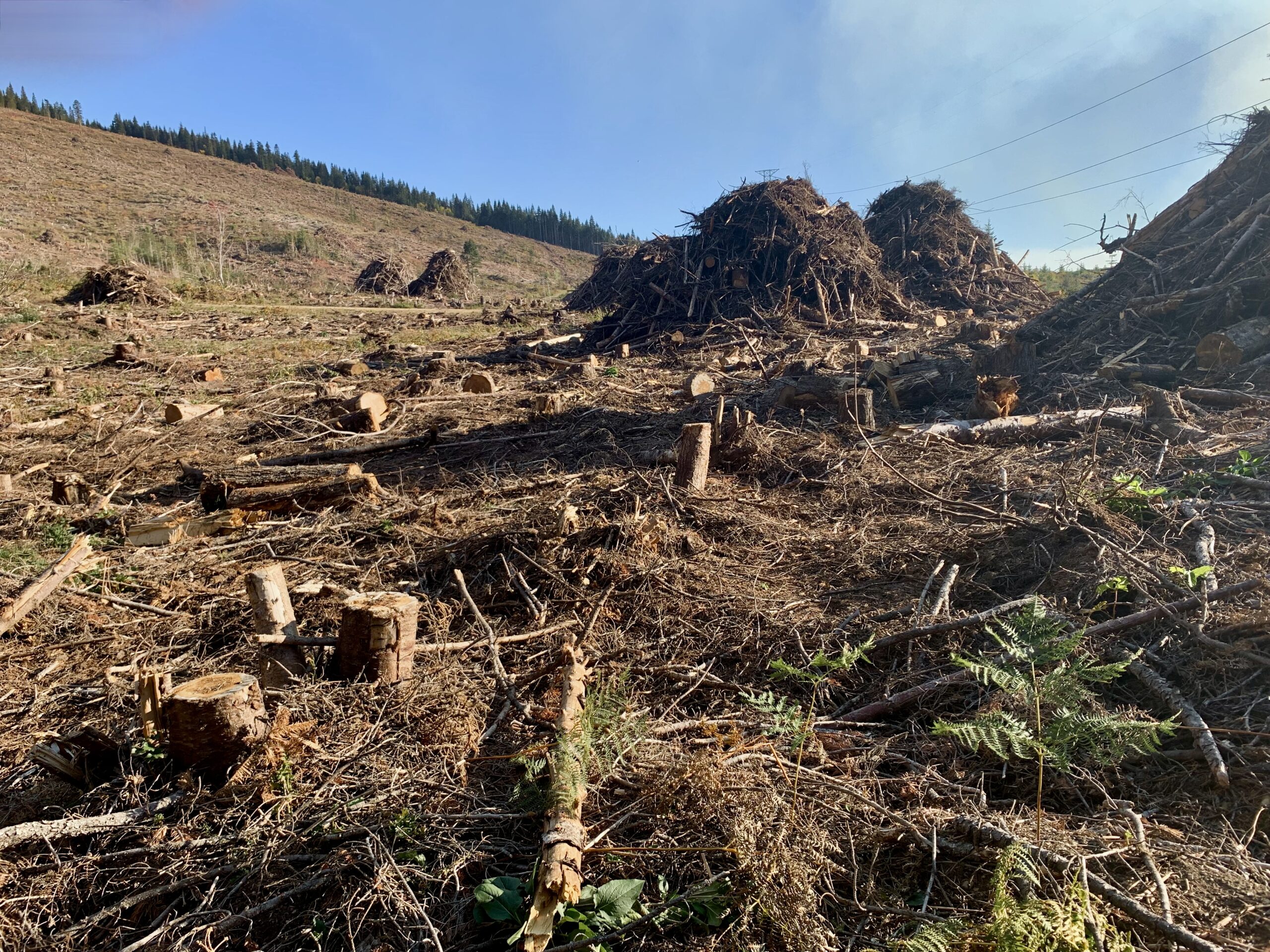
After World War II, a new technique of tree felling had been perfected, called “clearcutting,” in which swaths of forested mountainsides could be liquidated to extract merchantable timber as well as raw logs for the paper industry. Trees that held little commercial value, yet were integral to biological diversity, were cut down, too, left to rot on the ground or gathered in slash piles and burned.
Exposed slopes, stripped bare of vegetation, sometimes avalanched in landslides, clogging rivers below—spawning habitat for once mighty salmon and trout streams—under silt. Roads were audaciously and expensively blazed by engineers with the Forest Service and Bureau of Land Management into wild places in order to accommodate logging trucks.
What the public didn’t realize, not until environmental watchdogs and green-minded resource economists pointed it out, was that, often, road construction was being subsidized by taxpayers and public trees were being provided at hugely discounted rates—all to pad the bottom lines of big timber.
Many of the worst examples were in southeast Alaska on the Tongass National Forest, a rainforest of bewildering splendor and vital to the health of wild salmon. In the Lower 48, thousands of miles of logging roads crisscrossed the backcountry, and they invited waves of motorized recreationists.
The toppling of public forests and accompanying landscape fragmentation brought by roadbuilding resulted in ecosystems of species being disrupted or extirpated. Forest Service and BLM biologists who documented the wreckage and warned against it were threatened with termination, transferred to desk jobs or remote outposts to keep them silent. The same as today, science that did not serve the agendas of industry and politicians they supported were silenced.
How do I know this? I devoted an entire book to the plight of natural resource whistleblowers titled Science Under Siege: The Politicians’ War on Nature and Truth.
On national forests, the hardest to reach places, “roadless lands,” became vestigial refuges of incredible wildlife and planet diversity. Today, given the range of native species they are home to, or provide crucial seasonal habitat for, many Forest Service roadless lands are wilder than national parks and wilderness areas located close to large population center where they’re traversed by lots of people.
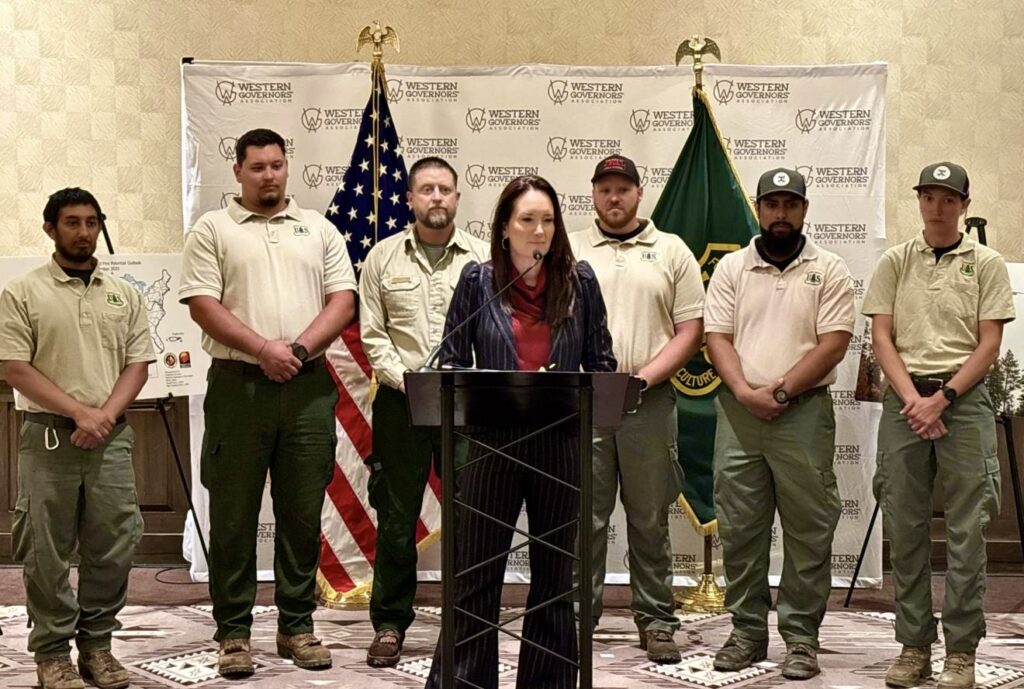
During the last week of June 2025, US Secretary of Agriculture Brooke Rollins, a cabinet member appointed by President Trump and who has authority over the Forest Service, gave a speech at the Western Governors Conference in Santa Fe. Rollins made a radical announcement. Protections that safeguarded Forest Service roadless lands for the last quarter century would be rescinded. Tens of millions of acres that had never been touched by mechanized access, roads, industrial logging, and intense recreation could soon be invaded by those activities and their character changed forever.
Part of the plan would also enable local Forest Service supervisors, in league with their political appointee superiors, to fast-track activities, including timber sales and roadbuilding, that otherwise would face rigorous review under the National Environmental Policy Act (NEPA). In addition, efforts are underway by Congress and the Trump Administration of weaken NEPA—often called the “Magna Carta of US environmental law” itself.
° ° ° °
Back now to the waning weeks of the Clinton Administration. In early 2021, I, as a young reporter, traveled to Washington D.C. and on a wintery day met with Forest Service Chief Mike Dombeck, a young policy advisor named Chris Wood, and experts conversant in wildlife, fisheries, watershed protection, forestry and fire management, wilderness, outdoor recreation, noxious weeds and economics.
They could point to a litany of destruction that the industrial timber era had wreaked. They and reform-minded colleagues gave me a tour of spaces where the Forest Service’s first chief, Gifford Pinchot, had met with an American president, Theodore Roosevelt at the start of the century just ending.
In their day, Pinchot and Roosevelt had devised strategies for how to protect public lands from the voracious appetites of robber barons, plunderers distinguished as much for their greed as their callous and poor understanding of nature. Roosevelt and Pinchot had positioned the Forest Service as a conservation agency, primarily aimed at protecting watersheds by protecting forests and preventing them from being stripped bare as had occurred in the East.
In their day, Pinchot and Roosevelt had devised strategies for how to protect public lands from the voracious appetites of robber barons, plunderers distinguished as much for their greed as their callous and poor understanding of nature. Roosevelt and Pinchot had positioned the Forest Service as a conservation agency, primarily aimed at protecting watersheds by protecting forests and preventing them from being stripped bare as had occurred in the East.
What Dombeck, Wood and others were trying to do was restore the agency’s credibility that had been lost due to timber cutting quotas that far surpassed sustainable levels of logging. They were endeavoring in 2001 to get an administrative action, called the Roadless Rule protecting 58.5 million acres, over the finish line before Clinton’s tenure ended. They succeeded in the early days of 2001, but it resulted in 12 years of protracted battles in the courts, against the same kind of frontier-era thinking conservationists are confronting today.
“Many Americans don’t realize this, but putting the Roadless Rule in place and successfully defending it was the most significant conservation measure of our lifetime,” Bozeman, Montana-based attorney Tim Preso with the non-profit, public-interest law firm, EarthJustice told Yellowstonian. The Earthjustice Bozeman office played a leading role in defense of the roadless rule and Preso had succeeded now retired attorney Doug Honnold.
“The Roadless Rule protected the most ecologically important lands in our national forest system and arguably within the public land base,” Preso said. “Now it could be squandered and for no compelling reason.”
“The Roadless Rule protected the most ecologically important lands in our national forest system and arguably within the public land base. Now it could be squandered and for no compelling reason.”
—Tim Preso, nationally respected environmental attorney with the public interest environmental law firm, Earthjustice
The most crucial point Preso makes is that roadless and a few other public lands currently classified as Wilderness Study Areas are the best habitat that remain and the last of the last; nature isn’t making any more of them, Contrary to what those who want to open them up to old-style multiple use development might say, they are not “underutilized,” he said. In fact, they still brim with environmental health and they hold priceless worth in a world becoming ever more intensely tamed and harmed by commercial exploitation.
As the late great conservationist David Brower, who penned a foreword for my book, Science Under Siege, said: most conservation victories achieved for the American people and wildlife are never permanent; they are destined to be fought over and over again by new generations of profiteers focused only on short-term gain. The most sobering truth of Brower’s words are these: when it comes to saving irreplaceable treasures in nature, “we have to win every time; the pillagers only have to prevail once and their attempts to do so are relentless.”
So, what is the Roadless Rule, why should readers care, and why has word of it being overturned by Agriculture Secretary Rollins left so many Americans reeling? Because the Roadless Rule, in terms of a conservation action that benefits the lives of citizens, is as concerning as efforts to halt separate maneuvering led by US Senator Mike Lee of Utah to sell off public lands. But together they represent a full-frontal assault on America’s conservation heritage belonging to all citizens, advocates say,
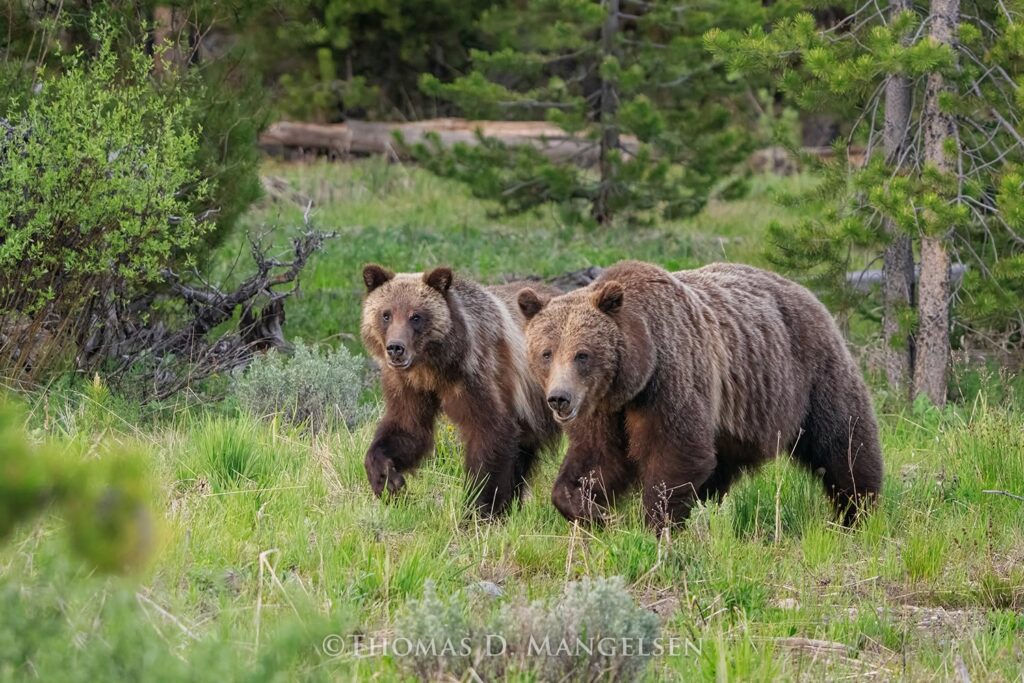
Sen. Lee claims that his divestment scheme, allegedly to help address lack of affordable housing, is aimed at public lands located near cities. Roadless lands hold supreme value for a number of differing reasons. They serve as buffers of space between intensifying human development pressures on private land and industrial strength levels of recreation on public lands. They are the fountainheads of clean drinking water that reaches tens of millions of Americans. They are essential to the biological recovery of grizzly bears, migratory elk and mule deer, wolverines, Canada lynx, imperiled amphibians, pollinators, and famous cold-water trout populations. All of the above support local economies and are critically important to the quality of life citizens enjoy and need.
Roadless lands are finite and compared to the vast majority of the US landscape in the Lower 48 that is dedicated to human domination, they are exceedingly rare and irreplaceable, Preso says.
A few years ago when I asked Ted Roosevelt IV, the lifelong Republican, New York City businessman, sportsman and conservationist, where his famous great grandfather president would have come down on the roadless lands issue, he said “the Old Lion would’ve been all-in and supported their protection—especially knowing what we know now about how important they are to a healthy country and healthy planet.”
A few years ago when I asked Ted Roosevelt IV, the lifelong Republican, New York City businessman, sportsman and conservationist, where his famous great grandfather president would have come down on the roadless lands issue, he said “the Old Lion would’ve been all-in and supported their protection—especially knowing what we know now about how important they are to a healthy country and healthy planet.”
At the Western Governors Association meeting, no notable Republicans rose up and supported Sen. Lee’s current attempts to sell off public lands, which has met with a backlash from hunters, anglers, ranchers, farmers, recreationists, and local communities. When Rollins took the podium and announced the Roadless Rule was being overturned, she said its preservation achievements are “outdated” and “contradicts the will of Congress” and undermines the Forest Service’s mandate “to sustain the health, diversity, and productivity of the nation’s forests and grasslands.”
The action is perfectly aligned with the agenda of the Heritage Foundation’s infamous Project 2025 document that would roll back many landmark environmental laws and public lands protections. And it’s a document that President Trump, when he was a candidate claimed he never read though many of his political appointees appear to use it as talking points.
Over the last 25 years, Wood left the Forest Service and went on to other things. He’s been the long-serving CEO and president of the national wild trout protection organization, Trout Unlimited. TU has 400 chapters and more than 300,000 members and supporters worldwide, the vast majority being in the US.
Ever since Trump started issuing executive orders and unleashing agents of the Department of Government Efficiency (DOGE) right out the gate of his second presidency, conservation organizations have braced against a continuous onslaught of rolling back wildlife and landscape protection that took decades to achieve.
“Rescinding the Roadless Rule surprises me a little bit, especially in the wake of the public so thoroughly rejecting attempts by Senator Mike Lee to sell off public lands with the endorsement of some in this Administration,” Wood said. As for roadless lands, he noted: “ I kind of felt like this was settled history. I don’t think the Forest Service has the appetite to tear off the scab that formed and healed over time.. It’s a wholly different Forest Service than it was 25 years ago.”
No longer is the Forest Service designed as it was, foremost, for much of the latter 20thcentury, “to get the timber cut out,” he noted, but in addition, there are no jobs jeopardized today by the presence of protected roadless lands.
“The popularity of backcountry areas hasn’t diminished and understanding of how important intact ecosystems are has only grown dramatically with conclusions supported by science,” he said. “The agency [Forest Service] has some of the most knowledgeable advocates for those areas.”
After a pause, Wood added, “I want to think there might be a good reason for what Agriculture Secretary Rollins is doing, and I’m always one to believe there’s a pony hidden in this pile somewhere and I’ll find it if I just keep digging, but I don’t see it. And if there’s no persuasive reason that can withstand, then why do it?”
From 1960 to 1989, between nine and 12 billion board feet of timber a year came off national forests. The Pacific Northwest and areas of the Rockies were breadbaskets. According to Congress, the volume of trees felled on national forests represented 16 percent of total US output, but it also swamped markets and resulted in lower prices for owners of private forests. Today, about three billion board feet of trees, around one fourth or one third of previous levels, is coming off national forest lands. Watersheds traumatized by intense cutting are now healing and, together with removal of dams in the Pacific Northwest, imperiled salmon are showing some signs of recovery.
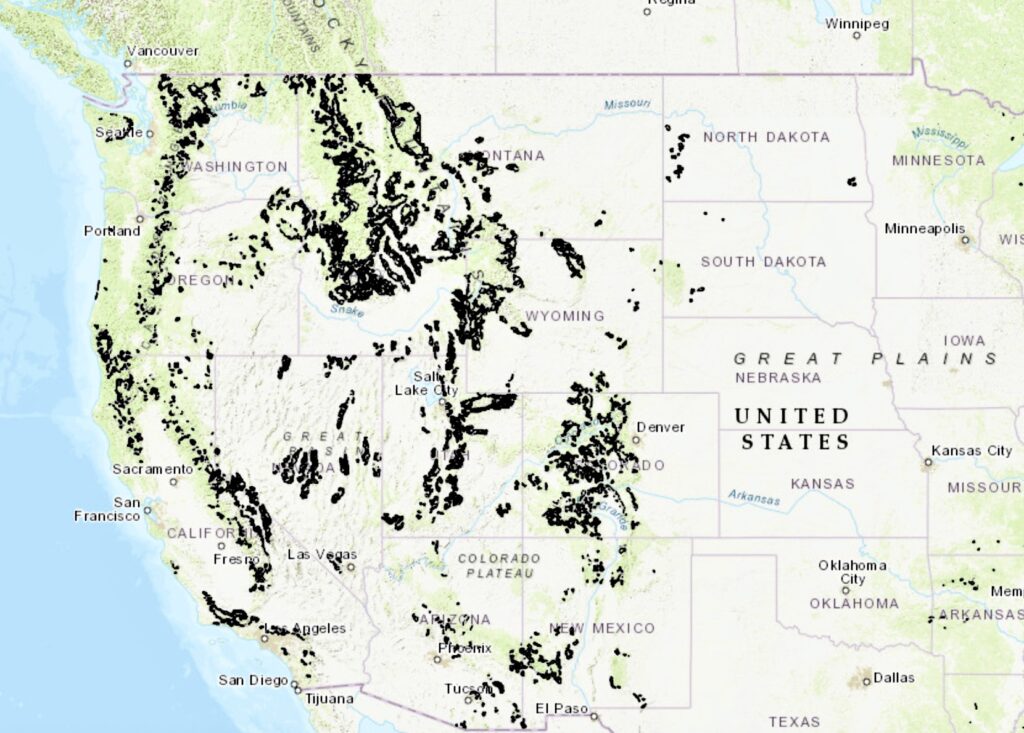
Regarding the three Greater Yellowstone states, here is a way to reach an overview of inventoried roadless lands not only for Montana, Wyoming and Idaho but across the country.
One of Rollins’ assertions, roundly mocked by scientists, is that in order to save national forests from wildfires due to climate change, they need to razed and, along the way, enabling the resuscitation in production capacity of the timber industry.
Just as American manufacturing can never turn to its glory years, neither will the timber industry. What Rollins doesn’t acknowledge is that technology alone eliminated many timber jobs, AI is going to make human workers even more redundant, and the value of healthy ecosystems holds more economic valuable than logging.
No one disputes that strategic thinning of forests in settings holding lots of human structures isn’t beneficial. Rollins and allies, like the free-market environmental think tanks touting her plans, claim that thinning will reduce large wildfires.

Yet ecologists note that most large fires are a result of dry condition (caused by warming climate) and high wind events of the kind that have had devastating consequences in California and Colorado. An insidious, lesser known aspect is that between administration action and legislation passed by Congress, local forest supervisors can invoke categorical exclusions from having to comply with environmental review of logging’s effects.
In Rollins’ press release, the Department of Agriculture stated, “This action aligns with President Trump’s Executive Order 14192, Unleashing Prosperity Through Deregulation to get rid of overcomplicated, burdensome barriers that hamper American business and innovation. It will also allow more decisions to be made at the local level, helping land managers make the best decisions to protect people, communities and resources based on their unique local conditions.”
In essence, much like the days of old, forest supervisors could be rewarded in their performance reviews for getting the cut out and building more roads while giving less attention to negative effects to fish and wildlife. It’s also a recipe for avoiding excoriation from politicians pushing to cut more trees. That’s how it used to be.
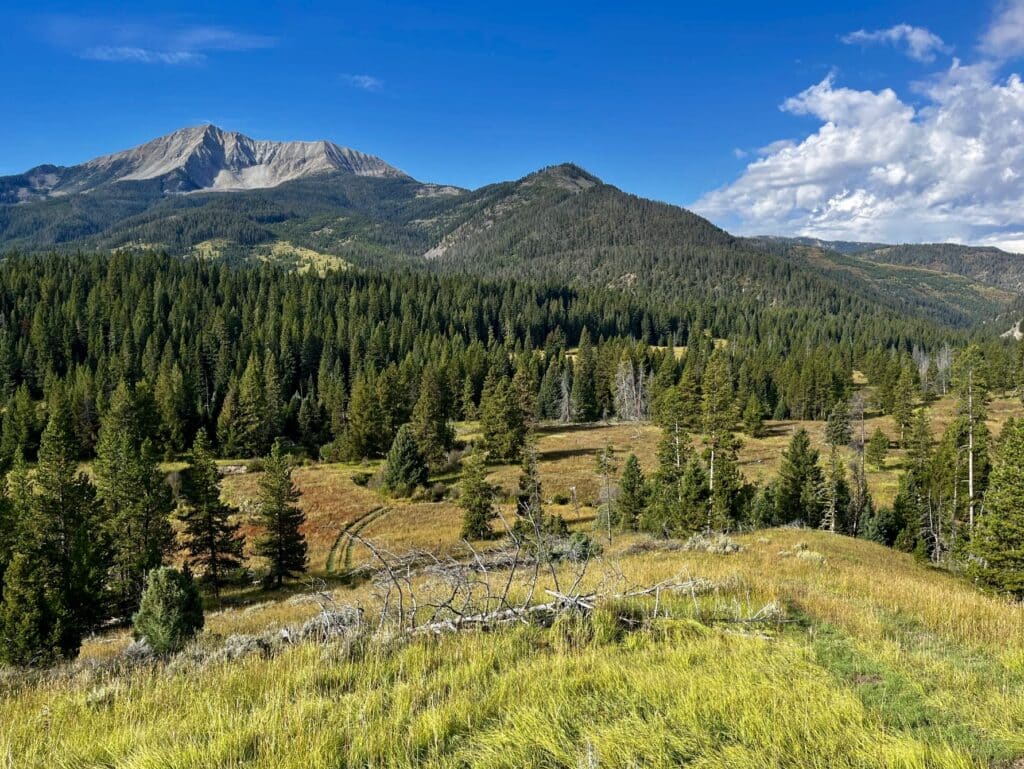
As Preso notes, forest supervisors at local levels have a historically checkered legacy of environmental protection, particularly when there is pressure applied to appease politically-connected natural resource industries. Roadless lands serve a vital function in Greater Yellowstone and the Northern Rockies in maintaining wildness.
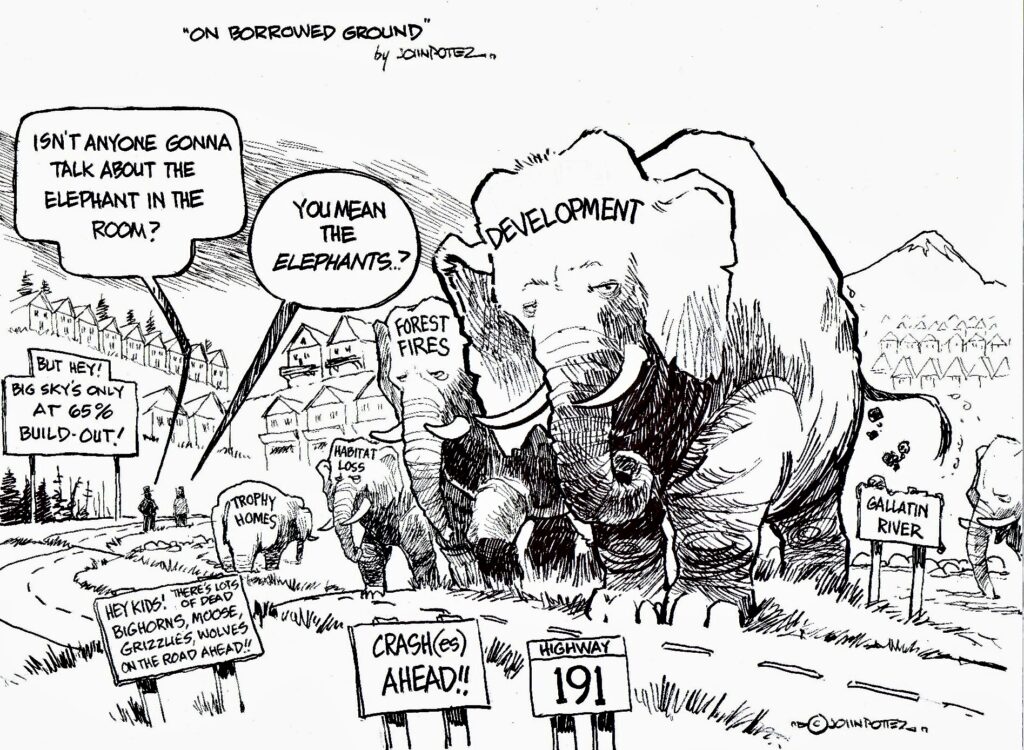
As Reed Noss, an ecologist and leader in modern conservation biology, notes, nothing leads to more destruction of nature than a road blazed into wild country. Once its there, industrial strength everything uses the access to exploit the space—be it resource extraction, sprawl grows (if roads are built on private lands) and a more recent phenomenon: industrial strength outdoor recreation.
Roadless lands hold some of the last great ancient trees on the American landscape. People nowadays forget that Dr. Seuss’s environmental fable, The Lorax, was penned by Theodor Geisel after he observed with revulsion, the toppling of California’s redwoods and cedars. Some of the old-growth giants were 2,000 years old and climbed hundreds of feet tall.
“Gifford Pinchot, the first chief of the Forest Service, once described conservation as ‘the application of common sense to common problems for the common good.’” TU’s Chris Wood said. “ Let’s hope common sense prevails and the Administration reconsiders its proposal.”