by Todd Wilkinson
Over the years, it’s been fascinating to observe the evolution of Bozeman artist Catherine Courtenaye and her ongoing explorations of “the Nature of place.”
Using pen, ink, and paint, Courtenaye’s work, recalling the stylish signatures of elegant penmanship, continues to delve deeper into the elemental patterns of the interior West, while refusing to pay heed to the fickle winds of the marketplace.
A decade ago, Courtenaye deployed the handwriting style of 19th-century inhabitants (found in the archives of the Montana Historical Society) with screen-printed facsimiles, presented as words floating enigmatically in the atmospheric ether of landscape, highlighting the gossamer qualities of the sentient outdoors which often, paradoxically, hover around us in ineffable ways.
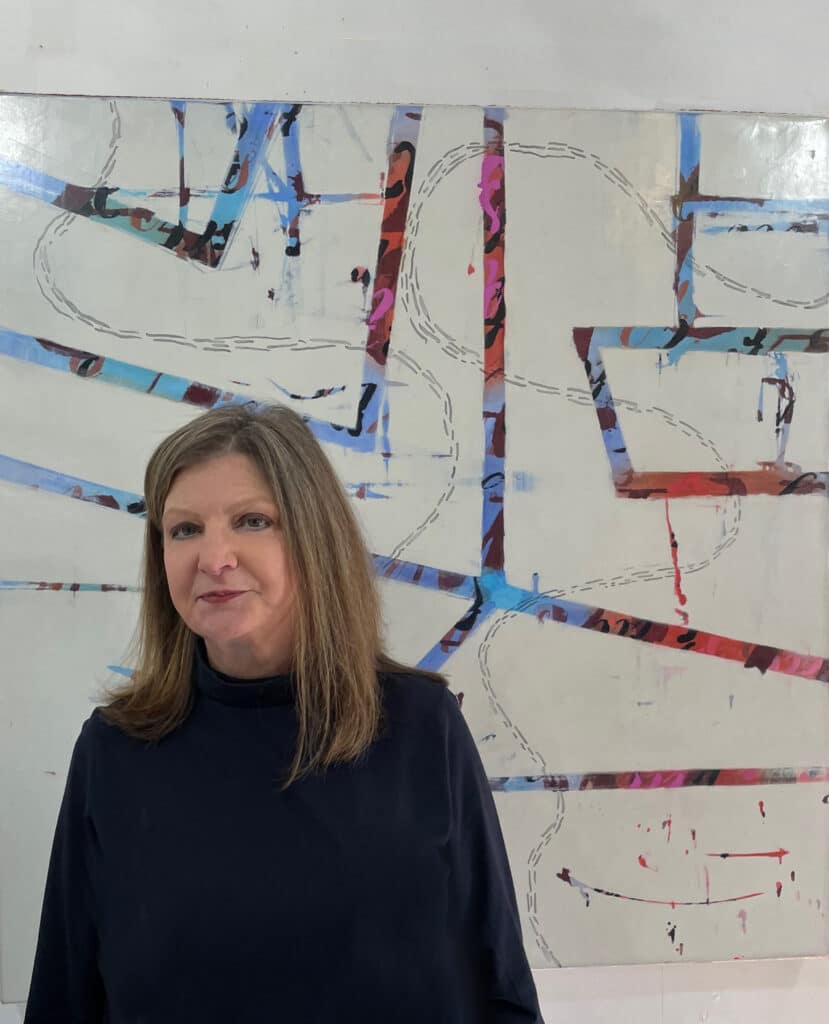
In more recent years, observing the movements of both avian and terrestrial wildlife migrations, and hoping to help sensitize viewers to the often-invisible essence of animal movements, she dwells at the intersection between painterly abstraction and the emerging revelations of science to create a personally expressive narrative.
Not long ago, after her solo exhibition “What the Nighthawk Knows” at Echo Arts in Bozeman, the Whitney Western Art Museum in Cody (part of the venerable Buffalo Bill Center of the West complex of museums) acquired her piece, The Measure of a Wingbeat, for its permanent collection.
She followed up that show with the series “Redrawn Topographies: Human and Wild Imprints on the Land” that is intended to seduce viewers into considering how the New West—erected on models of Cartesian order and geometric planning—often is at odds with the transcendent currents of Nature’s larger superstructure. When we try to impose our will to tame or control forces moving forward since time immemorial, we are unraveling the very essence of the planet.
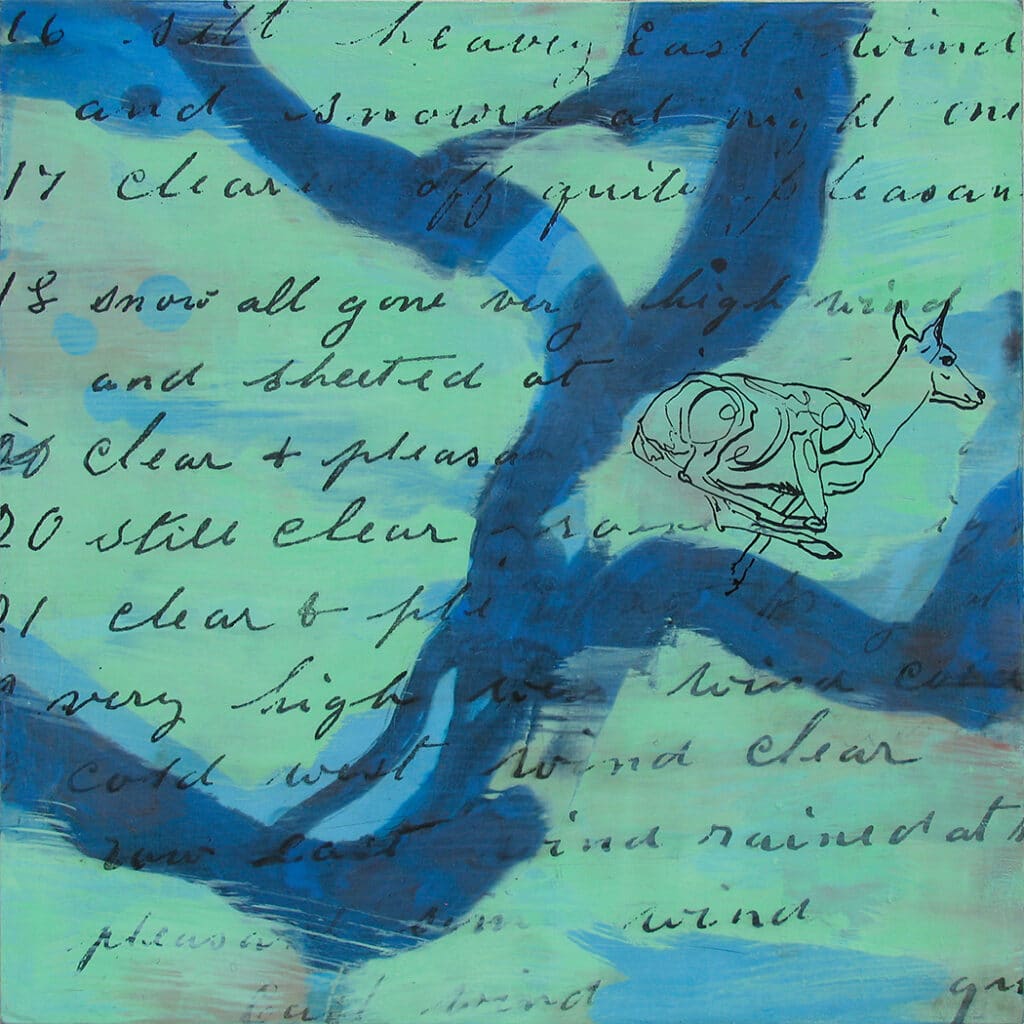
Based on the power of the idea, with the works as exponents, Courtenaye in 2026 was invited to be part of group shows at Zolla/Lieberman Gallery in Chicago and Stremmel Gallery in Reno.
Courtenaye isn’t alone. She is among a cohort of daring painters, sculptors, photographers and others demonstrating that interpreters of the contemporary West are not stuck in the past. They are not on a mission to venerate the romantic, often kitschy motifs of Cowboys & Indians that may speak to mythological tropes invented by Hollywood yet ignore the majesty of wild and pastoral landscapes, modern agrarians, and indigenous peoples right now before us in the 21st century.
Just last fall, the Bozeman-based non-profit Center for Large Landscape Conservation in Bozeman, renowned globally for its work in advancing wildlife overpasses and underpasses, hosted an event featuring the work of Courtenaye and that of Twin Bridges, Montana, artist Linda Foy. Both artists create paintings devoted to migration that are impactful, stimulating, and entirely original.
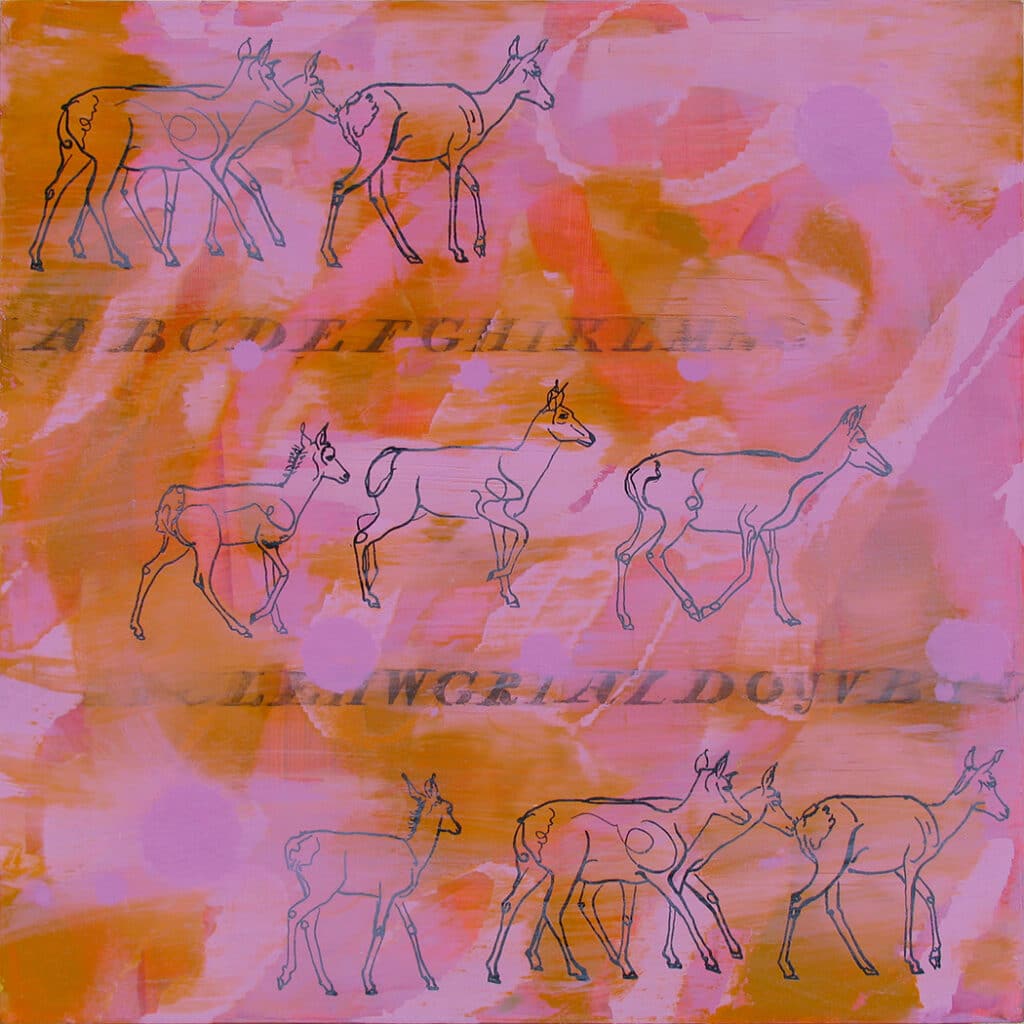
Courtenaye isn’t interested in literal representation of subject matter or in achieving exactitude in the way that we read migration cartography (such as that created by the Wyoming Migration Initiative and USGS) which is based on GPS coordinates from radio-collared elk, mule deer, pronghorn, and even grizzly bears. Nor does her work fit into the genre of classic naturalistic illustration or traditional wildlife art in which animals are often replicated, as if interpreted through photographs.
Gaining inspiration from the pulse of wild migration, Courtenaye wants to open our eyes, especially those of younger urban dwellers removed from daily contact with truly wild country, to the electric sparks of life inhabiting our part of the West. And, she wants us to reflect on that spirit, to see how nature’s rhythms and harmonies are being displaced in the human-dominated age of the Anthropocene.
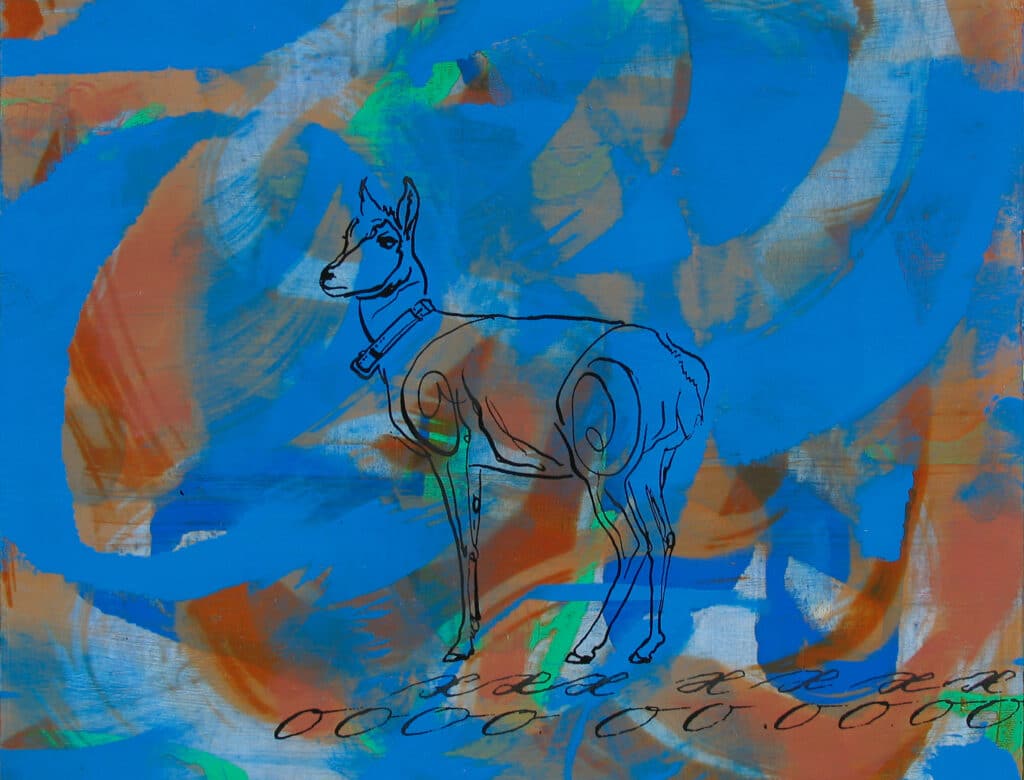
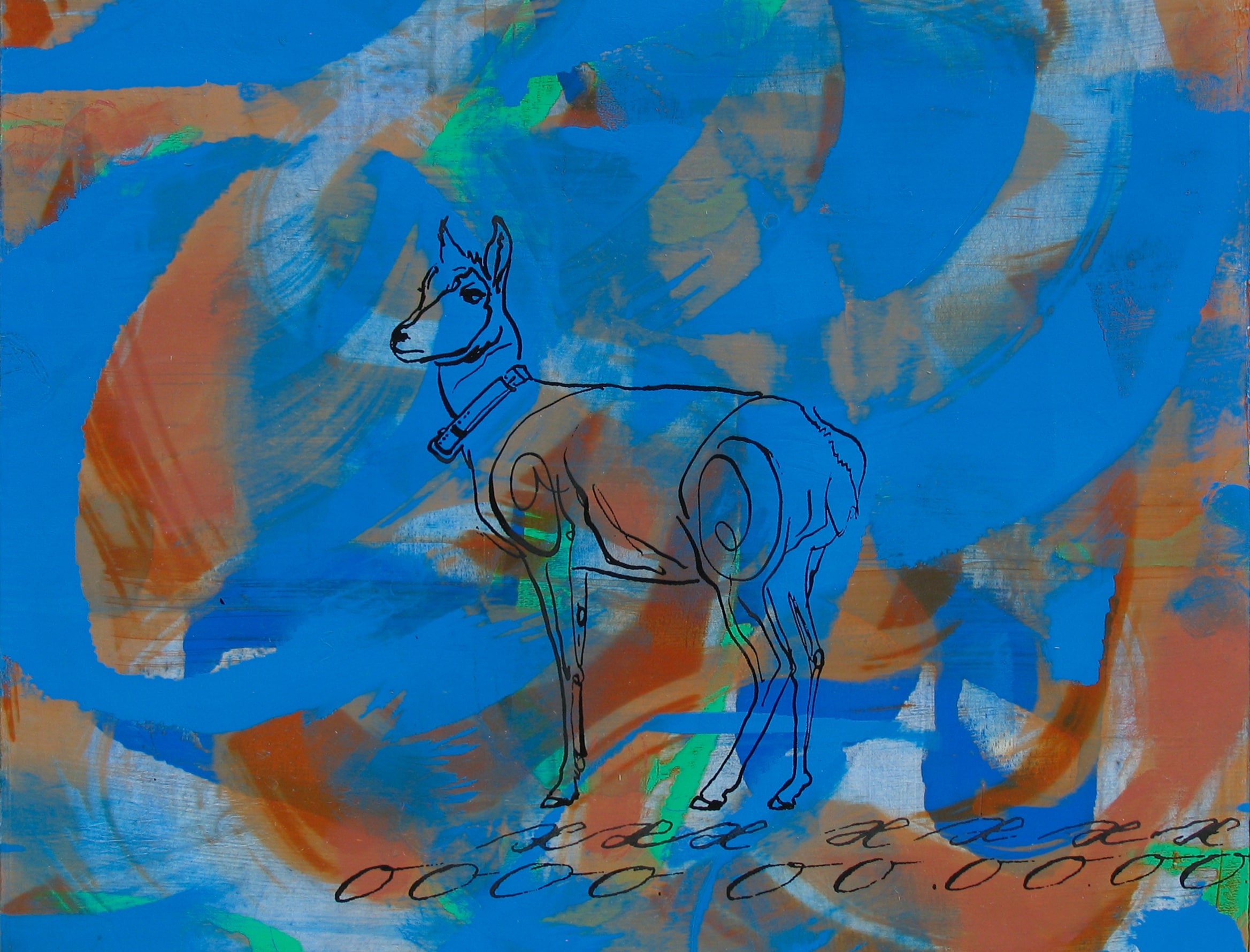
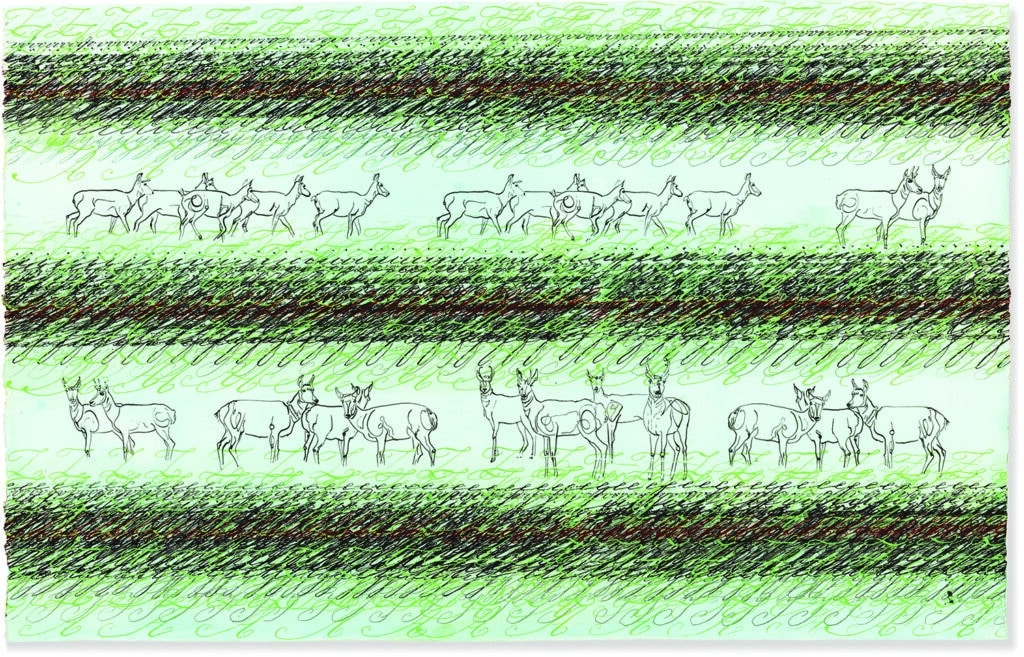
Courtenaye is currently in the midst of what she describes as a fertile period of pushing the envelope further, having spent long days of spring and summer in the studio pondering the seasonal patterns of migration. In one new series, “Liminal Range,” overlaid penmanship exercises are transformed into barbed wire fencing, raising our awareness about habitat spaces in-between. And, the the current “Sightings” series, (see above), she brings an eye toward often moody Mark Rothko-esque color fields while superimposing crisp, inky, calligraphic lines to mesmerizing effect.
The converging themes: wildlife, fences, survival, and freedom.
Her artist statement is a refreshing example of how we can think and orient ourselves differently to this special, fragile and finite corner of the West in which we are immersed.
How do the places we choose to inhabit affect wildlife’s ancient passageways? And ultimately, how does contemporary art speak to our conscience and values?
Seeing Courtenaye’s works in person can summon the kind of reflection we have when entering a mountain clearing after rain or snow has transformed the path before us into a fresh journal page: seeing tracks of non-human denizens, we realize they are fellow travelers in time and space. What can we learn from their traces?
You can find her work here.