by Todd Wilkinson
One of my favorite quotations about advocacy comes from a journalist who went on to become a twice-elected governor of a western state—as a Republican— and who didn’t approach his tenure as trying to win a popularity contest. He didn’t tell constituents what they wanted to hear, but what they needed to hear, and it won him the faith and trust of the electorate who felt with him a shared sense of place.
Tom McCall of Oregon touted the smartness, fiscal responsibility and predictability of land use planning. He also saw virtue in connecting people with public lands, having urban parks and protecting the integrity of natural and working lands, be they private or public.
Famously, as Oregon was first being inundated by an inflow of California transplants, McCall said, “We want you to visit our State of Excitement often. Come again and again. But for heaven’s sake, don’t move here to live. Or if you do have to move in to live, don’t tell any of your neighbors where you are going.”
(This, in turn, led to proliferation of bumper stickers and postcards that read: “Welcome to Oregon—Now Go Home.”)
The other McCall quote alluded to above, and even more appropriate, is: “Heroes are not giant statues framed against the sky. They are people who say: ‘This is my community, and it’s my responsibility to make it better.’”
McCall had no respect for whiners, slackers and those who believed the state’s future should be determined by outsiders.
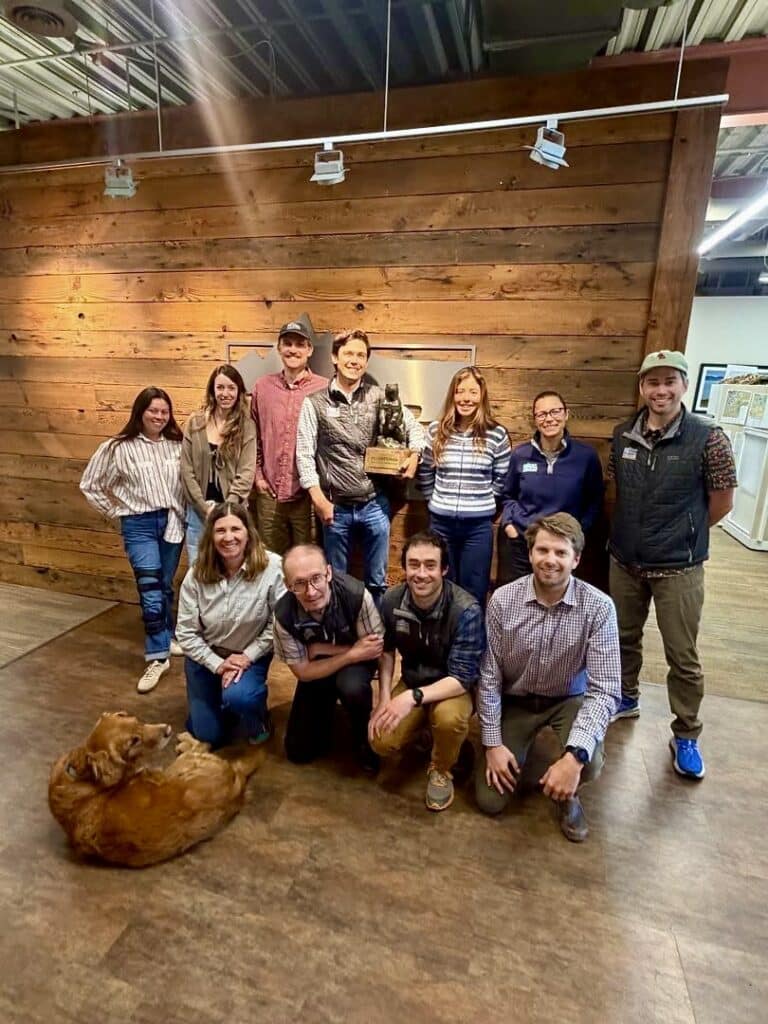
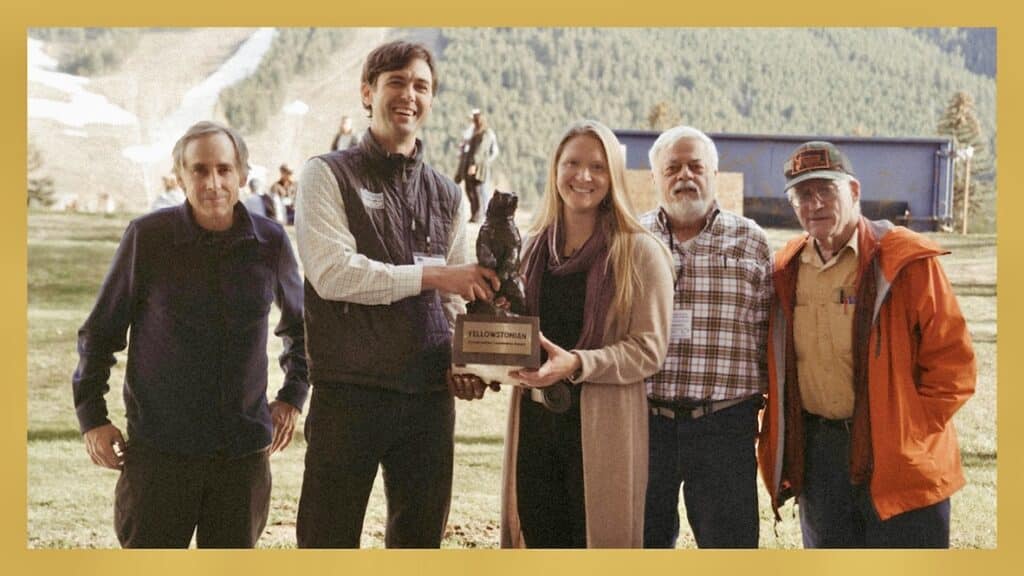
Back in late May, in Jackson Hole at the Northern Rockies Conservation Cooperative’s 10th biennial public symposium, Yellowstonian presented its first-ever Conservation Leadership Award to two organizations.
Although our bioregion is renowned globally as being “the cradle of American conservation,” its hard-earned legacy has been galvanized by individuals, groups and agency personnel across generations who put the spirit of McCall notion of advocacy into practice. You may wonder: Why did we select the Jackson Hole Conservation Alliance (originally known as the Jackson Hole Alliance for Responsible Planning) and the Jackson Hole Land Trust for special recognition?
Besides their longevity, persistence and legacy of results, we highlighted the Alliance and Land Trust because they continue to demonstrate why, in these most challenging of times, it’s essential to do everything an organization can to hold the line. This isn’t a political statement; it’s a fact of modernity involving the hard-wired instinct of human nature to constantly want to exploit good things that are finite.
Although different in their approaches but not at odds with one another, both the Alliance and Land Trust were born just a year apart in response to emerging challenges just beginning to erupt in the heart of Greater Yellowstone. Their ongoing work has proven them to be resilient and forward-thinking.
It’s hard to keep momentum going over a span of nearly five decades. But this the Alliance and Land Trust have managed to do.
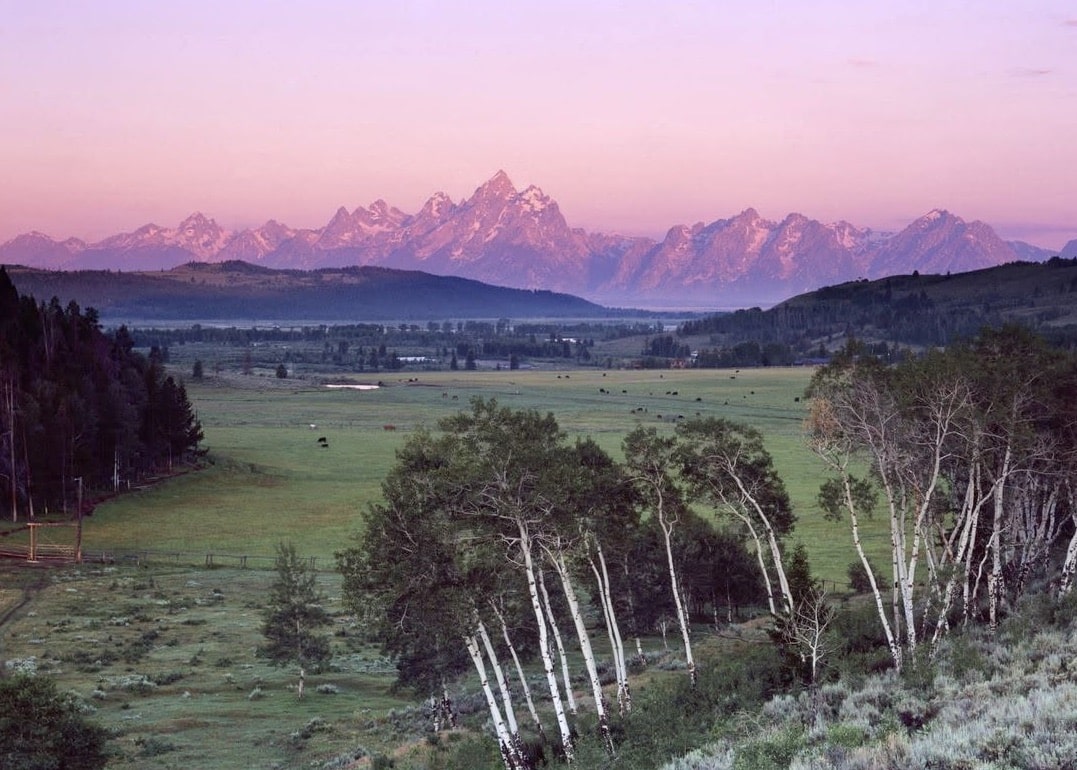
People forget that while Bozeman has one of the highest concentrations, per capita, of paid professional non-governmental conservationists in the country, the original centrifugal hub of advocacy in Greater Yellowstone was Jackson Hole. Along with the Alliance, founded in 1979, and Land Trust, born in 1980, other conservation entities that have a direct or proximate connection to that breathtaking dale are the Teton Science School; the Murie Ranch in Grand Teton National Park that today is the Murie Center (which is on the National Register of Historic Places) and, nearby, in Lander, the National Outdoor Leadership School and Wyoming Outdoor Council.
The Alliance itself was a springboard for creation of the Greater Yellowstone Coalition, founded at the Teton Science School in 1983 and then cemented by two subsequent gatherings of advocates at John and Melody Taft’s ranch in the Centennial Valley and Maryanne Mott’s B Bar in Tom Miner Basin, both in Montana
GYC , though based in Bozeman, arguably would not exist were it not for the contingent of concerned citizens in Jackson Hole who recognized the need for a larger cohesive vision of public and private land conservation.
At the NRCC symposium, we asked two individuals who were part of that earlier era to present Yellowstonian’s Conservation Leadership Award to the executive directors of the Alliance (Jenny Fitzgerald) and the Land Trust (Max Luddington). While to some it represented a contrast—between two grizzled gray hairs long in the tooth and weathered by years of battle, and younger conservation leaders in the making—the message we wanted to convey was this:
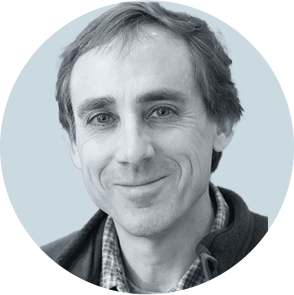
Both of the octogenarian elders, Franz Camenzind and Phil Hocker, had once been the age of Fitzgerald and Luddington; both had been influenced by the late Mardy Murie and her sister, Louise (and, of course, their famous brother scientist husbands, Olaus and Adolph Murie. Both Camenzind and Hocker did not adopt a self-absorbed mindset focused only on playing in wild and natural lands. They embraced the ethic of defending them, especially wilderness. Laudatorily, Fitzgerald and Luddington exude similar character and it is reflected in the dedication of their staffs and boards that surround them.
Both of the octogenarian elders, Franz Camenzind and Phil Hocker, had once been the age of Jenny Fitzgerald and Max Luddington; both had been influenced by the late Mardy Murie (the Jackson Hole-based “godmother of the modern wildlands conservation movement) and her sister, Louise, and, of course, their famous brother scientist husbands, Olaus and Adolph Murie. Both Camenzind and Hocker did not adopt a self-absorbed mindset focused only on playing in wild and natural lands. They embraced the ethic of defending them, especially wilderness.
In Hocker’s case, he was asked to fly out to Jackson Hole to not only give the shared trophy of a grizzly to Luddington, but for him, it was a deeply personal pilgrimage. He is the widower of the late Jean Hocker, a conservation legend in her own right who co-founded the Jackson Hole Land Trust. A decade later she went on to lead the Land Trust Alliance, headquartered in Washington, DC, and which is today the bulwark for the land trust idea that exists coast to coast.
Yes, Jackson Hole is a North Star in the constellation of American land trusts that use a revolutionary tool called “conservation easements” to protect natural lands.
Hocker himself was a warrior, first with the Sierra Club and then as founder of the Mineral Policy Center that had an important role in waking up the nation to costs of unregulated hard rock mining and seeking reform of the General Mining Law of 1872.
While Jean focused on advancing land stewardship on private ground, working with legacy ranchers and private property owners to safeguard open space, wildlife habitat and agrarian traditions, Phil’s attention pertained mostly to threats rapidly emerging on public lands. That, in turn, gave him an overlap with the science-driven advocacy of Camenzind, a canid biologist with a PhD and award-winning wildlife filmmaker, who went on to be the Alliance’s executive director. One person both Hocker and Camenzind mentioned as a playing a critical role in both the Alliance and Land Trust is Story Clark, a best friend to Jean Hocker, and a gentle tour de force.
The Alliance and Land Trust did not happen because locals wanted a social club but recognition that Jackson Hole needed to confront dire threats, some that continue to this day. Development pressure, soaring real estate values and land fragmentation were making it ever tougher for cattle ranchers, even generations ago, to operate at scale.
Meanwhile, the US Forest Service was considering approving controversial exploratory natural gas wells up Cache Creek just beyond the eastern town boundary of Jackson. There were serious concerns it could result in deadly hydrogen sulfide (sour gas) being accidentally released into the air.
There was also talk of a shopping center being built in Kelly (inside Grand Teton National Park], another dam being built on the Snake that would have submerged the Oxbow Bend in Grand Teton, and a water slide amusement park proposed for construction across from the National Elk Refuge. Another threat, that would’ve been disastrous for dealing with growth, was a proposal to build the “North Bridge” over the Snake providing easy quick access between Teton Village and developable lands off the west bank of the Snake River and the Jackson Hole Airport.
Without the intervention of the Alliance and Land Trust, things would be profoundly different in Jackson Hole today. Each group had a catalytic effect, inspiring other communities to take notice and adopt pro-active strategies for conservation rather than practicing advocacy that is only reactive, defensive and less effective.
During their early days they also demonstrated synergy as the Alliance played a key role in securing $1.8 million in federal funds that, in turn, protected $4 million worth of private scenic ranchlands in Buffalo Valley.
Year after year, pressures have been incessant and cumulative. The Jackson Hole Land Trust has protected more than 66,000 acres on 280 different parcels in Jackson Hole, the Upper Green River Valley, Park County, Wyoming and the Wind River Valley. Noteworthy is that each easement holds strategic importance. They all add up.
East Gros Ventre Butte that rises above the town of Jackson and juts northward past the National Elk Refuge onto the front doorstep of Grand Teton Park is a landmark, and one that easily could have had homes and buildings crowning its top. But the Land Trust, by piecing together easements, has insured it will never be blemished by structures while at the same time offering habitat for species like elk, mule deer, grizzlies, cougars and even wolves that have moved across it.
It’s also worth noting that the Alliance, meanwhile, started as the Jackson Hole Alliance for Responsible Planning and it played a crucial role in creation of the Teton County/Jackson Comprehensive Land Use Plan, one of the most thoughtful ecologically-informed planning documents in the rural West and among the few in the Northern Rockies with enforceable planning and zoning. It’s opening paragraphs feature these aspirational words that spell out its overarching intent: “Preserve and protect the area’s ecosystem in order to ensure a healthy environment, community and economy for current and future generations.”
It’s extraordinarily difficult to be an organization in the trenches that questions the mythology that “all growth is good” no matter what form it takes. That is the kind of thinking that turned the Front Range of the Colorado Rockies and Wasatch Front of Utah into places where their natural ambiance has been crushed by human footprints of development pressure.
It’s extraordinarily difficult to be an organization in the trenches that questions the mythology that “all growth is good” no matter what form it takes. That is the kind of thinking that turned the Front Range of the Colorado Rockies and Wasatch Front of Utah into places where their natural ambiance has been crushed by human footprints of development pressure.
People, especially developers, get angry with groups that take stands for wildlife, clean water and open space, but no one regrets the bold stands the Alliance has taken and it’s a model for working and thinking across the invisible boundaries that, administratively, separate public from private land.
The hallmark of the unparalleled kind of landscape protection that (still) exists in Greater Yellowstone today that in earlier times, people and organizations did not cower, or engage in conflict avoidance behavior, or sit in passive meekness on the sidelines; they dug in, spoke up and, made their voices count when necessary.
Still, in Jackson Hole today there’s a weird recalcitrance floating in the air that represents a cultural shift away prioritizing conservation. Some developers have succeeded in trying to portray nature protection groups as “obstructionists to progress” and they’ve succeeded in convincing the public to believe conservation is at odds with, say, affordable housing which is a false dichotomy.
In fact, conservation is the very cornerstone of protected wildlife and scenery that makes Jackson Hole stand apart. The irony, of course, that the real estate industry would not be nearly as lucrative had the valley, east to west from the Gros Ventres to Tetons, and north to south from Moran to Hoback Junction, been covered in subdivisions.

While Jackson Hole has attracted some of the most influential and affluent humans in the world, who have adopted it as a playground/escape from tensions elsewhere, some people of means—let’s state it bluntly—have been shamefully and inexplicably stingy when it comes to supporting groups at the forefront of local land, water and wildlife protection. Why is that?
Plus, there’s a second phenomenon: Young people in many cases are missing in action. While each year there is a steady flow of incoming kids who arrive to ski, bike, float rivers, hike and climb—and constantly press for more access to the finite backcountry—there are far fewer today demonstrating empathy and compassion for wildlife.
Decry as they do “the older generations,” the question remains: what are they doing to give back to nature? No, illegally blazing a new mountain biking lane is not a gift to the wildlife that call a place home.
The truth is that to be a wildlife conservationist, no matter what one’s background in life is, requires no permission from anyone else. All that’s needed is passion, time and a willingness to make a difference in a way that’s bigger than oneself and which, if successful, will outlast you.
In the case of the Land Trust, this is the essence of conservation easements, for their noble objective, of limiting development, is advancing private land protection “in perpetuity.” While the Land Trust does an extraordinary job with its mission of voluntary private land conservation, based on putting together conservation easements under willing seller, willing buyer arrangements, the Alliance realizes that development in Jackson Hole and most valleys is fast outpacing the amount of ground being safeguarded.
We all know the end game of that trajectory is.
How can you make a difference? If you love Jackson Hole, support the Alliance and the Jackson Hole Land Trust. They need you—or if you live somewhere else contribute to groups who bravely are involved with scrutinizing issues of growth and promoting sensible planning and zoning. Support your local land trust. Elect politicians who aren’t in it to fuel their own egos but are genuinely interested in advancing the public interest—which includes giving a voice to wildlife and other things that inspire us—even if it risks them not being elected.
With our first Yellowstonian Conservation Leadership Award, we offer thanks to the good work of the Jackson Hole Conservation Alliance and Jackson Hole Land Trust. We are grateful beyond words, too, to Franz Camenzind, Phil and Jean Hocker and Story Clark. You set a high bar.